Imroatul Nasiyah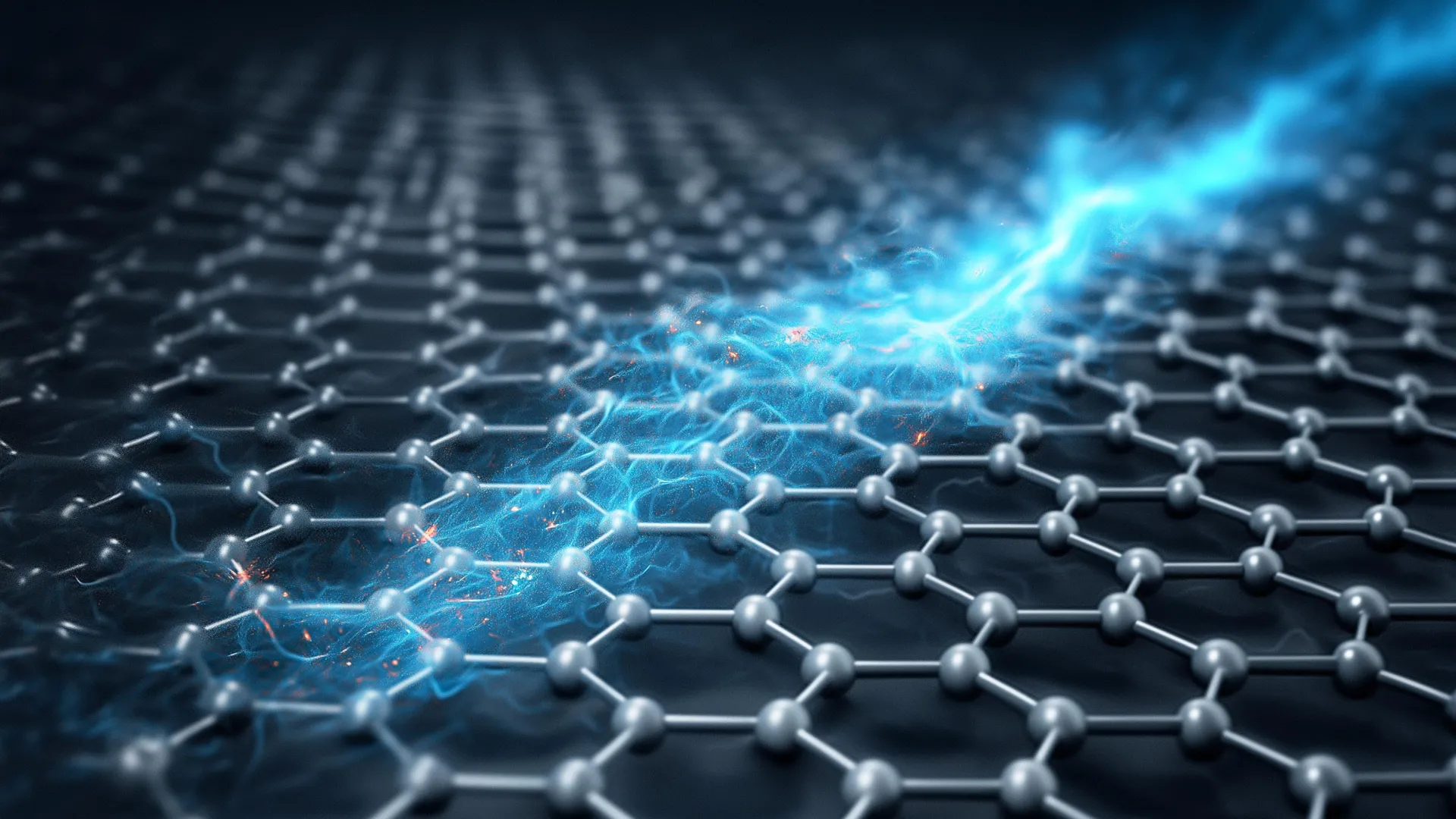
Graphene, a revolutionary allotrope of carbon, is celebrated for its unique structure – a single, perfectly flat sheet of carbon atoms arranged in a hexagonal lattice, just one atom thick. This astonishing thinness, however, belies its remarkable strength and exceptional electrical conductivity. These attributes have already positioned graphene as a “miracle material,” driving innovation in a diverse array of applications, from the development of flexible electronic displays that could redefine mobile technology and wearable devices, to the creation of highly sensitive sensors capable of detecting minute changes in their environment with unparalleled accuracy. Furthermore, its potential is being harnessed to enhance the performance of advanced batteries, promising faster charging times and greater energy storage capacity, and to revolutionize solar cells, paving the way for more efficient energy harvesting from sunlight. Yet, this new research suggests that graphene’s full potential, particularly its quantum mechanical behaviors, has only just begun to be explored.
The core of this groundbreaking discovery lies in the direct observation of Floquet effects within graphene. Floquet engineering, a theoretical concept that has gained significant traction in recent years, proposes that by subjecting a material to a periodic external perturbation, such as a light field, its electronic properties can be fundamentally altered. This modification can effectively "engineer" the material, bestowing upon it new characteristics that are not present in its equilibrium state. For quantum materials like graphene, which exhibit unique electronic behaviors governed by quantum mechanics, the ability to precisely control these properties with light offers a tantalizing prospect for technological advancement. However, demonstrating that Floquet engineering is viable in such materials has been a significant challenge, until now.
To achieve this pivotal observation, the research team employed a cutting-edge technique known as femtosecond momentum microscopy. This advanced methodology allows scientists to probe and capture the incredibly rapid dynamics of electrons within a material, essentially providing a high-speed camera for observing quantum phenomena. The experimental setup involved illuminating meticulously prepared graphene samples with ultrafast bursts of light, delivered in femtoseconds – quadrillionths of a second. Immediately following this initial excitation, a second, delayed pulse of light was used to probe the resulting electronic behavior. By precisely controlling the timing and characteristics of these light pulses, the researchers could meticulously track how the electrons in graphene responded to the external photonic stimulus over unimaginably short timescales. This temporal resolution was crucial for capturing the fleeting nature of the Floquet effects.
"Our measurements clearly prove that ‘Floquet effects’ occur in the photoemission spectrum of graphene," states Dr. Marco Merboldt, the study’s first author from the University of Göttingen. Photoemission spectroscopy is a technique that analyzes the electrons emitted from a material when it is struck by photons, providing insights into the electronic band structure and energy states. The detection of distinct signatures of Floquet effects within this spectrum served as undeniable evidence of their presence in graphene. Dr. Merboldt further emphasizes the far-reaching implications of this finding: "This makes it clear that Floquet engineering actually works in these systems — and the potential of this discovery is huge." The successful demonstration of Floquet engineering in graphene not only validates the theoretical framework but also signifies that this powerful technique is applicable to a broad spectrum of quantum materials, extending beyond the initial theoretical predictions.
The ability to precisely tune the quantum properties of materials using laser pulses within extremely short intervals brings scientists significantly closer to realizing a new paradigm in materials science and engineering. This capability is not merely an academic curiosity; it lays the foundational groundwork for a new generation of advanced electronic devices and computational technologies. Professor Marcel Reutzel, who co-led the project in Göttingen alongside Professor Stefan Mathias, elaborates on the transformative potential: "Our results open up new ways of controlling electronic states in quantum materials with light. This could lead to technologies in which electrons are manipulated in a targeted and controlled manner." Imagine a future where electronic components are not fabricated through traditional lithographic processes, but rather "programmed" using light, allowing for dynamic reconfigurability and unprecedented performance.
The implications extend even further, particularly into the realm of quantum computing and advanced sensing. Professor Reutzel highlights a particularly exciting aspect of this discovery: "What is particularly exciting is that this also enables us to investigate topological properties." Topological properties are a class of very stable, robust characteristics of quantum materials that are immune to local perturbations. These properties are fundamental to the development of fault-tolerant quantum computers, which are a holy grail of modern science and technology. By precisely controlling and manipulating these topological states with light, researchers can pave the way for building quantum computers that are more reliable and less susceptible to errors. Furthermore, these light-controlled topological states could be harnessed to create new types of sensors with unparalleled sensitivity and specificity, opening doors to advancements in fields ranging from medical diagnostics to environmental monitoring and fundamental physics research.
The research was generously supported by the German Research Foundation (DFG) through Göttingen University’s Collaborative Research Centre "Control of Energy Conversion at Atomic Scales." This interdisciplinary initiative fosters collaborative research aimed at understanding and manipulating energy at the most fundamental levels, a mission that this discovery powerfully advances. The successful demonstration of Floquet engineering in graphene is a testament to the power of fundamental scientific inquiry and the collaborative spirit of international research. It not only deepens our understanding of quantum materials but also ignites the imagination with the possibilities for future technologies, promising to revolutionize electronics, computing, and beyond, all powered by the hidden quantum magic of a single layer of carbon atoms. The ability to sculpt matter at its most fundamental level with light opens a new chapter in scientific exploration, one that could redefine our technological landscape and the very nature of the content we consume and create.