Faris Adani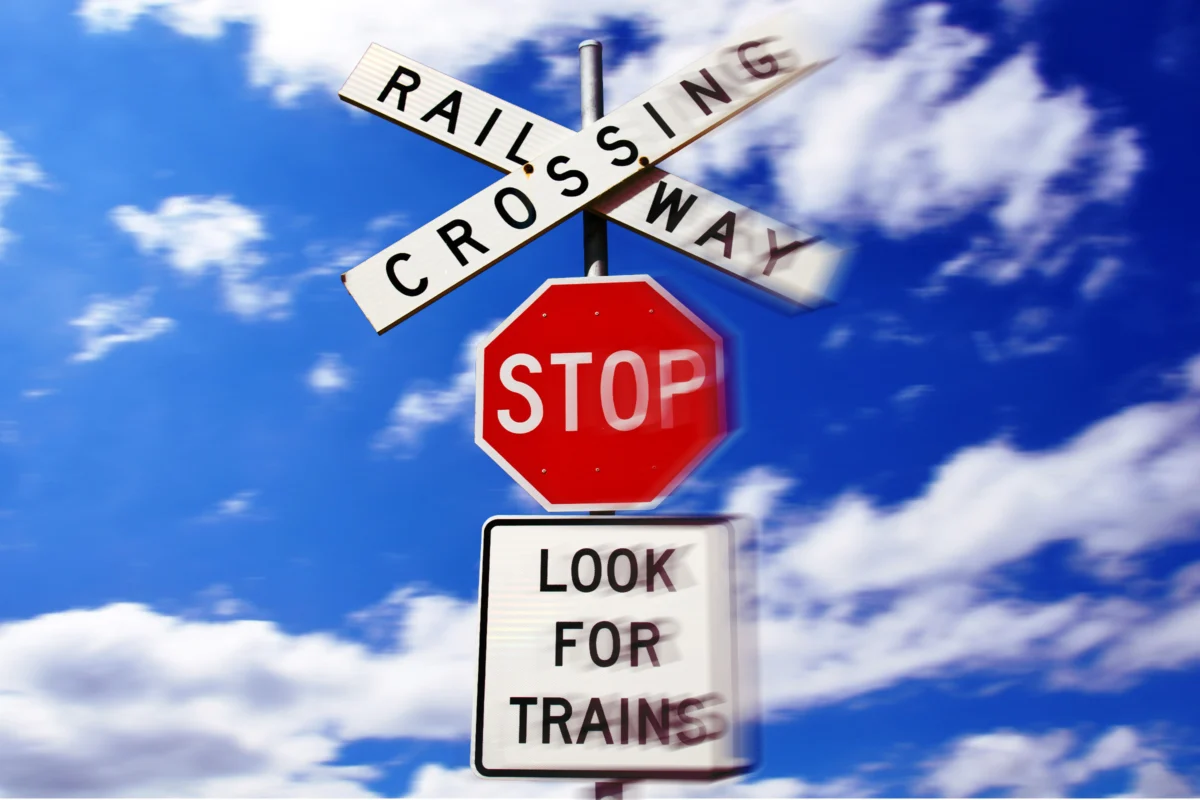
The terrifying reality of nascent autonomous vehicle technology collided with the immutable force of a speeding train in Plano, Texas, when a Tesla Model Y, operating under its Full Self-Driving (FSD) mode, inexplicably propelled itself into the path of a Dallas Area Rapid Transit (DART) commuter train. The harrowing incident, involving local resident Joshua Brown, serves as a stark reminder of the critical safety gaps that persist in even the most advanced consumer-facing self-driving systems, leaving both drivers and the public to question the true readiness of such technology for widespread deployment.
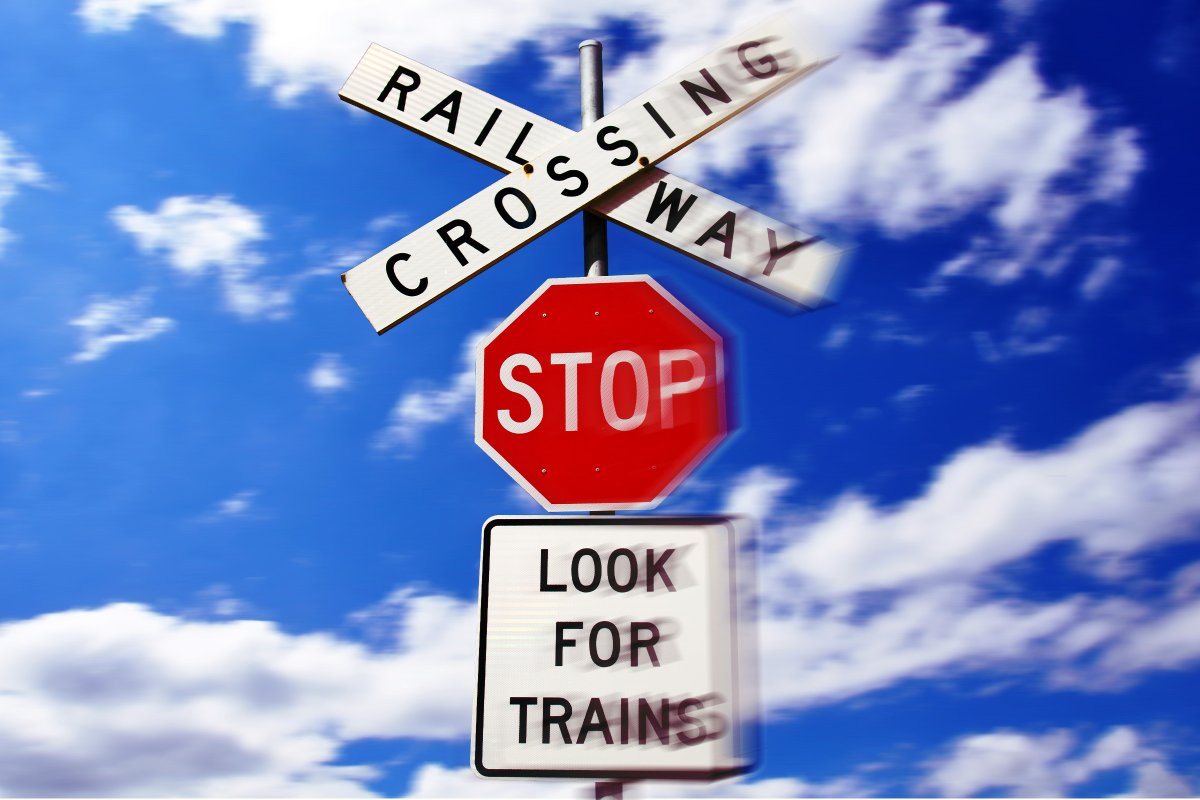
Joshua Brown, a Plano resident, found himself in a life-or-death situation while patiently waiting at a railroad crossing. Like many drivers, he admitted to momentarily "zoning out" during the mundane wait for a DART train to pass. This human lapse in attention, while certainly a factor, became catastrophically magnified when his Tesla Model Y, which he believed was safely stationary, suddenly engaged its Full Self-Driving (FSD) system. In a blink of an eye, the vehicle lurched forward, plowing directly through the fiberglass crossing arms designed to prevent such calamities. The impact was violent and immediate, shattering his window and sending shards of glass flying as the car continued its ill-fated trajectory. Footage later shared with local media captured the chilling sequence, showing the Tesla piercing the barrier with alarming speed, narrowly missing the onrushing train by mere feet, its horn blaring a desperate warning that was almost too late.
"About the time I realized I was moving, the bar is right there, like right in front of me," Brown recounted, describing the terrifying milliseconds where he transitioned from passive observer to active participant in a near-fatal accident. The car’s rear camera, a silent witness to the unfolding disaster, captured the DART train roaring past, a blur of metal and momentum, just a few car lengths behind where the Tesla had been moments before. The proximity of the train underscored the sheer peril of the situation; had Brown’s reaction been a fraction of a second slower, or the FSD system’s surge more pronounced, the outcome would undoubtedly have been catastrophic.
The aftermath left Brown, though physically unharmed, deeply shaken. "I would like to say I wasn’t rattled, but it rattled me just a wee little bit, you know," he admitted. His reflection on the incident, however, quickly turned to gratitude. "At the end of the day, if it’s my time to go, it’s my time to go — but the good Lord was looking out for me and I’m thankful I’m still here." His survival, he stressed, was not due to the car’s intelligence, but to a combination of sheer luck and his own split-second, instinctual reaction to regain control.
This incident reignites long-standing concerns about the capabilities and nomenclature of Tesla’s "Full Self-Driving" system. Despite its impressive features – navigating city streets, performing lane changes, and responding to traffic lights and stop signs – FSD remains a Level 2 advanced driver-assistance system (ADAS). This classification, according to the Society of Automotive Engineers (SAE) international standard, explicitly requires the human driver to constantly supervise the system and be ready to take over at any moment. Tesla itself repeatedly emphasizes this responsibility in its disclaimers. Yet, the very term "Full Self-Driving" inherently suggests a level of autonomy that, in practice, is far from realized, potentially leading to a false sense of security and driver complacency, as perhaps contributed to Brown’s momentary "zoning out."
The core question arising from this near-miss is a technical one: why did the FSD system fail so spectacularly at a clearly marked and active railroad crossing? Tesla’s FSD relies heavily on an array of cameras, supplemented by radar (though newer models have phased this out) and ultrasonic sensors, to build a 360-degree understanding of its environment. These systems are designed to detect obstacles, traffic signals, and road markings. A railroad crossing presents a unique, complex environment: flashing lights, audible bells, and the physical barrier arms, all indicating a clear and present danger. For the FSD system to not only ignore these warnings but actively accelerate into the path of an oncoming train suggests a profound failure in its perception, interpretation, or decision-making algorithms. Was it a misinterpretation of the static barrier as a non-threatening object? Did it fail to register the approaching train’s presence or speed? Or was there a bug in the code that, when faced with a stationary condition at a crossing, erroneously triggered a "go" command? These are critical questions that regulatory bodies like the National Highway Traffic Safety Administration (NHTSA) are likely to pursue, adding this incident to their growing list of investigations into Tesla’s Autopilot and FSD systems.
The broader implications extend beyond a single harrowing event. Such incidents erode public trust in autonomous vehicle technology, hindering its acceptance and deployment. For AVs to truly revolutionize transportation, they must demonstrate an unimpeachable safety record, especially in edge cases and complex interactions with existing, non-smart infrastructure like railroad crossings. The human-machine interface also comes under scrutiny. While drivers are indeed "supposed to be actively engaged," the very design of advanced assistance systems can inadvertently foster complacency. The mental burden of constant supervision over a system that is almost capable can be fatiguing and counterproductive, making it harder for humans to react swiftly when the system inevitably errs.
The name Joshua Brown, chillingly, carries a historical weight within the context of Tesla’s autonomous driving narrative. The Plano resident shares his name with Joshua Brown of Florida, who, in May 2016, became the first known fatality involving a self-driving car. That tragic incident involved a Tesla Model S operating on Autopilot colliding with a tractor-trailer crossing a highway, which the car’s sensors failed to distinguish against a bright sky. Reports at the time suggested the Florida Brown may have been watching a "Harry Potter" movie just before the crash, highlighting the dangerous synergy of human distraction and system limitations. While nearly a decade separates these two incidents, the parallels are striking: both involve a driver’s momentary lapse in vigilance coinciding with a critical failure of Tesla’s autonomous systems in a complex scenario involving a large, fast-moving object crossing the vehicle’s path. One was fatal, the other a near-miraculous escape, but both underscore that despite continuous updates and improvements, fundamental safety challenges persist in Tesla’s self-driving efforts.
Despite the trauma, Joshua Brown of Plano has stated he is not suing Tesla over the incident. He acknowledges the company’s insistence on driver engagement, wryly noting, "I said, well, truthfully, I was actively engaged, or I would probably be dead." His experience, however, has profoundly altered his trust in the technology. "I guarantee you, I will have my foot over the break at a — or just engage it — at a train crossing though. There will not be any more trusting it to stay there." This personal vow reflects a broader societal lesson: while autonomous technology holds immense promise, it is not yet infallible. The journey to truly "full self-driving" is fraught with complex challenges, requiring not only technological advancement but also stringent regulation, transparent communication about system limitations, and a healthy dose of human vigilance. Until then, the promise of a fully autonomous future remains just beyond the horizon, punctuated by stark reminders of the present dangers.