Imroatul Nasiyah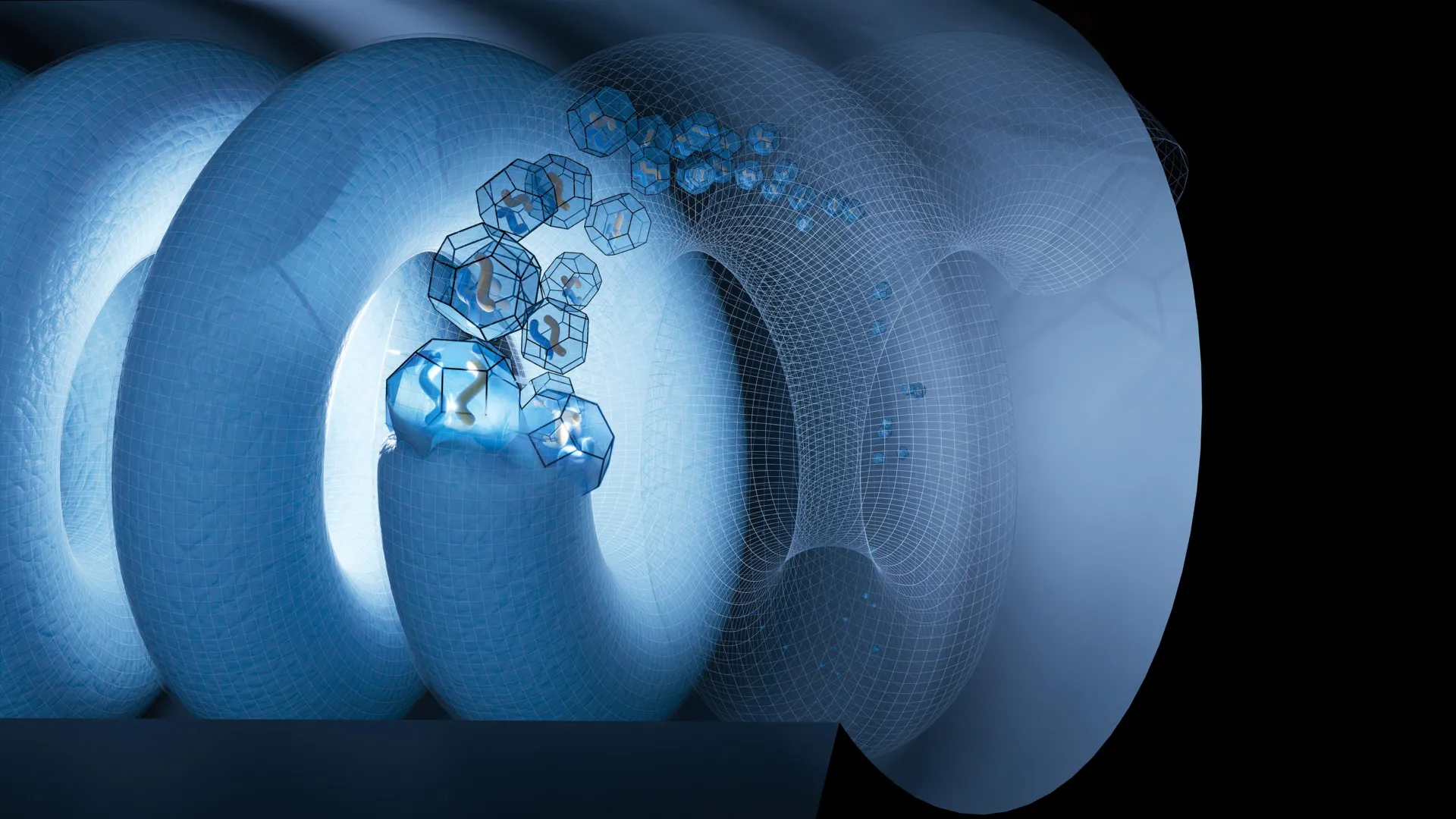
In a development that has sent ripples of excitement through the scientific community, a collaborative effort led by Professor Young Keun Kim from Korea University and Professor Ki Tae Nam of Seoul National University has culminated in the successful creation of these groundbreaking magnetic nanohelices. Published in the prestigious journal Science, this research unveils a novel method to regulate electron spin by leveraging the unique properties of chiral magnetic materials, even under ambient conditions. "These nanohelices achieve spin polarization exceeding ~80% — just by their geometry and magnetism," stated Professor Young Keun Kim, a co-corresponding author of the study, underscoring the remarkable efficiency of their design. He further elaborated on the significance of this achievement: "This is a rare combination of structural chirality and intrinsic ferromagnetism, enabling spin filtering at room temperature without complex magnetic circuitry or cryogenics, and provides a new way to engineer electron behavior using structural design."
The research team’s ingenious approach involved fabricating both left- and right-handed chiral magnetic nanohelices through a sophisticated electrochemical control of the metal crystallization process. A pivotal innovation in their methodology was the incorporation of minute quantities of chiral organic molecules, such as cinchonine or cinchonidine. These molecules acted as molecular architects, guiding the formation of helices with an exceptionally precise and predetermined handedness, a level of control that has historically been exceedingly difficult to achieve in inorganic materials. The researchers then experimentally verified the functionality of these nanohelices, demonstrating that when a right-handed helix was utilized, it exhibited a remarkable selectivity, preferentially allowing electrons with one spin direction to pass through while impeding those with the opposite spin. This represents a monumental discovery: the identification and creation of a three-dimensional inorganic helical nanostructure capable of actively controlling the direction of electron spin.
Professor Ki Tae Nam, also a co-corresponding author, drew a parallel to the well-established principles of organic chemistry: "Chirality is well-understood in organic molecules, where the handedness of a structure often determines its biological or chemical function. But in metals and inorganic materials, controlling chirality during synthesis is extremely difficult, especially at the nanoscale. The fact that we could program the direction of inorganic helices simply by adding chiral molecules is a breakthrough in materials chemistry." This highlights the interdisciplinary nature of the research, bridging the gap between materials science, chemistry, and physics.
To rigorously confirm the chirality of their nanohelices, the researchers devised an innovative electromotive force (emf)-based chirality evaluation method. This technique allowed them to measure the emf generated by the helices when subjected to rotating magnetic fields. The crucial observation was that left- and right-handed helices consistently produced distinct and opposing emf signals, providing a quantitative and reliable means to verify chirality, even in materials that do not exhibit strong interactions with light, a common limitation in optical methods.
Beyond their ability to act as spin filters, the research team made another significant discovery: the magnetic material itself, through its inherent magnetization and aligned electron spins, facilitates the long-distance transport of spin information at room temperature. This remarkable phenomenon, sustained by strong exchange energy within the material, remained consistent regardless of the orientation of the chiral axis relative to the spin injection direction. Crucially, this spin transport effect was entirely absent in non-magnetic nanohelices of comparable scale, unequivocally attributing it to the magnetic and chiral properties of their engineered structures. This groundbreaking finding marks the first instance of measuring asymmetric spin transport in a chiral body of this relatively macro-scale. Furthermore, the team successfully constructed a solid-state device that exhibited chirality-dependent conduction signals, a tangible step towards the practical implementation of spintronic applications.
Professor Kim expressed optimism about the far-reaching implications of their work: "We believe this system could become a platform for chiral spintronics and architecture of chiral magnetic nanostructures." He emphasized that this research represents a powerful synergy between geometry, magnetism, and spin transport, all constructed from scalable and readily available inorganic materials. The versatility of their electrochemical fabrication method, which allows for precise control over the handedness (left/right) and even the complexity of the helical structures (e.g., double or multiple strands), is expected to significantly accelerate the development of novel applications across various technological domains.
The implications for data storage are particularly profound. Current magnetic storage relies on the orientation of magnetic domains, which are relatively large and can be prone to thermal instability. Spintronic devices utilizing these nanohelices could enable data storage at an unprecedented density, where information is encoded in the spin of individual electrons or in the precise arrangement of these nanohelices. This would lead to storage devices with capacities orders of magnitude greater than those available today, fitting vast libraries of data into minuscule footprints.
In the realm of computing, spintronic logic gates promise to overcome the fundamental speed and power limitations of conventional transistors. By manipulating electron spin instead of just charge, spintronic devices can perform operations much faster and with significantly less energy consumption. This could pave the way for ultra-fast processors that are also remarkably energy-efficient, a critical need for everything from personal devices to large-scale data centers and high-performance computing. The ability of these nanohelices to filter spins at room temperature eliminates the need for bulky and power-hungry cooling systems, making these advanced spintronic applications more feasible and cost-effective.
The discovery also opens new avenues in quantum computing. The precise control over electron spin is a fundamental requirement for creating and manipulating qubits, the basic units of quantum information. These magnetic nanohelices could serve as building blocks for novel quantum computing architectures, enabling more stable and scalable qubit systems. The chirality-dependent spin transport could also be leveraged for error correction mechanisms, a significant challenge in quantum computing.
Furthermore, the unique electromagnetic properties of these chiral magnetic structures could find applications in advanced sensor technologies. Their sensitivity to magnetic fields and their ability to interact with polarized electron beams could lead to the development of highly sensitive detectors for magnetic signals, useful in medical imaging, materials science, and fundamental physics research.
The research team’s achievement underscores the power of interdisciplinary collaboration and the strategic integration of different scientific fields. By combining expertise in materials chemistry, nanotechnology, and condensed matter physics, they have not only addressed a critical challenge in spintronics but have also created a versatile platform for future innovation. The ability to tailor the properties of inorganic materials through precise structural design, guided by molecular principles, represents a paradigm shift in materials engineering.
Looking ahead, the focus will likely shift towards scaling up the production of these nanohelices and integrating them into functional devices. Challenges such as ensuring long-term stability, optimizing spin injection and detection mechanisms, and developing robust fabrication processes for large-scale manufacturing will need to be addressed. However, the fundamental breakthrough in creating controllable chiral magnetic nanostructures at room temperature provides a strong foundation for overcoming these hurdles.
The successful demonstration of chirality-dependent conduction signals in a solid-state device is a critical step towards practical applications. This proof-of-concept device suggests that the principles demonstrated by the researchers can be translated into real-world technologies. The ability to control the handedness of inorganic helices through simple chemical additives represents a significant advancement in materials synthesis, offering a cost-effective and scalable pathway to produce these functional nanostructures.
In conclusion, the development of these tiny magnetic spirals by Professor Kim and Professor Nam’s teams is not merely an incremental advancement but a paradigm shift in our ability to manipulate electron spin. It offers a compelling solution to long-standing challenges in spintronics, promising a future of faster, more energy-efficient, and potentially revolutionary electronic and quantum technologies. This breakthrough firmly positions chiral magnetic nanohelices as a cornerstone for the next generation of information processing and advanced materials science.