Imroatul Nasiyah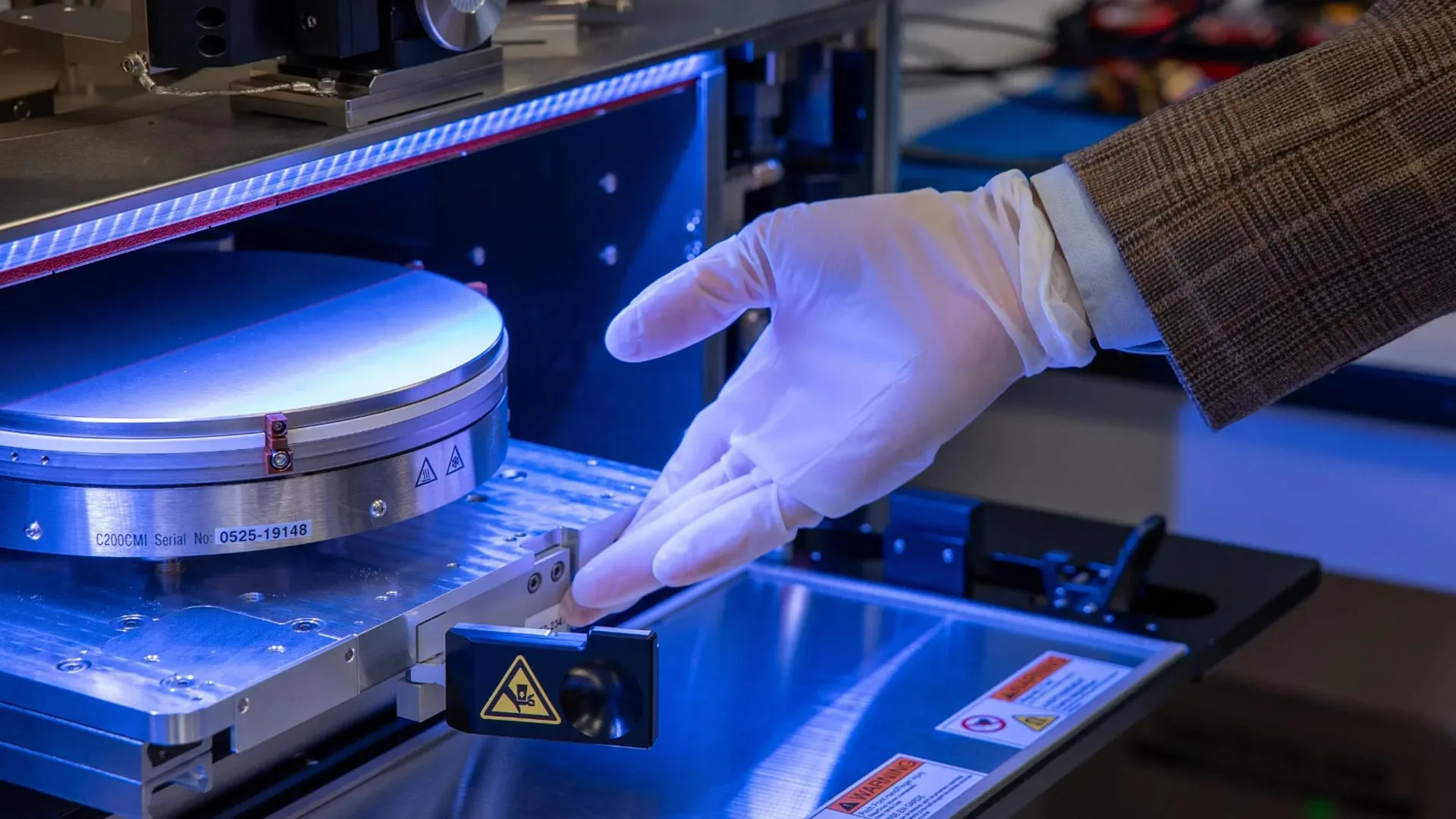
A groundbreaking advancement in semiconductor technology, developed through a collaborative effort between engineers from Stanford University, Carnegie Mellon University, the University of Pennsylvania, and the Massachusetts Institute of Technology, in partnership with SkyWater Technology, the nation’s largest exclusively U.S.-based pure-play semiconductor foundry, promises to revolutionize artificial intelligence hardware. This novel multilayered computer chip, unlike the predominantly flat, two-dimensional designs that have characterized the industry for decades, is architected to build vertically, stacking ultra-thin components akin to floors in a skyscraper. This innovative approach, combined with high-speed vertical wiring acting as efficient data elevators, aims to overcome the significant data transfer limitations that have long hampered the progress of AI. The prototype boasts a record-breaking number of vertical connections and a meticulously integrated layout that places memory and computing units in close proximity, thereby circumventing the slowdowns inherent in conventional flat chips. Early hardware tests and simulations have demonstrated a remarkable performance improvement of approximately one order of magnitude when compared to traditional 2D chips, signaling a potential paradigm shift in AI hardware and a significant boost to domestic semiconductor innovation.
While experimental 3D chips have been explored in academic settings previously, this development marks a pivotal moment as it is the first to deliver demonstrable performance enhancements and, crucially, has been manufactured within a commercial foundry environment. "This opens the door to a new era of chip production and innovation," stated Subhasish Mitra, the William E. Ayer Professor in Electrical Engineering and professor of computer science at Stanford University, and principal investigator of the paper detailing this breakthrough, which was presented at the 71st Annual IEEE International Electron Devices Meeting (IEDM). He further emphasized, "Breakthroughs like this are how we get to the 1,000-fold hardware performance improvements future AI systems will demand."
The Unyielding "Memory Wall" of Flat Chips in Modern AI
The insatiable data demands of contemporary AI models, such as large language models like ChatGPT and Claude, necessitate the constant and rapid movement of enormous data volumes between memory storage units and the processing cores that execute computations. In conventional 2D chips, where all components reside on a single plane, memory is inherently limited and often geographically dispersed. This physical separation forces data to traverse long, congested pathways, creating a bottleneck. The computing elements, capable of processing information at remarkable speeds, frequently find themselves waiting for data to arrive. This critical limitation, known as the "memory wall," arises when the processing speed of the chip outpaces its ability to supply the necessary data.
For years, the semiconductor industry has attempted to push back against the memory wall by relentlessly shrinking the size of transistors – the fundamental building blocks for computation and data storage – thereby increasing their density on each chip. However, researchers now acknowledge that this strategy is approaching its fundamental physical limitations, often referred to as the "miniaturization wall." The new 3D chip architecture directly confronts and aims to surmount both of these formidable barriers by embracing verticality.
Tathagata Srimani, assistant professor of electrical and computer engineering at Carnegie Mellon University and the paper’s senior author, who initiated this research as a postdoctoral fellow under Mitra’s guidance, drew a compelling analogy: "By integrating memory and computation vertically, we can move a lot more information much quicker, just as the elevator banks in a high-rise let many residents travel between floors at once."
Robert M. Radway, assistant professor of electrical and systems engineering at the University of Pennsylvania and a co-author of the study, underscored the severity of the challenge: "The memory wall and the miniaturization wall form a deadly combination. We attacked it head-on by tightly integrating memory and logic and then building upward at extremely high density. It’s like the Manhattan of computing — we can fit more people in less space."
The Manufacturing Prowess of the Monolithic 3D Chip
Previous endeavors in 3D chip development often relied on a more straightforward approach of stacking pre-fabricated, separate chips. While this method offers some advantages, the interconnections between these stacked layers tend to be relatively rudimentary, limited in number, and can easily become performance bottlenecks.
The research team has pioneered a distinct methodology. Instead of fabricating individual chips and then bonding them together, they construct each subsequent layer directly atop the preceding one in a continuous, integrated manufacturing process. This technique, termed "monolithic" 3D integration, operates at temperatures sufficiently low to prevent damage to the circuitry already established in the underlying layers. This critical capability allows for much denser layering and facilitates the creation of significantly more numerous and robust interconnections between these layers.
A paramount achievement highlighted by the researchers is that the entire fabrication process was executed within a domestic commercial silicon foundry. "Turning a cutting-edge academic concept into something a commercial fab can build is an enormous challenge," acknowledged co-author Mark Nelson, vice president of technology development operations at SkyWater Technology. He emphasized the broader implications: "This shows that these advanced architectures aren’t just possible in the lab — they can be produced domestically, at scale, which is what America needs to stay at the forefront of semiconductor innovation."
Tangible Performance Gains and the Future Trajectory of AI Hardware
Initial hardware testing of the prototype has yielded impressive results, outperforming comparable 2D chips by approximately fourfold. The team’s sophisticated simulations suggest that as the 3D design grows taller, incorporating more stacked layers of memory and compute units, even more substantial performance gains can be realized. Projections indicate potential improvements of up to twelvefold for real-world AI workloads, including those derived from Meta’s open-source LLaMA model, as the number of tiers increases.
Beyond immediate performance boosts, the researchers point to a significant long-term benefit: the architecture offers a viable pathway to achieve 100 to 1,000-fold improvements in the Energy Delay Product (EDP). EDP is a crucial metric that encapsulates both the speed of computation and its energy efficiency. By drastically reducing the distances data must travel and providing a multitude of vertical pathways for data movement, the chip can simultaneously enhance throughput and decrease the energy consumed per operation – a synergistic outcome that has eluded conventional flat chip designs.
The significance of this work extends beyond raw performance metrics. The successful demonstration that monolithic 3D chips can be manufactured in the United States provides a compelling blueprint for a new era of domestic hardware innovation. This paves the way for the design and fabrication of the most advanced chips to occur on American soil, bolstering national technological sovereignty and competitiveness.
Furthermore, the transition towards vertical, monolithic 3D integration necessitates the cultivation of a new generation of engineers proficient in these advanced methodologies. This mirrors the transformative impact of the integrated circuit revolution in the 1980s, which was propelled by students acquiring expertise in chip design and fabrication within U.S. laboratories. Through proactive collaborations and dedicated funding initiatives, such as the Microelectronics Commons California-Pacific-Northwest AI Hardware Hub (Northwest-AI-Hub), students and researchers are already being equipped to drive the future of American semiconductor innovation.
"Breakthroughs like this are of course about performance," stated H.-S. Philip Wong, the Willard R. and Inez Kerr Bell Professor in the Stanford School of Engineering and principal investigator of the Northwest-AI-Hub. "But they’re also about capability. If we can build advanced 3D chips, we can innovate faster, respond faster, and shape the future of AI hardware."
This pioneering research was conducted across the Stanford University School of Engineering, Carnegie Mellon University College of Engineering, the University of Pennsylvania School of Engineering and Applied Science, and the Massachusetts Institute of Technology. All fabrication processes were completed at SkyWater Technology’s foundry in Bloomington, Minnesota. The project received crucial support from a diverse range of esteemed organizations, including the Defense Advanced Research Projects Agency, the U.S. National Science Foundation Graduate Research Fellowship Program, Samsung, the Stanford Precourt Institute for Energy, the Stanford SystemX Alliance, the Department of War’s Microelectronics Commons AI Hardware Hub, the U.S. Department of Energy, and the National Science Foundation’s Future of Semiconductors Program (grant number 2425218). Additional contributing authors from Stanford include Suhyeong Choi, Samuel Dayo, Andrew Bechdolt, Shengman Li, Dennis T. Rich, and R.H. Yang, with further collaborators from Carnegie Mellon University and MIT.