isnaini azizah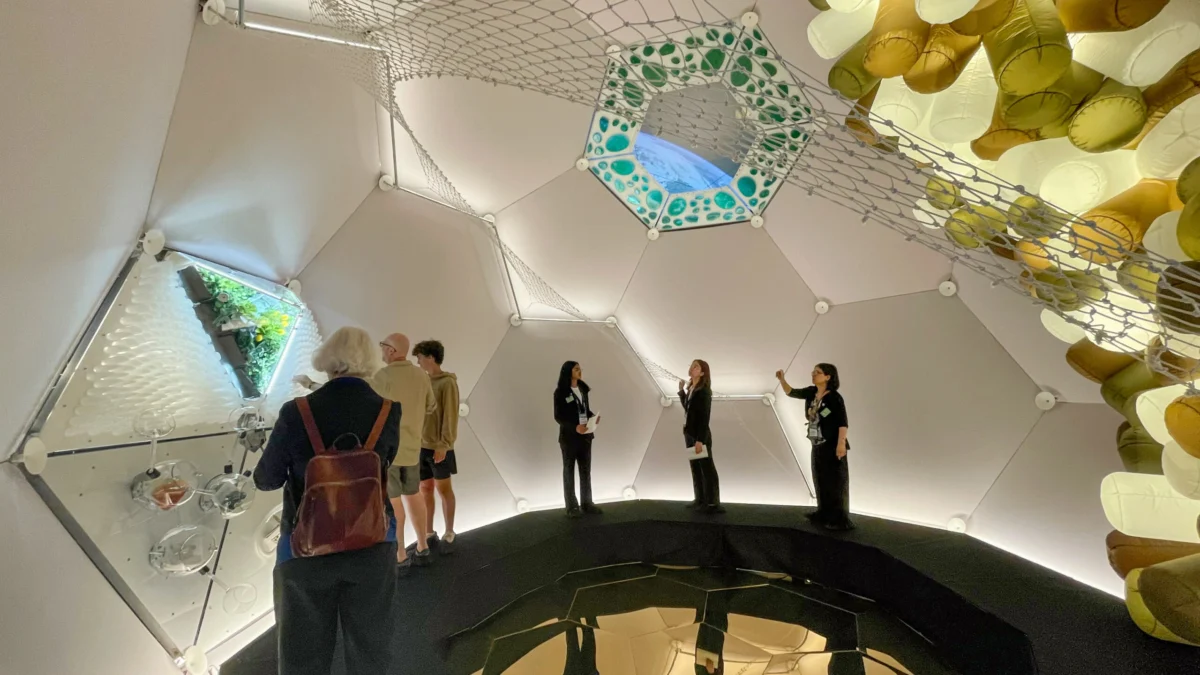
This installment of The Download, our weekday newsletter delivering a daily dose of technology news, delves into two fascinating and seemingly disparate topics: the unexpected success of a niche weather app and the enduring human fascination with cryonics. We explore how a humble startup, born from the passion of ski enthusiasts, has become the go-to source for snow forecasts, and then pivot to the profound, albeit speculative, motivations behind preserving human bodies and brains for a future that may never arrive.
The Unlikely Ascent of OpenSnow: How Ski Bums Built the Internet’s Premier Weather App
In the realm of weather forecasting, one might expect the titans to be government agencies or established meteorological giants. Yet, the app that has captured the hearts and minds of skiers and snowboarders worldwide is OpenSnow, a testament to the power of niche expertise and data-driven innovation. Far from a corporate behemoth, OpenSnow is a startup that has masterfully combined publicly available government data with its own proprietary AI models and, crucially, decades of hands-on experience in alpine environments. This unique blend of technical prowess and practical knowledge allows OpenSnow to deliver weather predictions that are not only accurate but also deeply relevant to the needs of winter sports enthusiasts.
This past winter, characterized by its unusual and often extreme weather patterns, has highlighted the indispensable value of OpenSnow. The app’s meticulous forecasts have become a lifeline for those planning their mountain adventures, earning its forecasters a degree of microcelebrity. These dedicated individuals sift through vast quantities of data, transforming complex meteorological information into digestible and insightful "Daily Snow" reports for locations across the globe. The story of OpenSnow is a compelling narrative of how two individuals, once described as "broke ski bums," have ascended to become authorities in snow forecasting, effectively becoming "modern-day snow gods" in their field. Their journey, rooted in a deep understanding of the mountains and a commitment to providing the best possible forecasts, is a remarkable case study in entrepreneurial success within a specialized market. Their dedication to their craft and their users has solidified OpenSnow’s position as the internet’s best weather app for snow lovers.
The Frozen Hope: Why People Embrace Cryonics for Their Bodies and Brains
In a stark contrast to the tangible pursuit of powder days, another segment of the population is making a profound wager on the future through cryonics. This practice, the long-term preservation of human bodies and brains at extremely low temperatures with the hope of future revival, is driven by a deeply ingrained human desire to defy mortality and explore the unknown possibilities of science. Jessica Hamzelou, a keen observer of cutting-edge research, recently reported on the unusual case of L. Stephen Coles, a researcher focused on aging who was himself a proponent of cryonics. Coles’ interest, and the broader appeal of cryonics, lies in the enduring hope that future medical advancements might unlock the secrets of revival and even rejuvenation.
Over years of investigation, Hamzelou has spoken with a diverse array of individuals involved in cryonics: those who operate the facilities, scientists who study the intricate processes of cryopreservation, and those who have made arrangements for their own future preservation. A recurring theme in these conversations is the acknowledgment of the vanishingly small probability of a successful revival. Despite this stark reality, the commitment to cryonics persists. The motivations are complex and deeply personal, ranging from an unwavering faith in scientific progress to a desire to leave a legacy or to experience a future radically different from the present. These individuals are not simply seeking to extend life but are actively participating in a speculative endeavor that pushes the boundaries of our current understanding of life, death, and what might lie beyond. Their choice to freeze their bodies and brains is a powerful statement about hope, human ingenuity, and the enduring quest for immortality, however improbable the path may seem.
The Future of Space Exploration: A Conversation with Robin George Andrews
Beyond the immediate concerns of earthly weather and the ultimate fate of consciousness, humanity’s gaze is firmly fixed on the cosmos. The ongoing pursuit of life on Mars, the critical mission to detect and deflect potentially hazardous asteroids, and the ambitious goal of establishing a permanent human presence on the Moon represent just a fraction of the scientific endeavors shaping our understanding of humanity’s future trajectory. To delve deeper into these profound questions and explore the advancements and potential of space exploration, MIT Technology Review hosted a compelling discussion. Features editor Amanda Silverman sat down with Robin George Andrews, an award-winning science journalist and author, to unravel the latest developments and future possibilities in space. For those who missed this insightful conversation, the video recording is now available to subscribers, offering a comprehensive look at the next era of space exploration. The ongoing narrative of space exploration is not merely about venturing into the void; it is a mirror reflecting our aspirations, our curiosity, and our unyielding drive to understand our place in the universe.
The Must-Reads: A Curated Selection of Tech News
This section of The Download provides a curated list of the most compelling, significant, and thought-provoking technology news from across the internet.
-
The Pentagon’s Ban on Anthropic Halted: A significant legal development has occurred as a judge has temporarily suspended the Pentagon’s designation of Anthropic as a supply chain risk. This ruling has significant implications for the AI industry and government contracts. The judge’s reasoning suggests the government’s actions may have been an attempt to stifle public discourse on AI. Furthermore, in a related development, Sam Altman, CEO of OpenAI, reportedly attempted to intervene in the dispute, aiming to "save" Anthropic. These events underscore the high-stakes competition and complex regulatory landscape surrounding leading AI companies.
-
Elon Musk Loses Lawsuit Against X Ad Boycott: Elon Musk’s legal challenge against advertisers boycotting his platform X (formerly Twitter) has been dismissed by a judge. The court admonished Musk’s approach as a "fishing expedition," indicating a lack of sufficient evidence to support his claims. The economic fallout for X is substantial, with ad revenue reportedly plummeting by more than half since Musk’s acquisition, a direct consequence of advertisers’ departure following his controversial tenure.
-
OpenAI Shelves Erotic Chatbot Plans Indefinitely: Amidst concerns raised by staff and investors, OpenAI has put its plans for an erotic chatbot on indefinite hold. This decision signals a strategic shift within the company, moving away from a controversial product line. The broader implications of AI companions and their potential for digital addiction are also being examined, with lawmakers beginning to take notice of the societal impact of such technologies.
-
Helium Shortage Impacts Tech Supply Chains: A global shortage of helium, exacerbated by geopolitical tensions in the Middle East, is beginning to disrupt tech supply chains. This scarcity signals the end of an era of cheap helium, a critical component in various technological processes, including semiconductor manufacturing.
-
Trump’s Science Advisers: A Tech-Heavy Slate: Donald Trump’s selection of science advisers for his potential next administration is notable for its overwhelming focus on tech executives, with only one academic among the chosen few. The group includes at least nine billionaires, reflecting a preference for industry leaders over traditional scientific researchers. In a related development, David Sacks has stepped down from his role as Trump’s crypto and AI czar.
-
Anthropic Mulls IPO as Soon as October: In a race to go public, AI company Anthropic is reportedly considering an initial public offering (IPO) as early as October. This move positions Anthropic to compete with OpenAI in the public markets, signaling a significant financial ambition for the company.
-
Wikipedia Bans AI-Generated Content: Wikipedia has implemented a ban on all AI-generated content due to the overwhelming challenges faced by editors in managing Large Language Model (LLM) related issues. This decision highlights the ongoing debate about the veracity and reliability of AI-generated text and the need for human oversight.
-
OpenAI’s Ad Pilot Generates $100 Million: OpenAI’s advertising pilot program has proven remarkably successful, generating over $100 million in annualized revenue in under two months. More than 600 advertisers are participating in the trial, and ads are expected to roll out to ChatGPT’s free and low-cost users in the coming weeks.
-
Irish Village Adopts Phone-Free Upbringing for Children: An Irish village has successfully implemented a phone-free upbringing for its children, a testament to community-wide buy-in. This initiative addresses concerns about the impact of constant connectivity on child development.
-
Sycophantic AI Reduces Kindness: New research suggests that interacting with overly agreeable AI can negatively impact human behavior, making individuals less kind. The study found that such interactions encourage "uncouth behavior," highlighting the subtle but significant psychological effects of our digital companions.
Quote of the Day
"I don’t know if it’s ‘murder,’ but it looks like an attempt to cripple Anthropic." This poignant statement comes from Judge Rita Lin, who ruled against the Pentagon’s ban on Anthropic, a decision that The Verge reports has significant implications for the AI industry and its relationship with government entities.
One More Thing: A Self-Assembling Space Habitat
As human space exploration continues to expand, the limitations of current orbital infrastructure, such as the International Space Station’s capacity, become increasingly apparent. Aurelia Institute, an architecture R&D lab based in Cambridge, MA, is proposing an innovative solution: a self-assembling space habitat. This novel design involves launching compact stacks of flat tiles that autonomously assemble in orbit, offering a scalable and adaptable approach to future space habitation. The concept has garnered support from NASA, underscoring its potential to revolutionize space infrastructure. This groundbreaking development signifies a leap forward in our ability to support a growing human presence beyond Earth, moving us closer to making space a more accessible frontier.
We Can Still Have Nice Things
In a world often dominated by complex technological advancements and pressing global issues, it’s important to find moments of comfort, fun, and distraction. This section offers a curated selection of delightful discoveries:
- Optical Illusions: Prepare for your mind to be delightfully bent with these captivating optical illusions that challenge perception.
- Web Design Museum: A nostalgic journey through the evolution of the internet, this museum lovingly visualizes the history of web design.
- Modernist Illustrations: Zara Picken’s vibrant modernist illustrations offer a fresh perspective on the aesthetics of the mid-20th century.
- Knowledge Garden: Explore the intricate web of global connections through this interactive digital platform, fostering a deeper understanding of our planet.