isnaini azizah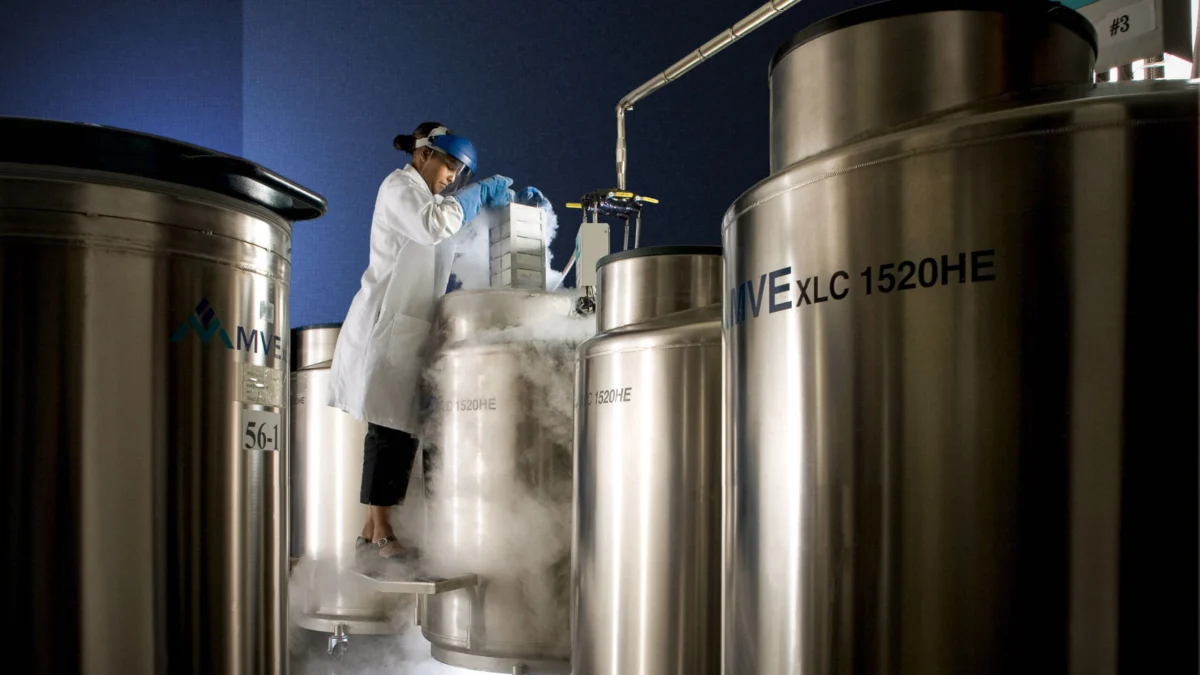
The narrative surrounding cryonics often sparks curiosity, particularly when prominent figures choose this path. A recent case that has garnered attention involves the brain of L. Stephen Coles, a gerontologist who dedicated the latter part of his career to the study of human longevity. Coles, who passed away from pancreatic cancer in 2014, made the decision to have his brain cryogenically preserved. Today, it resides at a facility in Arizona, meticulously stored at -146°C, encased in a delicate layer of frost. His choice was not merely about preservation but also about scientific inquiry. Coles entrusted his longtime friend, Greg Fahy, a distinguished cryobiologist, with the task of studying preserved samples of his brain. This was partly driven by Coles’ own concern about potential structural damage, such as cracking, during the preservation process. Fahy’s findings have been remarkably positive, describing the brain tissue as "astonishingly well preserved," a testament to advancements in cryoprotective techniques.
However, it is crucial to understand that this preservation, while remarkable, does not equate to the ability to reanimate Coles at this time. The overarching question for many is: why undertake such a procedure when the chance of revival is, as acknowledged by those involved, "vanishingly small"? To understand this, we must look at the history and core tenets of cryonics.
The very first individual to undergo cryopreservation was James Hiram Bedford, a retired psychology professor who succumbed to kidney cancer in 1967. His preservation was orchestrated by affiliates of the Cryonics Society of California, an organization then led by an individual with no formal scientific or medical training. The process involved perfusing his body with cryoprotective chemicals, designed to prevent the formation of damaging ice crystals, and then "quick-freezing" him. Today, Bedford’s body continues to be stored at Alcor, a leading cryonics facility located in Scottsdale, Arizona. Alcor, along with a few other organizations, offers the service of collecting, preserving, and storing entire bodies or just the brain, with the aim of indefinite preservation. It is within this same facility that L. Stephen Coles’ brain is currently housed.
Both Coles and Bedford faced terminal illnesses that current medical science could not overcome. This shared experience with untreatable diseases likely fuels a fundamental belief in the potential of future medical advancements. A central premise of cryonics is the unwavering faith in the continuous progress of medicine. The decline in cancer death rates in the US since the early 1990s serves as a tangible example of this progress. While the specific drivers behind Coles’ and Bedford’s decisions remain personal, it is highly probable they harbored a hope of being revived in a future where their respective cancers were curable.
Beyond the hope of overcoming specific diseases, a more profound motivation for some is the outright rejection of death itself. This sentiment was palpable at Vitalist Bay, a recent gathering for individuals who view life as inherently valuable and consider death to be "humanity’s core problem." Emil Kendziorra, CEO of the cryonics organization Tomorrow.Bio, was a prominent speaker at this event, and the strong interest in cryonics among attendees was evident. Many at Vitalist Bay subscribe to the belief that scientific breakthroughs will eventually lead to the obsolescence of aging. For them, cryopreservation is not just a way to cheat death, but a method to effectively pause their existence until science can conquer aging itself.
This desire to transcend aging and death is not confined to fringe gatherings. Research conducted by Kendziorra and his colleagues in 2021 surveyed 1,478 US-based internet users. The findings indicated that men were generally more aware of cryonics and held more optimistic views about its potential outcomes. Notably, over a third of the male respondents expressed a "desire to live indefinitely." This suggests a broader societal undercurrent of interest in radical life extension, with cryonics serving as a potential vehicle.
Despite this underlying interest, cryonics remains a niche field. Kendziorra estimates that globally, only around 5,000 to 6,000 individuals have signed up for cryopreservation services. His own company, Tomorrow.Bio, receives between 20 and 50 new sign-ups each month, illustrating a consistent, albeit small, demand.
However, the decision against cryonics is equally significant, and there are numerous compelling reasons why people do not opt for it. Some individuals find the concept of cryonics to be dystopian, with a small fraction of those surveyed by Kendziorra even suggesting it should be outlawed. These objections often stem from ethical concerns or a fear of the unknown societal implications of widespread life extension.
Cost is another significant barrier. Alcor charges approximately $80,000 for the preservation of a brain and around $220,000 for a whole body. Tomorrow.Bio’s prices are slightly higher. For many, the financial hurdle is overcome through life insurance policies, a common strategy to fund these extensive procedures.
Perhaps the most substantial reason why cryonics has not achieved broader adoption is the current absence of any proven method for reanimating cryopreserved individuals. James Bedford has been in storage for over five decades, and L. Stephen Coles for more than ten years. Every scientist interviewed for this report acknowledges that the likelihood of successful reanimation from such long-term preservation remains "vanishingly small." This lack of certainty casts a long shadow over the entire field.
Yet, for some, the mere existence of a possibility, however infinitesimal, is enough to pursue cryonics. Nick Llewellyn, director of research and development at Alcor, exemplifies this perspective. As a scientist, he readily admits the chances of successful reanimation are "pretty low." Nevertheless, his fascination with the future and the potential of scientific progress leads him to have signed up for the cryopreservation of his own brain. This reflects a deep-seated belief in the trajectory of human innovation.
Conversely, Shannon Tessier, a cryobiologist at Massachusetts General Hospital, expresses a different viewpoint. She states that even if reanimation were technically feasible, she would not opt for cryopreservation. Her decision transcends the purely scientific and enters the realm of philosophy. "Do I want to be revived hundreds of years later when my family is gone and life is different?" she poses. Tessier highlights the profound philosophical, societal, and legal complexities that arise from the prospect of being revived in a vastly altered future, emphasizing the need for careful consideration of these far-reaching implications. This perspective underscores that the choice to embrace cryonics is not solely a scientific gamble but also a deeply personal and philosophical one, fraught with uncertainties about identity, connection, and the very nature of existence.