isnaini azizah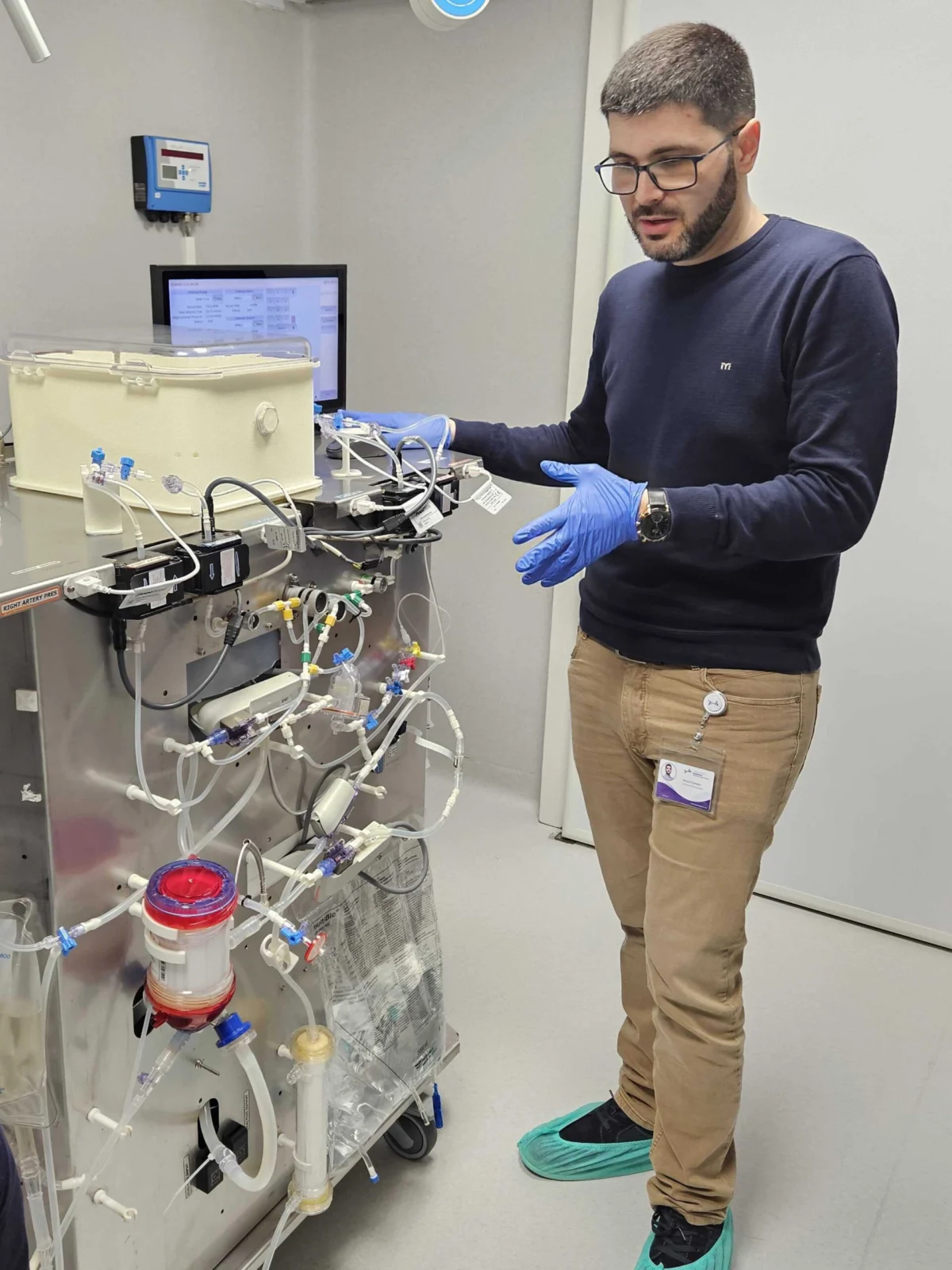
The innovative system, technically known as PUPER (preservation of the uterus in perfusion), has been under development for several years. Javier González, a biomedical scientist who spearheaded the device’s creation with his colleagues, described it as a "human body" in essence, a metal box on wheels adorned with flexible plastic tubing representing veins and arteries. These tubes connect to transparent containers holding the various components that mimic vital organs. At the heart of this intricate setup is a cream-colored tub, within which the human uterus was placed ten months prior to the experiment.
The team’s immediate goal with this groundbreaking technology is to extend the viability of donated uteruses outside the body, aiming to observe a full menstrual cycle. This extended observation period is crucial for studying uterine diseases such as endometriosis and fibroids, and for gaining a deeper understanding of the complex process of embryo implantation – the very inception of pregnancy. By meticulously studying how embryos burrow into the uterine lining in a controlled, ex vivo environment, researchers hope to identify factors that contribute to implantation failures, a common hurdle in in vitro fertilization (IVF) cycles.
Carlos Simon, the founder and director of the Carlos Simon Foundation, articulated the profound implications of this research for IVF. He highlighted that despite advancements in assisted reproductive technologies, embryo implantation remains a significant challenge, leading to numerous unsuccessful IVF attempts. The ability to meticulously study this process in a viable, living organ could unlock new strategies to enhance implantation success rates.
The inspiration for the PUPER device stems from the rapid advancements in organ preservation technologies used for transplantation. In recent years, researchers globally have developed machines that deliver essential nutrients and filter waste, thereby extending the lifespan of organs after removal from donors. This "normothermic or machine perfusion" approach is already being clinically implemented for liver, kidney, and heart transplants, allowing for better donor-recipient matching and quality assessment of organs.

The PUPER machine functions similarly, mimicking the body’s physiological processes. A blood bag serves as the source, with blood pumped through plastic tubing to a pump acting as the heart. An oxygenator then replenishes oxygen and removes carbon dioxide, akin to the lungs. The blood is warmed, passed through sensors monitoring glucose and oxygen levels, and filtered by a "kidney" to eliminate waste. Finally, this revitalized blood circulates through the uterus via its connected "arteries" and "veins." The uterus itself is positioned at a tilt, mirroring its natural orientation within the body, and maintained in a humid environment to prevent dehydration.
The journey to this human uterus success began with extensive trials using sheep uteruses approximately four years ago. Veterinary surgeons at an animal research center successfully kept sheep uteruses alive for a day using blood from the same animals. Following these successful preclinical trials, the team refined their machine to its current sophisticated iteration, "Mother." They then partnered with a local hospital performing hysterectomies, which provided their first human uterus donation in May of the previous year.
The urgency of organ retrieval and connection is paramount. Xavier Santamaria, medical vice president of the Carlos Simon Foundation, emphasized that the uterus must be placed in the machine within a couple of hours of extraction. The delicate task of connecting the uterus’s blood vessels to the machine’s tubing required extreme precision to prevent blockages, as clotting is a significant challenge in organ perfusion. The human blood used in the experiment was sourced from a blood bank.
The successful preservation of the human uterus for 24 hours has been met with enthusiasm and cautious optimism from experts in the field. Keren Ladin, a bioethicist specializing in organ transplantation and perfusion at Tufts University, described the achievement as an "impressive proof of concept," while acknowledging that "these are early days."
Gerald Brandacher, professor of experimental and translational transplant surgery at the Medical University of Innsbruck, Austria, highlighted the transformative potential of this extended preservation time for uterus transplantation. Currently, a mere few hours exist for transplanting a uterus, often necessitating rushed procedures. The ability to maintain a uterus for 24 hours significantly expands the possibilities, potentially allowing for the utilization of organs from deceased donors, which is not currently feasible for uterus transplants. While the Spanish team is not immediately pursuing deceased donor uterus transplants, they are focused on addressing other critical research questions.

The researchers’ primary interest lies in leveraging sustained human uteruses for in-depth research. A camera system has been installed to remotely monitor "Mother," ensuring the integrity of its connections. This meticulous oversight is crucial, as evidenced by an earlier incident where a pressure spike dislodged a blood bag, resulting in a significant spill.
The ultimate aim is to maintain uteruses for approximately 28 days, enabling the study of the menstrual cycle and various uterine disorders. Brandacher cautioned that achieving such extended viability presents considerable challenges, noting that even for livers, maintaining them for more than seven days in machine perfusion circuits has not been widely reported.
Despite these hurdles, the pursuit of understanding embryo implantation remains a driving force. The team intends to use lab-created embryo-like structures derived from stem cells to study this process, as using actual human embryos would cross ethical boundaries.
Carlos Simon harbors even more ambitious long-term visions, envisioning a future where machines like "Mother" could support the full gestation of a human fetus from embryo to newborn. This revolutionary concept could offer a new avenue for parenthood for individuals unable to conceive naturally due to the absence or dysfunction of a uterus. While acknowledging the futuristic nature of this prospect, Simon emphasized the foundational importance of their current work: "You have to start somewhere," he stated, underscoring their commitment to understanding every step required to potentially achieve pregnancies entirely outside the body. This groundbreaking research represents a pivotal moment, opening new frontiers in our understanding of reproductive biology and organ preservation.