Imroatul Nasiyah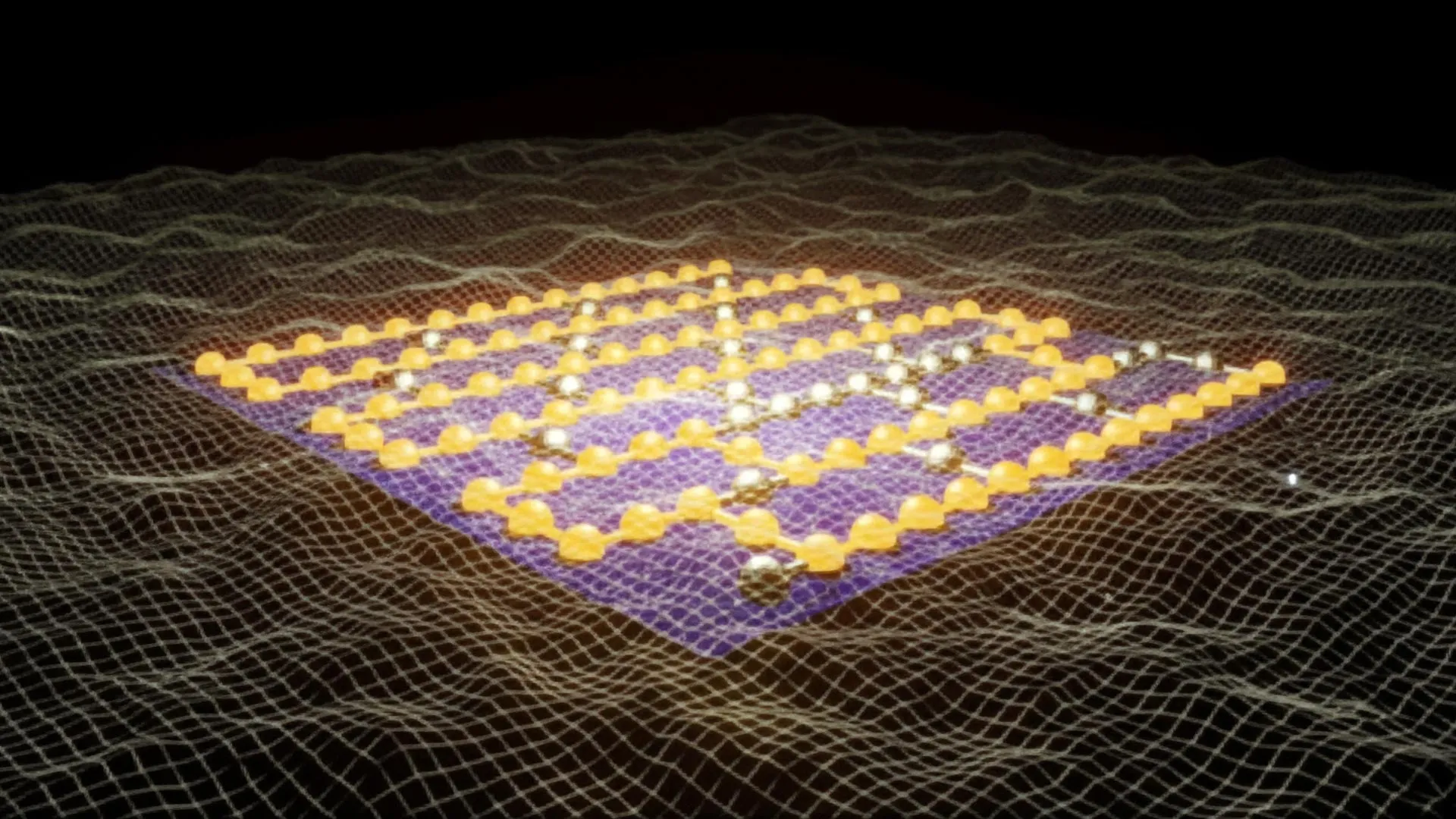
Scientists are constantly striving to understand the fundamental behaviors of nature, particularly matter subjected to extreme conditions. The Standard Model of particle physics provides the theoretical framework, housing the complex equations that govern these phenomena. However, in scenarios characterized by rapid changes or incredibly dense matter, these equations transcend the computational capacity of even the most powerful classical supercomputers. This is where the revolutionary potential of quantum computing begins to shine. In principle, quantum computers possess the inherent ability to represent and simulate these intricate systems with vastly superior efficiency. A significant hurdle in harnessing this power has been the development of reliable methods for preparing the precise initial quantum state required for a simulation. Overcoming this challenge, a team of researchers has achieved a groundbreaking first: the creation of scalable quantum circuits capable of accurately preparing the starting state for simulations of particle collisions, mirroring the high-energy events witnessed in particle accelerators. Their pioneering work specifically targets the strong interactions, a cornerstone of the Standard Model.
The research journey commenced with the meticulous determination of the necessary quantum circuits for small-scale systems, a task accomplished using classical computing resources. Once these foundational circuit designs were established, the researchers ingeniously applied their scalable structure to construct significantly larger and more complex simulations, directly executing them on a quantum computer. Leveraging the capabilities of IBM’s quantum hardware, they successfully simulated key aspects of nuclear physics, utilizing a quantum system comprising over 100 qubits. This remarkable feat represents a significant leap forward, demonstrating the practical applicability of quantum computation for problems previously deemed intractable.
Scalable Quantum Methods Usher in an Era of High-Density Physics Simulations
The development of these scalable quantum algorithms represents a paradigm shift, opening avenues for simulations that were once confined to the realm of theoretical speculation. The innovative approach pioneered by this team is poised to revolutionize the modeling of various complex physical systems. This includes simulating the ephemeral vacuum state that precedes a particle collision, meticulously detailing the behavior of physical systems under conditions of extreme density, and accurately modeling the propagation of particle beams, such as those composed of hadrons. The researchers express a strong conviction that future quantum simulations built upon these advanced circuits will not only match but significantly surpass the computational capabilities of current classical machines.
The implications of these advancements are profound and far-reaching, promising to illuminate some of the most enduring mysteries in physics. Such simulations could provide critical insights into the persistent imbalance between matter and antimatter in the universe, a fundamental question that has long puzzled cosmologists. Furthermore, they hold the key to understanding the intricate processes by which heavy elements are forged within the fiery hearts of supernovae, a crucial aspect of stellar evolution. The behavior of matter at the unprecedented densities found in the cores of neutron stars and during the early moments of the universe can also be investigated with unprecedented detail. Beyond these grand cosmological questions, the same quantum simulation techniques are anticipated to prove invaluable in modeling other exceptionally challenging systems. This includes the investigation of exotic materials exhibiting peculiar quantum properties, such as superconductivity at high temperatures or novel magnetic behaviors, paving the way for the discovery and design of next-generation materials.
In a significant demonstration of their capabilities, nuclear physicists employed IBM’s quantum computers to execute what is believed to be the largest digital quantum simulation ever accomplished. Their success can be attributed, in part, to their astute identification of recurring patterns within physical systems, including inherent symmetries and significant differences in length scales. These insights were instrumental in guiding the design of scalable circuits meticulously engineered to prepare quantum states exhibiting localized correlations. To rigorously validate the effectiveness of their algorithm, the team successfully prepared the vacuum state and simulated the emergence and behavior of hadrons within a simplified one-dimensional model of quantum electrodynamics (QED), a fundamental theory describing the interaction of light and matter.
Advancing from Small-Scale Models to Comprehensive Large-Scale Quantum Systems
The validation process for the newly developed quantum circuit components was a critical step in ensuring their reliability and accuracy. The team meticulously tested these components on small, manageable systems using the sophisticated tools of classical computing. This initial phase allowed them to confirm that the quantum states generated by their circuits could be systematically refined and improved, ensuring a robust foundation for larger simulations. Subsequently, they masterfully scaled up the complexity of these circuits to accommodate the demands of simulating systems involving more than 100 qubits, executing these advanced simulations on IBM’s cutting-edge quantum devices. The wealth of data meticulously gathered from these quantum simulations enabled the scientists to extract crucial properties of the vacuum state with an impressive level of accuracy, achieving results within a few percent of theoretical predictions.
Further demonstrating the versatility and power of their approach, the researchers ingeniously employed the developed circuits to generate precisely controlled pulses of hadrons. They then meticulously simulated the subsequent evolution of these hadron pulses over time, diligently tracking their propagation through space. These remarkable advances collectively point towards a transformative future where quantum computers will routinely perform full, dynamic simulations of matter under extreme conditions, a feat that currently lies well beyond the computational reach of even the most advanced classical machines. This heralds a new era of scientific discovery, where previously inaccessible realms of physics can be explored and understood.
This groundbreaking research received substantial support from various prestigious institutions and initiatives, underscoring its scientific significance. Funding was provided by the Department of Energy (DOE) Office of Science, specifically through its Office of Nuclear Physics. Crucial support also came from the InQubator for Quantum Simulation (IQuS) as part of the Quantum Horizons: QIS Research and Innovation for Nuclear Science Initiative, and from the Quantum Science Center (QSC), a collaborative endeavor between the DOE and the University of Washington dedicated to advancing National Quantum Information Science. Additional vital computing resources were generously provided by the Oak Ridge Leadership Computing Facility, a prominent DOE Office of Science User Facility, and by the Hyak supercomputer system, housed at the University of Washington. The research team also gratefully acknowledges the indispensable use of IBM Quantum services, which played a pivotal role in the successful execution of this ambitious project.