isnaini azizah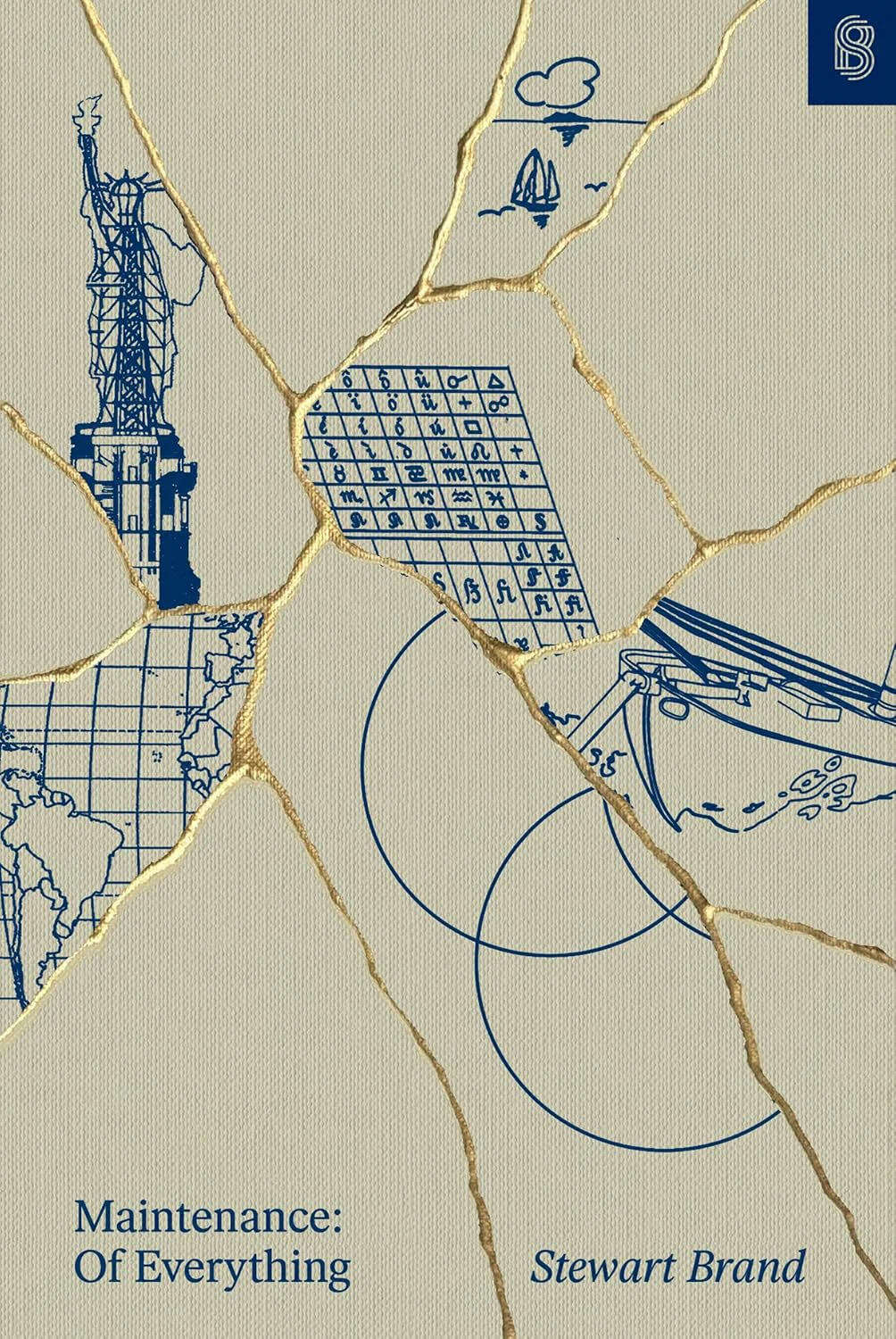
Stewart Brand, a figure whose influence spans both the counterculture and the digital age, has released Maintenance: Of Everything, Part One, the inaugural volume in a series intended to illuminate the "civilizational importance of maintenance." Brand, a tech industry legend and subject of multiple biographies, posits that the constant upkeep and repair of our tools and systems hold a profound, often overlooked, impact on daily life. He provocatively declares, "Taking responsibility for maintaining something—whether a motorcycle, a monument, or our planet—can be a radical act." While the precise nature of this radicalism remains somewhat elusive in this initial installment, Brand’s stated ambition for the complete work is to conclude with an exploration of "the nature of maintainers and the honor owed them."
This notion of inherent honor for maintainers might surprise some, yet it resonates with a burgeoning academic interest in maintenance and repair that has gained traction since the mid-2010s. The author of this piece, a co-founder of "the Maintainers," a global network dedicated to studying the essential, often invisible, work of keeping the world functioning, acknowledges Brand’s premise that maintainers frequently lack due recognition. Scholarly work has increasingly revealed how tasks ranging from oiling machinery to updating code are consistently devalued in comparison to "innovation." This neglect is starkly evident in the state of much of America’s infrastructure. Furthermore, the right-to-repair movement has exposed how profit-driven companies actively hinder our ability to fix products, often by designing them with deliberately limited lifespans, as evidenced by the peculiar inclusion of a computer in a refrigerator door. While Brand’s earlier work may have subtly contributed to these insights, his current book, according to the reviewer, seems to frame maintenance more as a solitary pursuit of personal accomplishment rather than a collective endeavor for societal betterment.
At 87 years old, Brand’s Maintenance: Of Everything carries an elegiac tone, contemplating decay and the inevitable struggle against entropy, a reflection on mortality itself. The book traces a trajectory through Brand’s life, connecting his lifelong fascination with tools and repair to the systems that demand the most critical care. His early involvement with Ken Kesey’s Merry Pranksters and the iconic Trips Festival in 1966, a vibrant hub of psychedelic culture and nascent rock music, set a precedent for his career. As noted by his biographers, Brand possesses a talent for networking and building coalitions, a skill Kesey himself described as recognizing and cleaving to power.
This network-centric approach was central to the Whole Earth Catalog, Brand’s most enduring legacy. Launched in 1968, its motto, "Access to tools," offered a vision for self-sufficiency, featuring technologies for off-grid living. While seemingly progressive, its underlying philosophy of rugged individualism and eschewing corrupt systems stood in contrast to the more collective social change movements of the era, such as civil rights and feminism. This ethos of individual empowerment through tools segued seamlessly into the digital revolution. The 1985 Whole Earth Software Catalog and the co-founding of the WELL (Whole Earth ‘Lectronic Link), a pioneering online community, further cemented his connection to emerging technologies. His hagiographic account of the MIT Media Lab, with its emphasis on technological solutions to technological problems, exemplified his belief in "tools" over political or economic interventions. His subsequent co-founding of the Global Business Network solidified his ties to academic and technological elites, positioning him as a midwife to the modern digital age.
Brand’s attention then pivoted to the maintenance of these burgeoning systems. His 1994 book, How Buildings Learn, challenged architectural dogma by arguing that buildings are inherently mutable and that simple, affordable structures are most amenable to adaptation. This echoed the Whole Earth Catalog‘s libertarian ideal: individuals could reshape their world with accessible tools. In a chapter titled "The Romance of Maintenance," he encouraged readers to find beauty and value in the act of repair. This chapter, in particular, served as a touchstone for the academic field of maintenance studies. Researchers across disciplines, along with practitioners in fields like libraries and engineering, began to explore the realities and the inherent "romance" of maintenance. Brand actively engaged with these communities, contributing to listservs and attending conferences. Therefore, his assertion in the new book that it is "the first to look at maintenance in general" feels somewhat disingenuous, given his prior engagement with the field. The crucial question remains what novel insights this new work offers.
Maintenance: Of Everything, Part One is an idiosyncratic volume. After a career focused on providing access to tools, Brand now asks, in a more extended fashion, how these tools are maintained. The book defies easy categorization, resembling a digest, an almanac, or an encyclopedia, with a "riotous variety" that defies genre conventions.
The first chapter, "The Maintenance Race," narrates the divergent maintenance philosophies of three solo sailors in the 1968 Golden Globe race. One neglected maintenance and perished; another meticulously prepared and completed the race, setting a record for a solo non-stop voyage. The winner embodied a "Whatever comes, deal with it" ethos. Structured as a fable, the story, like many anecdotes in the book, centers on the valor of "vigorous white guys." Brand’s outline reveals his intention: to "start with a dramatic contest of maintenance styles under life-critical conditions—a true story told as a fable" meant to inspire.

The second, significantly longer chapter, "Vehicles (and Weapons)," is a sprawling exploration encompassing multiple sections, digressions, and postscripts, feeling at times like preliminary notes for a larger work. Brand offers no apologies for its "wooliness," framing it as a "muse across a representative of maintenance domains and see what emerges." While it can be an enjoyable read, randomly opened for entertainment, the book often seems adrift, uncertain of its purpose.
"Vehicles (and Weapons)" opens by referencing Robert M. Pirsig’s Zen and the Art of Motorcycle Maintenance and Matthew B. Crawford’s Shop Class as Soulcraft, highlighting maintenance as a process of both "problem finding" and "problem solving." Brand acknowledges the anxiety and boredom often associated with repair, but also its positive dimensions, noting that "motorcycle maintainers take heart from what they repair for—the glory of the ride."
A recurring theme is the "beauty and triumph of cheapness," a callback to How Buildings Learn. Brand cites Henry Ford’s Model T as a prime example, asserting that its affordability and ease of maintenance led to its dominance over more expensive alternatives. The Model T, the Volkswagen Beetle, and the Lada "Classic" are presented as historically significant for their cheapness, longevity of design, and invitation to owner repair. However, the reviewer notes Brand’s failure to consider the potential frustration of frequent breakdowns and his reliance on anecdote over social research to gauge public sentiment.
Other sections delve into the development of interchangeable parts, the role of maintenance in warfare, and the evolution of technical manuals. While these are solid, historically significant accounts, they largely rehash well-known information and are heavily reliant on block quotes from other sources, offering little new insight.
Brand consistently portrays maintenance as an unalloyed good. However, the field of maintenance studies has evolved to grapple with its inherent ironies and complexities. For instance, maintaining an aging internal-combustion vehicle is often environmentally detrimental compared to acquiring an electric one. Moreover, maintenance can become a crushing burden for the poor and disproportionately falls on women and people of color. Upholding existing systems can sometimes impede necessary societal progress, such as making technological systems more accessible for people with disabilities. Brand, in this volume, sidesteps these thorny trade-offs and avoids any discussion of the political dimensions of maintenance.
This avoidance is most glaring in his treatment of Elon Musk, whom Brand lauds as a figure of "unique mastery." He recounts Musk’s financial victory over Bill Gates’s stock shorting, framing it as a triumph of financial acumen. While Brand notes the mechanical simplicity of electric vehicles, he overlooks the luxury status of Teslas, their reliance on subsidies, and the numerous right-to-repair lawsuits they have faced. He declares Musk a "maintenance hero" and claims his companies have achieved more "practical world saving" than any other business leader of his time, a statement made without acknowledging the widely publicized controversies surrounding Musk’s rhetoric on antisemitism, racism, sexism, and authoritarianism.
The reviewer argues that Brand’s omission of these critical issues is tone-deaf and out of touch. He fails to engage with the argument that Silicon Valley’s "move fast and break things" ethos actively undermines healthy maintenance, even to dismiss it. While it’s possible that future volumes will offer a more coherent and critical perspective, Brand’s history suggests otherwise. As Kesey observed, Brand "cleaves to power," and in this instance, he appears to avoid questioning it. Lee Vinsel, the author, is an associate professor of science, technology, and society at Virginia Tech and host of the podcast Peoples & Things.