Imroatul Nasiyah
In a groundbreaking experiment that marks a significant stride towards the realization of a quantum internet, engineers at the University of Pennsylvania have successfully demonstrated the transmission of quantum signals over commercial fiber-optic cables, utilizing the very same Internet Protocol (IP) that underpins the modern web. This pioneering research, published in the prestigious journal Science, offers compelling evidence that the delicate nature of quantum information is not an insurmountable barrier to integration with existing, everyday online infrastructure. The team’s innovative approach was rigorously tested on Verizon’s campus fiber-optic network, a real-world environment far removed from the controlled conditions of a laboratory.
At the heart of this transformative achievement lies the Penn team’s ingenious "Q-chip." This compact marvel of engineering serves a dual purpose: it adeptly coordinates both quantum and classical data streams, and, crucially, it "speaks the same language" as the contemporary internet. This remarkable compatibility is the key that could unlock the door to a future quantum internet, a network that scientists envision holding the potential for a paradigm shift in computing and communication, akin to the revolutionary impact of the initial advent of the online era.
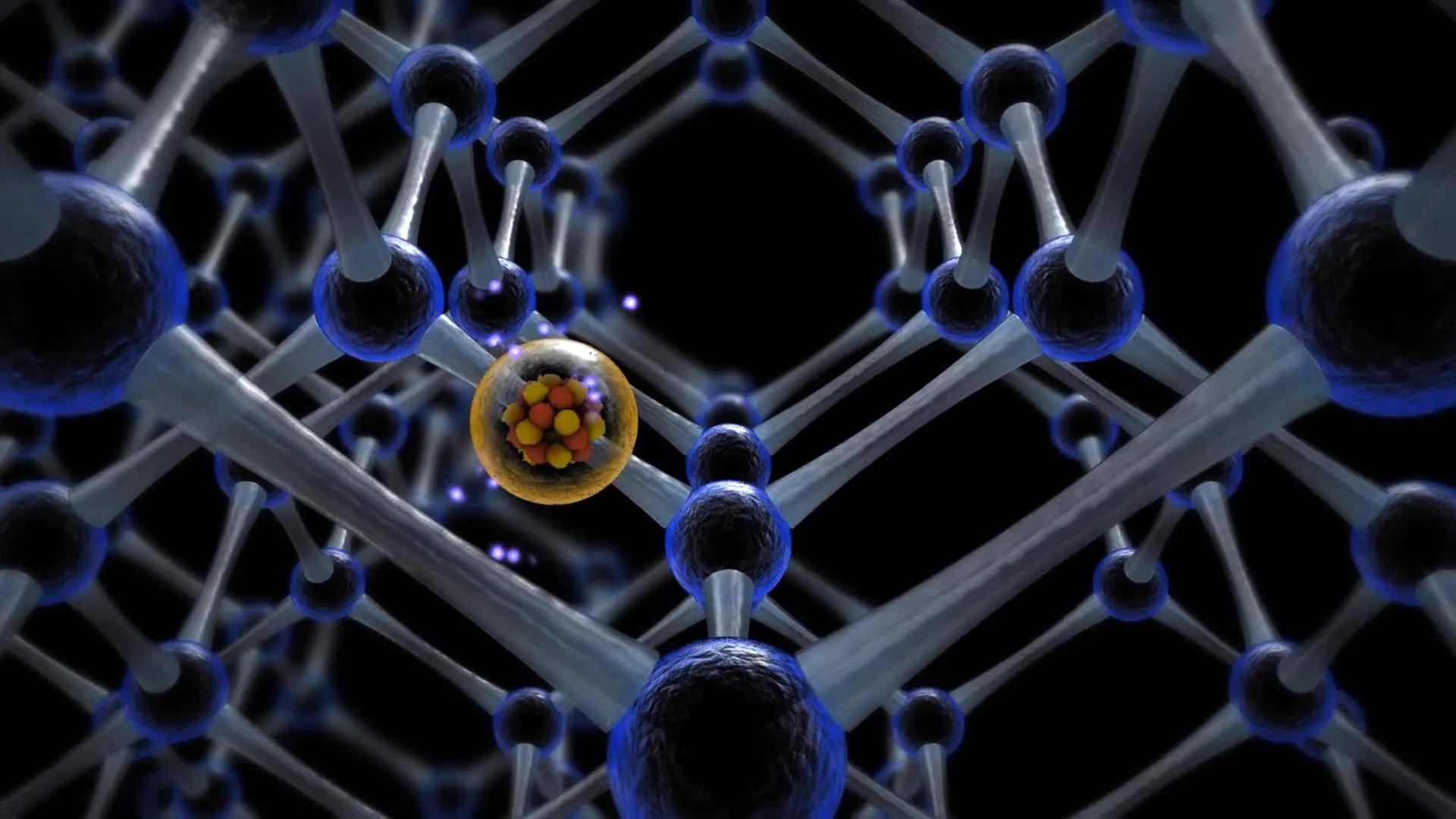
The fundamental building blocks of quantum networking are pairs of "entangled" particles. These particles are so intrinsically linked that a change to one instantaneously influences the other, regardless of the distance separating them. The ability to harness this profound quantum phenomenon could revolutionize computing by enabling quantum computers to interlink and consolidate their formidable processing power. This synergy promises to accelerate advancements in fields such as artificial intelligence, leading to faster and more energy-efficient algorithms, and to unlock the design of novel drugs and materials that currently lie beyond the capabilities of even the most powerful supercomputers.
The Penn team’s work represents a critical juncture, as it is the first to demonstrate, on a live commercial fiber network, that a single chip can not only transmit quantum signals but also autonomously compensate for noise, elegantly package quantum and classical data into standard internet-style packets, and accurately route them using the established addressing systems and management tools that govern today’s connected world. Professor Liang Feng, a senior author of the Science paper and a luminary in Materials Science and Engineering (MSE) and Electrical and Systems Engineering (ESE) at Penn, articulated the significance of this breakthrough: "By showing an integrated chip can manage quantum signals on a live commercial network like Verizon’s, and do so using the same protocols that run the classical internet, we’ve taken a key step toward larger-scale experiments and a practical quantum internet."
Navigating the Labyrinth: The Intricacies of Scaling the Quantum Internet
The concept of quantum entanglement, famously illustrated by Erwin Schrödinger’s thought experiment involving a cat in a box, highlights the counterintuitive nature of quantum mechanics. The paradox of the cat being simultaneously alive and dead until observed underscores the fact that quantum particles exist in a state of superposition, and the act of measurement collapses this delicate state. This inherent fragility makes the scaling of quantum networks a formidable challenge.
Robert Broberg, a doctoral student in ESE and a coauthor of the paper, explained the fundamental difference in data handling: "Normal networks measure data to guide it towards the ultimate destination. With purely quantum networks, you can’t do that, because measuring the particles destroys the quantum state." This inability to simply "peek" at quantum information without altering it necessitates entirely new strategies for routing and management.
The Art of Coordination: Harmonizing Classical and Quantum Signals
To circumvent the measurement problem, the Penn researchers engineered the "Q-Chip," an acronym for "Quantum-Classical Hybrid Internet by Photonics." This innovative chip is designed to orchestrate the interaction between classical signals, which are essentially streams of conventional light, and the fragile quantum particles. Yichi Zhang, a doctoral student in MSE and the paper’s first author, described their ingenious solution: "The classical signal travels just ahead of the quantum signal. That allows us to measure the classical signal for routing, while leaving the quantum signal intact."
This elegant pairing can be visualized as a sophisticated railway system. The classical signal acts as the locomotive, providing the necessary information for navigation, while the quantum information is carried safely within sealed carriages, shielded from direct observation. "The classical ‘header’ acts like the train’s engine, while the quantum information rides behind in sealed containers," Zhang elaborated. "You can’t open the containers without destroying what’s inside, but the engine ensures the whole train gets where it needs to go."
The critical advantage of this "header" approach is its compatibility with the existing internet infrastructure. Because the classical header can be measured and interpreted, the entire system can operate under the same "IP" or "Internet Protocol" that governs the flow of data across the global internet today. Zhang emphasized this crucial point: "By embedding quantum information in the familiar IP framework, we showed that a quantum internet could literally speak the same language as the classical one. That compatibility is key to scaling using existing infrastructure."
Bridging the Gap: Adapting Quantum Technology to the Real World
A significant hurdle in transmitting quantum particles over commercial infrastructure is the inherent variability of real-world transmission lines. Unlike the pristine conditions of a laboratory, commercial networks are subjected to a multitude of environmental disturbances. Fluctuations in temperature due to weather, vibrations from urban construction and transportation, and even seismic activity can all introduce noise and instability that are detrimental to delicate quantum signals.
The Penn researchers addressed this challenge with a sophisticated error-correction method that leverages the symbiotic relationship between the classical header and the quantum signal. Professor Feng explained: "Because we can measure the classical signal without damaging the quantum one, we can infer what corrections need to be made to the quantum signal without ever measuring it, preserving the quantum state." This clever technique allows the system to adapt to and counteract the disruptions encountered in a live network.
In their rigorous testing, the system consistently achieved transmission fidelities exceeding 97%. This impressive performance demonstrates its capacity to overcome the noise and instability that typically degrade quantum signals when they venture outside controlled laboratory settings. Furthermore, the Q-chip’s fabrication process utilizes silicon and established manufacturing techniques, paving the way for mass production and facile scalability of this new approach. Feng highlighted the potential for expansion: "Our network has just one server and one node, connecting two buildings, with about a kilometer of fiber-optic cable installed by Verizon between them. But all you need to do to expand the network is fabricate more chips and connect them to Philadelphia’s existing fiber-optic cables."
Gazing into the Horizon: The Promising Future of the Quantum Internet
One of the primary obstacles to expanding quantum networks beyond metropolitan areas is the current inability to amplify quantum signals without compromising their entanglement. While some research efforts have successfully transmitted "quantum keys" – used for ultra-secure communication – over long distances via ordinary fiber, these systems rely on weak coherent light to generate random numbers. While highly effective for security applications, this method is not sufficient for linking actual quantum processors.
Overcoming this amplification challenge will necessitate the development of novel hardware. However, the Penn study provides an indispensable foundational step. By demonstrating that a chip can effectively manage quantum signals over existing commercial fiber, utilizing internet-style packet routing, dynamic switching, and on-chip error mitigation that aligns with contemporary network protocols, they have laid crucial groundwork for future advancements.
Broberg drew a compelling parallel to the nascent stages of the classical internet: "This feels like the early days of the classical internet in the 1990s, when universities first connected their networks. That opened the door to transformations no one could have predicted. A quantum internet has the same potential." This sentiment underscores the profound and potentially unpredictable societal and technological transformations that a fully realized quantum internet could usher in.
This groundbreaking research was made possible through the dedicated efforts of the University of Pennsylvania School of Engineering and Applied Science, with generous support from the Gordon and Betty Moore Foundation, the Office of Naval Research, the National Science Foundation, the Olga and Alberico Pompa endowed professorship, and a PSC-CUNY award. Additional invaluable contributions were made by co-authors Alan Zhu, Gushi Li, and Jonathan Smith from the University of Pennsylvania, and Li Ge from the City University of New York.