Faris Adani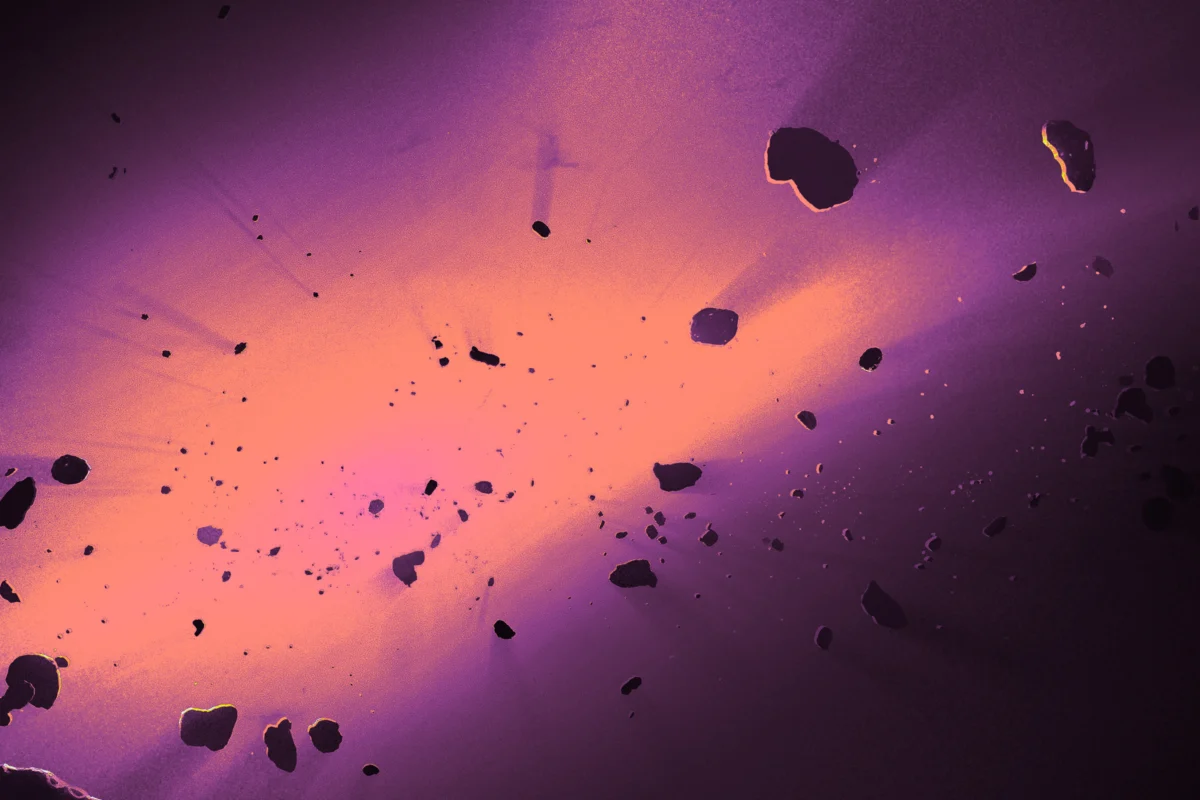
A captivating astronomical discovery has revealed that our planet is presently traversing a previously uncharted field of cosmic debris, originating from an elusive asteroid that is shedding hundreds of fragments into space. This phenomenon promises a spectacular display of shooting stars as these small, metallic, and rocky bits encounter Earth’s atmosphere, igniting into brilliant streaks of light. The groundbreaking findings were published last month in The Astrophysical Journal by NASA postdoctoral fellow Patrick Shober, whose meticulous analysis of vast datasets from observatories spanning California, Canada, Japan, and Europe unveiled this celestial secret.
Shober’s research, further elaborated in an insightful essay for The Conversation, focuses on the intricate world of asteroids, particularly those that evade conventional telescopic detection due to their diminutive size and elusive trajectories. A primary goal of his work is to demystify how these cosmic bodies contribute to the meteoric events we witness, which are essentially fragments of rock or dust that superheat and glow intensely upon frictionally interacting with Earth’s atmospheric gases. This detailed investigation sheds new light on the origins of such phenomena, pushing the boundaries of our understanding of solar system dynamics and the myriad objects within it.
Historically, many meteor showers are understood to originate from comets. As these icy wanderers approach the Sun, the increasing solar radiation causes their frozen components to sublimate, releasing vast quantities of gas and dust that form their iconic tails. This expelled material, when intercepted by Earth’s orbital path, manifests as dazzling displays of shooting stars. However, asteroids also play a significant role in generating meteors, with notable examples like asteroid 3200 Phaethon. Measuring an impressive 3.6 miles in diameter, Phaethon is the parent body responsible for the annual Geminids meteor shower, a truly awe-inspiring celestial event that graces our skies every December. Such large objects are relatively straightforward to track and study using existing telescopic instruments.
Shober’s pioneering work, however, was aimed at identifying the origins of meteors from much smaller, less detectable asteroids. His methodology involved an exhaustive examination of an immense sample comprising 235,271 meteors and fireballs. Employing sophisticated computational tools, he meticulously searched for statistical groupings or shared characteristics among these meteoric events, indicative of a common celestial source. This data-driven approach allowed him to trace back the trajectories and properties of countless atmospheric entry events, searching for the cosmic needle in the haystack that would reveal an unknown parent body.
Through this rigorous analysis, Shober successfully identified a distinct cluster of 282 meteors. The convergence of their orbital characteristics and atmospheric entry parameters strongly suggested a shared point of origin: a small, previously uncataloged asteroid that is actively disintegrating as it makes its close approaches to the Sun. This fragmentation process creates a vast "cosmic junkyard" – a stream of debris – through which our planet now regularly journeys. The implications of an asteroid actively breaking up due to solar proximity are profound, offering new insights into the life cycles of these rocky bodies and the various forces that shape them over cosmic timescales.
The significance of this discovery extends beyond mere celestial observation. As Shober articulated in The Conversation, "Each meteor shower we observe occurs when Earth passes through one of these debris streams. So if astronomers can detect meteor showers, they can also be used to find active objects in space." This statement underscores a powerful new paradigm in astronomical detection: using the observable effects of debris (meteor showers) as indirect indicators of otherwise undetectable parent bodies. This method could prove invaluable in identifying small, dark asteroids that pose potential, albeit rare, impact risks, or simply contribute to our comprehensive inventory of Near-Earth Objects (NEOs).
The identified parent asteroid, though still "elusive" in terms of direct telescopic observation, is inferred to be undergoing a process of thermal stress-induced fragmentation. Unlike comets, which shed material through sublimation, asteroids are typically thought to be more stable. However, intense and repeated heating cycles as they orbit close to the Sun can cause thermal fracturing, leading to the gradual shedding of material. Alternatively, subtle rotational forces, amplified by solar radiation pressure (the YORP effect), could also contribute to the breakup of weakly bound rubble-pile asteroids. This new discovery provides tangible evidence of such processes occurring, further enriching our understanding of asteroid evolution and the various mechanisms by which they lose mass and generate debris.
The global network of observatories utilized in Shober’s research – encompassing facilities in California, Canada, Japan, and Europe – highlights the collaborative and data-intensive nature of modern astronomy. By pooling data from diverse geographical locations and leveraging advanced computational algorithms, scientists can achieve a level of detection sensitivity and analytical depth previously unimaginable. This infrastructure is critical for capturing transient phenomena like meteors, which occur unpredictably across the globe, and for reconstructing their precise trajectories and origins. The 282 meteors identified represent a significant statistical sample, providing robust evidence for the existence of this new debris stream and its parent body.
Looking ahead, this discovery opens several avenues for future research. Astronomers will undoubtedly intensify efforts to directly observe the elusive parent asteroid, perhaps using specialized telescopes or advanced radar techniques. Further analysis of the meteor cluster’s characteristics – such as the composition of the fragments, their velocity, and the precise timing of the shower – could yield more clues about the parent body’s physical properties and orbital dynamics. Understanding the rate at which this asteroid is shedding material could also provide insights into its remaining lifespan and its long-term contribution to the solar system’s dust and debris environment.
Ultimately, this finding is a testament to the ongoing quest to unravel the mysteries of our solar system. Every streak of light across the night sky tells a story, and thanks to dedicated astronomers like Patrick Shober and the power of modern data analysis, we are learning to read these cosmic narratives with ever-increasing clarity. The knowledge gained from such discoveries not only enhances our appreciation for the celestial ballet above but also contributes vital information to the broader scientific endeavor of understanding the origins and evolution of planetary systems, including our own. The next time you gaze up at a shooting star, remember that it might be a fragment from a newly discovered cosmic junkyard, a silent messenger from an elusive asteroid, revealing yet another fascinating facet of our dynamic universe.