Faris Adani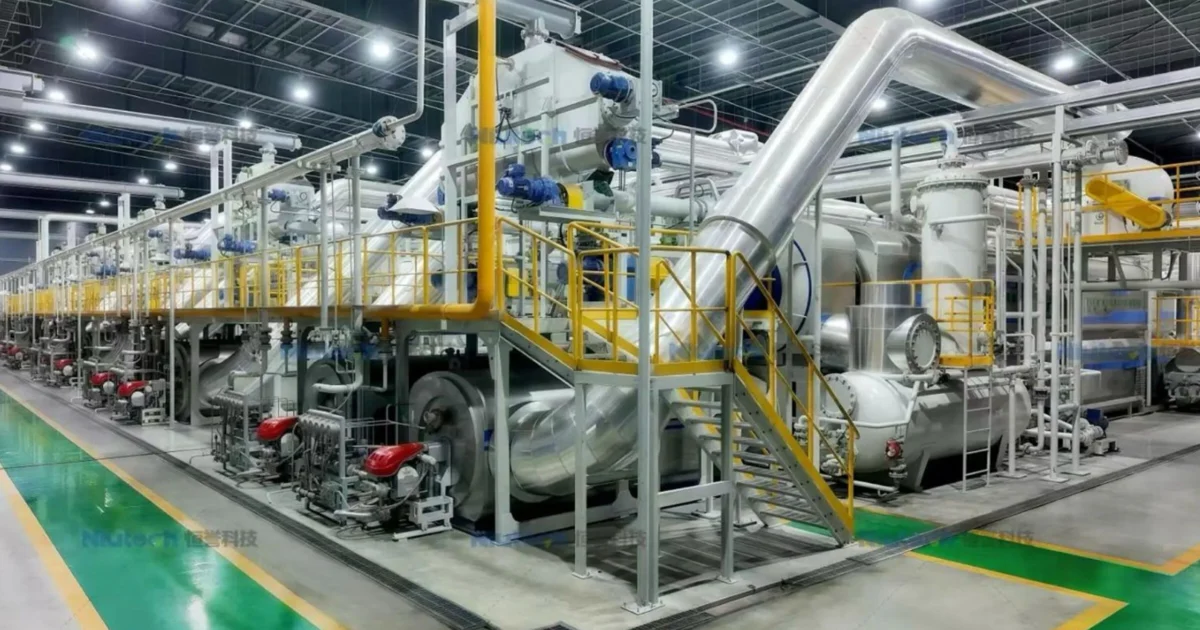
China Installing Huge Facility That Turns Plastic Waste Into Jet Fuel
In a landmark move poised to revolutionize both waste management and sustainable aviation, Chinese technology firm Niutech has announced a significant agreement with an undisclosed “global energy major” to construct an industrial-scale facility dedicated to converting plastic waste into sustainable aviation fuel (SAF). This ambitious project, leveraging Niutech’s advanced pyrolysis technology, aims to produce between 10,000 and 50,000 tons of plastic-derived jet fuel annually, marking a pivotal step towards mitigating the global plastic crisis while simultaneously addressing the burgeoning demand for cleaner aviation fuel alternatives.
The global aviation industry faces immense pressure to decarbonize, driven by escalating environmental concerns and stringent regulatory mandates. The European Union, a bellwether for climate policy, has already set a target requiring a minimum 6 percent SAF blend by 2030, with an aggressive climb to 70 percent by 2050. Similar policies are rapidly being adopted across major economies, including the United Kingdom, Singapore, Japan, and Brazil, all aiming to reduce the aviation sector’s heavy reliance on traditional petroleum-based jet fuel and its associated carbon emissions. This global push creates an unprecedented market for SAF, pushing innovators to explore diverse and scalable feedstocks.
Historically, SAF has primarily been sourced from readily available waste byproducts such as plant material, animal fats, and, most notably, used cooking oil (UCO). Indeed, UCO has emerged as a significant contributor to existing SAF supplies, with nations like Japan intensifying efforts to secure this valuable resource. However, the enthusiasm for UCO as a primary SAF feedstock is rapidly encountering a ceiling. The supply of spent fry oil is inherently finite, and as refiners worldwide scramble to secure this “gloop,” the flow is already slowing to a trickle, indicating that current sources alone cannot meet the projected exponential growth in SAF demand. This impending supply crunch underscores the critical need for alternative, abundant, and scalable feedstocks.
Enter Niutech Technology Group, a company with nearly four decades of expertise in pyrolysis. Their recently announced contract signifies a strategic pivot towards addressing the dual challenges of plastic pollution and SAF scarcity. The core of Niutech’s solution is an “industrial continuous waste plastic pyrolysis production line.” Pyrolysis is a thermal decomposition process wherein organic materials, such as plastics, are heated to exceptionally high temperatures in an oxygen-free environment. This process breaks down complex hydrocarbon polymers into simpler molecules, yielding liquid oil (pyrolysis oil), combustible gases, and solid char. The pyrolysis oil can then be refined into various fuels, including jet fuel.
While pyrolysis itself is not a nascent technology, its application on an industrial scale for plastics-to-jet-fuel conversion remains a niche within the broader advanced plastics recycling sector. The transition from small-scale eco-startups to a widely accepted industrial standard is a significant hurdle that Niutech aims to overcome. Their project, distinguished by its massive scale and integrated approach, represents a substantial leap forward in achieving this goal. By bringing the entire production line “under one roof,” Niutech seeks to drastically reduce the logistical complexities and prohibitive costs typically associated with transporting waste materials and intermediate products across multiple facilities. This streamlined operation is crucial for economic viability and scalability.
One of the most compelling aspects of Niutech’s proposed refinery is its ability to process a diverse “smorgasbord of plastics.” The facility is designed to handle various types of plastic waste, including polyethylene (PE), nylon, polypropylene (PP), and acrylonitrile butadiene styrene (ABS). Crucially, this can be achieved “without complex pre-treatment such as washing, sorting, or drying.” This feature represents a monumental advantage in the notoriously challenging field of plastic recycling. Traditional mechanical recycling processes often require meticulous sorting and cleaning, which are labor-intensive, costly, and limit the types and quality of plastics that can be processed. By circumventing these complex pre-treatment steps, Niutech’s approach promises to significantly streamline the conversion of mixed plastic waste into refinable oil, making a much broader range of discarded plastics viable for fuel production.
The sheer volume of plastic waste generated globally presents both an environmental catastrophe and a potential goldmine for energy recovery. Millions of tons of plastic end up in landfills or polluting oceans annually, persisting for hundreds of years. Developing technologies that can efficiently convert this persistent waste into valuable resources, particularly high-demand products like jet fuel, offers a compelling dual solution. It not only addresses the problem of waste accumulation but also contributes to a circular economy model, reducing reliance on virgin fossil fuels and potentially lowering the carbon footprint of aviation.
However, the journey of advanced recycling technologies like pyrolysis is not without its complexities and considerations. A critical aspect is the overall energy efficiency of the process; heating plastics to extreme temperatures requires significant energy input. Furthermore, a comprehensive lifecycle assessment is essential to determine the true environmental benefits, accounting for emissions from energy consumption, transportation of waste, and the processing of byproducts. Pyrolysis also produces gases and solid char alongside the oil. The responsible management and potential beneficial utilization of these byproducts (e.g., using pyrolysis gas for process heat, or char as an activated carbon or soil amendment) are vital for the sustainability of the entire operation.
Despite these considerations, Niutech’s long-standing dedication to pyrolysis technology, evidenced by its “nearly 40 years” of experience, positions it as a credible player in this emerging field. The company’s spokesperson affirmed that “large-scale pyrolysis projects impose stringent requirements on continuous operational capability,” and highlighted Niutech’s “mature equipment and extensive project experience” as key differentiators. This partnership, therefore, serves as a powerful validation of their industrial continuous technology and its readiness for commercial deployment at a significant scale.
Should Niutech and its anonymous industry partner successfully bring this system online, its impact could be profound. It would establish a robust and consistent source of plastics-based SAF for the global aviation industry, diversifying the feedstock portfolio beyond scarce bio-based options. More importantly, it would serve as a crucial role model for other refineries and energy companies worldwide, demonstrating the viability and potential of advanced recycling technologies to transform waste into high-value products. This could catalyze further investment and innovation in the sector, accelerating the transition towards a more sustainable and circular global economy. The development underscores China’s growing leadership in green technologies and its commitment to tackling complex environmental challenges with innovative industrial solutions.
As the world grapples with both an escalating plastic waste crisis and an urgent need for decarbonization, Niutech’s initiative offers a beacon of hope. By transforming an environmental liability into a vital resource, this facility could pave the way for a future where aviation is powered not by depleting fossil fuels, but by the very waste we struggle to manage, heralding a new era for sustainable travel and resource management. The success of this venture could fundamentally alter how industries perceive waste, shifting it from an end-of-life problem to a valuable input for the next generation of fuels.