
 Joko Widodo
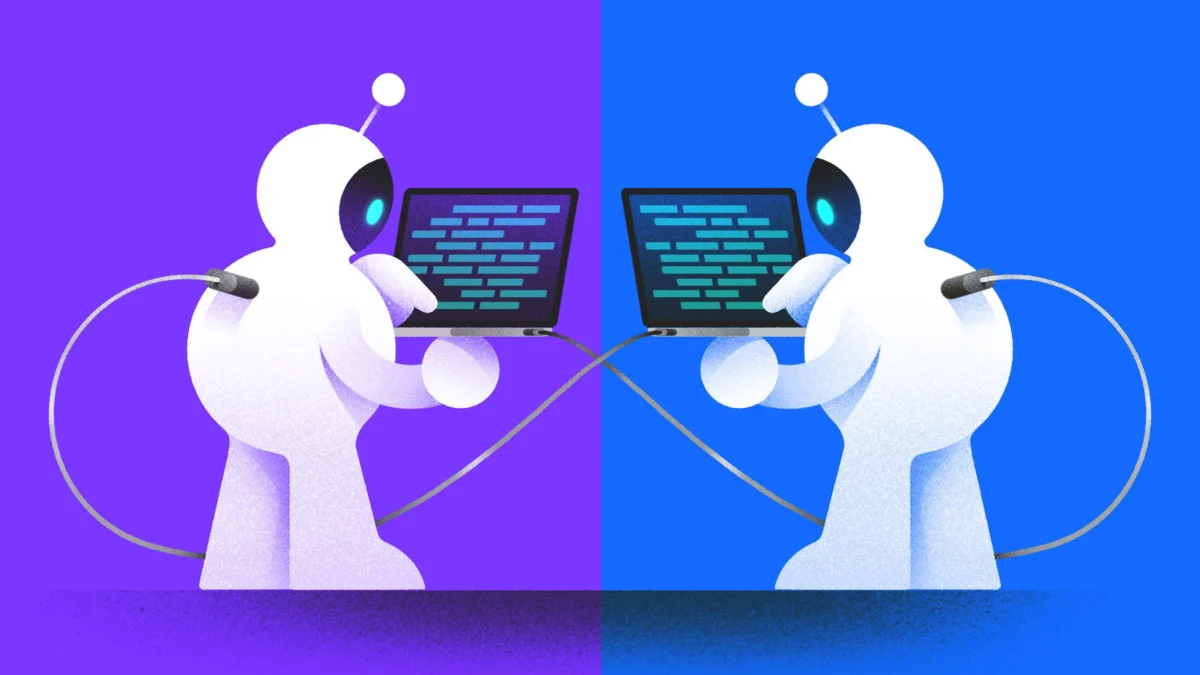
This alarming scenario is precisely what transpired in a recent federal trade secrets case, meticulously litigated by Seth Kugler, a partner at Grellas Shah LLP, in the U.S. District Court for the Northern District of California. Kugler’s client, a marketing agency, found itself facing an existential threat not from a traditional competitor, but from a former senior employee. This individual didn’t just pilfer client lists for direct solicitation; instead, he weaponized stolen trade secrets, using them as training inputs to construct an AI agent. The objective was clear: bypass years of skill development and industry experience, and instantly create a competing business capable of providing similar services. This audacious move underscores a new reality for founders and established companies alike, exposing novel risks related to AI and trade secrets, the pervasive use of personal devices, and the urgent necessity for robust protective measures in the era of agentic AI.
The core of this challenge lies in the transformative power of AI. Traditional trade secret misappropriation often involved the physical transfer of tangible data. An employee copied a document, stole a formula, or downloaded a database. While damaging, such acts left a clear trail and often allowed for the possibility of remediation – deleting the stolen files, returning the physical property. AI, however, introduces a layer of complexity that renders such simple solutions obsolete.
AI Contamination Cannot Be Undone: A Permanent Digital Imprint
One of the most critical lessons from Kugler’s case is the irreversible nature of AI contamination. The defense argued that merely placing the stolen documents in a "quarantine folder" and refraining from poaching clients meant no harm had been done. This argument, however, failed to grasp the fundamental shift brought about by AI. The court, recognizing the profound implications, appropriately deemed the "quarantine folder" grossly insufficient, granting a temporary restraining order and preliminary injunction, and characterizing the competing AI agent as an "existential threat."
Once a trade secret is used to develop a machine learning model or train an AI agent with recursive capabilities, it doesn’t just reside within a folder; it becomes an integral part of the AI’s learned intelligence. The proprietary information is absorbed, processed, and embedded within the model’s architecture, influencing its algorithms, decision-making processes, and output. It’s akin to baking an ingredient into a cake – you can’t simply remove it once it’s integrated. Even if the raw source files are meticulously scrubbed or deleted, the AI model has already learned from that data. Defendants will face an almost insurmountable challenge proving to courts that the AI isn’t operating in a certain way precisely because it once had access to that proprietary information. The knowledge derived from the trade secret is now intrinsically woven into the AI’s very fabric, creating a permanent, indelible digital imprint. This makes traditional remedies like "return of property" or "deletion of files" largely ineffective, necessitating a re-evaluation of legal strategies for intellectual property protection.
Personal Devices: Unseen Gateways to IP Leakage
The proliferation of personal devices in the workplace, often under Bring Your Own Device (BYOD) policies, adds another layer of vulnerability. While startups frequently scale with employees working on personal devices, governed by standard Confidential Information and Invention Assignment Agreements (CIAs), the advent of consumer-grade AI agents introduces a significant, often inadvertent, risk.
Unlike standard web interfaces that require explicit uploads, a desktop AI agent can silently scan files, index directory paths, and ingest data across a local hard drive, frequently without requiring special user permission or even alerting the user to its actions. An employee might innocently use an AI tool on their personal laptop for tasks like summarizing internal documents, generating code snippets, or analyzing market data – all of which could inadvertently expose confidential company information to the AI model. If the settings of these consumer AI agents allow for model training from this ingested data, thousands of employees could unknowingly be violating confidentiality agreements. Over time, courts may rule that these trade secrets have lost their legal protection due to widespread, albeit unintentional, dissemination outside the company’s control, undermining years of diligent IP protection efforts. The line between personal and professional data on a single device becomes dangerously blurred when AI is involved.
Standard IT Audits Are Obsolete in the AI Era

This recent case serves as a stark warning: traditional digital discovery and IT audit practices are no longer sufficient for trade secret investigations. AI tools make it effortless to disperse, alter, and recreate data across nonobvious folder paths and within complex data structures. The days of simply looking for copied files or logging network traffic are behind us.
Actions that previously seemed like overkill – such as full forensic imaging of a personal device – are now the bare minimum. Furthermore, AI dramatically reduces the friction of reverse-engineering software and tech products. An AI trained on proprietary code could generate functionally identical code without directly copying a single line, potentially removing telltale signs of direct infringement. Proving theft in AI contexts demands intensive, highly technical expert analysis, involving specialized AI forensics, model introspection, and complex data lineage tracking. This carries far more uncertainty and requires a deeper understanding of AI’s internal workings than traditional IP litigation. Identifying the source of information when an AI has transformed, synthesized, and re-presented it becomes a monumental challenge, pushing the boundaries of legal and technical investigation.
Three Practical Steps Companies Must Take
Founders and established companies alike must proactively modernize their legal and operational strategies to protect their businesses from AI-driven trade secret threats.
-
Strengthen Policies and Training for the AI Age: Companies must revise existing Confidential Information and Invention Assignment Agreements (CIAs) and Non-Disclosure Agreements (NDAs) to explicitly address AI use. These agreements should clearly define acceptable and unacceptable uses of AI, particularly regarding the input of proprietary information into public or consumer-grade AI models. Clear policies on the use of personal devices for work and the installation of AI agents should be established. Mandatory and regular employee training is crucial, educating staff on the risks of AI, responsible AI usage, and the implications of inadvertently exposing trade secrets. Fostering a strong "culture of security" around AI, emphasizing that every employee is a custodian of company IP, is paramount. This includes guidelines on approved enterprise AI tools versus public AI platforms, and strict protocols for handling sensitive data.
-
Implement AI-Aware Technical Controls and Data Governance: Robust data loss prevention (DLP) systems must be updated to detect and prevent the ingress of sensitive data into AI models, both on company and personal devices. Companies should explore and implement enterprise-grade AI solutions that offer built-in security features, audit trails, and strict data privacy controls, ensuring that proprietary data remains within the company’s ecosystem. Implementing strict access controls based on the principle of least privilege for sensitive data, ensuring only necessary personnel can access critical information, is more vital than ever. For companies developing their own AI models, regular audits of model inputs and outputs are essential to prevent internal contamination or accidental leakage. Advanced techniques, such as data watermarking or even strategic "data poisoning" (though with careful legal consideration), might be explored to make proprietary data less useful or identifiable if misappropriated.
-
Enhance Legal Preparedness and Rapid Response Protocols: Companies need to develop comprehensive incident response plans specifically tailored for AI-related trade secret breaches. Given the speed at which AI can cause irreversible damage, immediate legal action – such as seeking Temporary Restraining Orders (TROs) and preliminary injunctions – is critical. Waiting until financial losses are evident is no longer an option, as feeding trade secrets into AI poses an existential threat from day one. Engaging specialized legal counsel with deep expertise in both AI and trade secret litigation is indispensable. Furthermore, companies must ensure their IT infrastructure is "forensically ready," capable of preserving and collecting relevant data (including AI model artifacts, prompt histories, and system logs) that might be crucial for AI investigations.
If an employee is suspected of having absconded with data or misused it in an AI tool, the very first step must be immediate: cut off all system access and retain specialized legal counsel. The speed of AI’s impact means that proactive vigilance and rapid response are the only effective defenses.
AI bestows upon individuals an unprecedented ability to compete in specialized domains where they lack the traditional experience and expertise, making proprietary data more vulnerable than ever before. Modernizing security, policy, and legal strategies to effectively address today’s sophisticated AI threats is not merely an option, but a critical imperative for both startups and established companies seeking to avoid catastrophic exposure and protect their competitive edge in this rapidly evolving digital landscape. The future of trade secret protection hinges on how quickly and effectively businesses adapt to the age of artificial intelligence.