isnaini azizah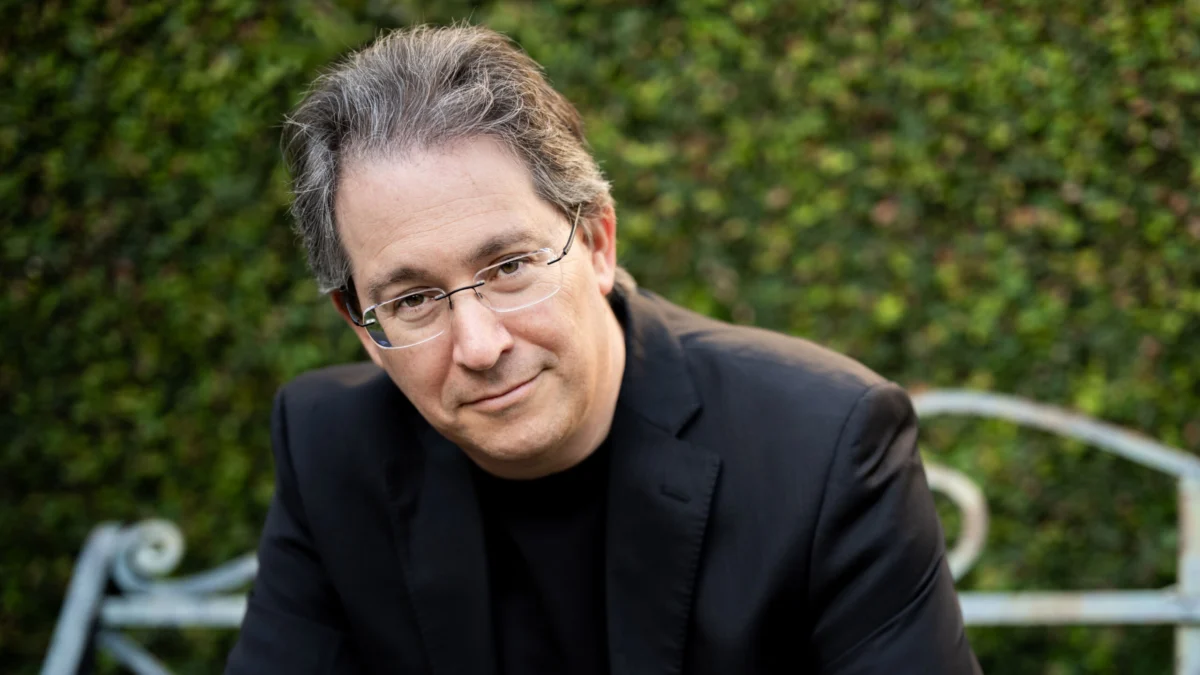
Uri Maoz, a distinguished professor at Chapman University, embarked on his doctoral journey with a passion for human research, delving into the intricate mechanisms of computational neuroscience. His early work focused on the brain’s command over arm movements and how our gray matter processes this kinesthetic feedback. This foundational expertise, however, was merely a prelude to a profound intellectual quest that would redefine his research trajectory and significantly impact the debate surrounding free will. The pivotal moment arrived when his professor tasked him with delivering an undergraduate lecture. To Maoz’s surprise, he was granted complete autonomy, a stark contrast to his expectation of receiving explicit guidance or pre-prepared materials. The vast expanse of neuroscience was open to him, from the cutting-edge field of human brain augmentation and cybernetics to more traditional areas. Yet, it was not the allure of futuristic cyborgs that captured his imagination. Instead, a question that had been simmering since his early twenties, sparked by an article suggesting a potential absence of genuine free will, resurfaced with compelling urgency: "What neuroscience has to say about the question of free will!" This fundamental inquiry, concerning how—or even if—humans make decisions, gnawed at him. It led to a cascade of introspective questions: Did he even have a choice in reading that initial article? How could he ever ascertain his responsibility for his life’s choices, or was it all merely an illusion of control?
This profound contemplation marked a point of no return for Maoz. While he completed his PhD in human movement, his intellectual curiosity propelled him further up the neural hierarchy, seeking to understand the transformation of desires and beliefs into actions. This journey encompasses everything from the simple act of raising an arm to the complex decision of asking someone out on a date. Today, Uri Maoz stands at the forefront of scientific and philosophical efforts to unravel this intricate neural pathway, often referred to as the "decision-making chain." His groundbreaking research has not only challenged and reinterpreted established neuroscience studies but has also forged a vital bridge between the empirical rigor of science and the speculative depths of philosophy, specifically concerning the enigma of free will. More than anything, Maoz has succeeded in unearthing novel complexities and nuances within this age-old debate.
The concept of free will, while intuitively straightforward, lacks a universally agreed-upon definition. A common understanding posits it as the capacity to make independent decisions and engage in purposeful actions, thereby asserting control over one’s life. However, physicists introduce a layer of complexity by questioning the deterministic nature of the universe, where events unfold according to a predetermined sequence, and whether genuine human choice can exist within such a framework. Maoz, however, frames his research within the domain of neuroscience, asserting that while the question of universal determinism is a philosophical one, neuroscientists are uniquely positioned to investigate the neural processes that occur when individuals make decisions. "And that’s what we’re trying to do: to understand how our wishes, desires, beliefs, turn into actions," he explains.
By the time Maoz concluded his PhD in 2008, decades of neuroscientific inquiry into the free will question had already transpired. A landmark study from the 1960s identified a neural phenomenon known as the "readiness potential"—an electrical signal in the brain that precedes voluntary movements, even those seemingly initiated spontaneously. Building upon this discovery, neuroscientist Benjamin Libet conducted a series of experiments in the 1980s that would profoundly influence Maoz’s own thinking. These experiments, widely interpreted for many years as evidence against free will, involved participants observing a clock with a rotating dot. They were instructed to flick their wrist whenever they felt the urge to do so and to note the position of the dot at the precise moment they became aware of this urge. Libet’s findings revealed that the readiness potential consistently appeared not only before the physical movement but also before the participants reported experiencing the conscious urge to move. This led to the interpretation that the brain initiates actions unconsciously, with conscious awareness of the decision lagging behind.
Subsequent studies have corroborated Libet’s observations, further demonstrating that the readiness potential can emerge one to two seconds, and in some fMRI studies, up to ten seconds, prior to the conscious reporting of a decision. This has led some to liken our conscious experience to that of a passenger in a self-driving car, where the underlying biological machinery steers our actions, and our conscious mind simply takes credit for the outcome. Maoz himself initially explored variations of Libet’s experiments, leveraging his work with epilepsy patients who had electrodes implanted in their brains for clinical monitoring. This allowed him to predict hand movements with remarkable accuracy, even before the patients themselves consciously registered their intent.
However, a nagging inconsistency in these Libet-inspired studies began to trouble Maoz. He observed that the experiments primarily focused on entirely arbitrary decisions, such as "raise your hand whenever you feel like it," devoid of any underlying reason or consequence. Maoz recognized that these trivial choices were fundamentally different from significant life decisions, like ending a relationship. He posited that the readiness potential, as observed in laboratory settings, might not be a universal indicator of pre-conscious decision-making, particularly when applied to choices with substantial emotional and existential weight. The field, he argued, was neglecting the examination of meaningful decisions—those that truly shape the course of our lives.
To address this limitation, Maoz began to collaborate with philosophers, seeking their expertise to refine his research methodology. These collaborations were instrumental in disentangling the subtle semantic distinctions between related concepts such as intention, desire, and urge. While neuroscientists often grouped these terms, philosophers meticulously differentiated them: desire represents a want that may or may not lead to action; urge implies immediacy and compulsion; and intention signifies a commitment to a plan. Maoz’s research has increasingly focused on the nature of intention, extending even to the burgeoning field of artificial intelligence and its potential for intent.
In 2017, Maoz organized the first in a series of conferences dedicated to the free will debate, attracting a diverse group of philosophers passionate about autonomy. During the opening remarks, he humorously acknowledged the attendees’ presence with a wry "Thank you so much for coming… As if you had a choice." This anecdote highlights Maoz’s characteristic blend of intellectual seriousness and playful wit. During one excursion on a lake, a dark joke about the entire field perishing if the boat sank humorously underscored the collective dedication of these researchers. Instead of existential dread, this remark spurred Maoz to envision a collaborative research grant, capitalizing on the convergence of so many leading minds. Liad Mudrik, a neuroscientist at Tel Aviv University and a frequent collaborator, attests to Maoz’s exceptional ability to identify the next crucial step and bring it to fruition. Aaron Schurger, a colleague at Chapman University and co-director of the Laboratory for Understanding Consciousness, Intentions, and Decision-Making (LUCID), echoes this sentiment, emphasizing Maoz’s unique position at the nexus of this field due to his talent for uniting individuals around profound ideas.
Maoz has recently achieved significant breakthroughs in distinguishing between trivial and consequential decisions in the brain. Collaborating with Mudrik, he has meticulously analyzed the neural differences between "picking" (arbitrary choices) and "choosing" (life-altering, emotionally charged decisions). Their research has challenged the ubiquitous finding of the readiness potential preceding choices. In a 2019 study, Maoz and his team measured brain activity as participants made a real-money decision to donate $1,000 to one of two nonprofits. This was compared to a scenario where participants randomly pressed a key to donate $500 to each. The readiness potential was observed in the arbitrary donation scenario but was absent when participants made the significant $1,000 choice. Their conclusion: Libet’s findings do not extend to important decisions, suggesting that the readiness potential might not, in fact, be a precursor to conscious decision-making. Mudrik notes that had Libet focused on deliberate decisions, "the entire debate about neuroscience proving free will to be an illusion would have been spared from us."
Maoz’s research has prompted a re-evaluation of Libet’s foundational work. Bianca Ivanof, a psychologist whose dissertation critically examined Libet’s methodologies, credits Maoz’s work with significantly enriching her own thought processes. She points out that variations in the design of the rotating-dot setup can lead to the identification of the readiness potential at different times, complicating the interpretation of results across studies.
Maoz continues to gather empirical data. In a recent experiment utilizing EEG, he measured brain signals as individuals prepared to press a spacebar. At random intervals, an audible tone interrupted their preparation, prompting them to report their intentions. He found no correlation between the readiness potential and their stated intention to press the key, suggesting that this potential does not reflect the accumulation of either conscious or unconscious plans. However, a distinct neural signal was detected in a different brain region when participants indicated they were preparing to move.
So, does this definitively resolve the question of free will? Maoz would likely respond with a nuanced, "Well, not exactly." He emphasizes that electrical impulses in the brain offer only a partial glimpse into our agency. The complexity and sometimes ambiguous nature of neural data, he suggests, might be the point. "I don’t think it is a yes-or-no question," Maoz asserts. He speculates that perhaps our less significant choices are indeed made with less conscious deliberation, while major decisions are governed by a different set of neural processes. It’s possible that we possess the conscious capacity to override an intended action, but only under specific neural conditions.
Maoz believes that neuroscientists alone cannot definitively determine the existence of free will. However, he argues that they can make significant progress in understanding how semantically distinct decision-making forces—desires, urges, intentions, wishes, and beliefs—manifest in our brains and translate into actions. "That is something that we are making progress on," he states, "and I think that that’s going to help us understand what we do control." Ultimately, this understanding may also offer a path toward reconciling ourselves with the aspects of our lives that lie beyond our conscious command.
Sarah Scoles is a freelance science journalist and author based in southern Colorado.