Imroatul Nasiyah
A newly developed superconducting quantum heat engine could deepen our understanding of thermodynamics while helping advance technologies needed for quantum computers with very large numbers of qubits. This groundbreaking achievement, pioneered by researchers at Aalto University, represents a significant stride in bridging the seemingly disparate realms of quantum mechanics and thermodynamics, with profound implications for both fundamental physics and cutting-edge technology. The experiment not only offers a clearer picture of how thermodynamic principles manifest at the quantum level but also provides a crucial proof of concept for components essential to the development of next-generation quantum computers, particularly those requiring an unprecedented number of qubits.
For decades, physicists have grappled with the question of how familiar thermodynamic laws, which govern macroscopic systems, behave when subjected to the peculiar rules of quantum mechanics. Phenomena such as quantum tunneling, where particles can pass through energy barriers that classical physics deems insurmountable, and entanglement, where particles become intrinsically linked regardless of distance, introduce a layer of complexity that challenges conventional thermodynamic understanding. Superposition, the ability of a quantum system to exist in multiple states simultaneously, further complicates the picture. The Aalto University team’s work directly addresses this by experimentally demonstrating a functional heat engine operating under these quantum conditions, allowing for a tangible exploration of these phenomena.
Conventional heat engines, from the venerable steam engine of James Watt to the internal combustion engines that power our modern world, operate by converting thermal energy into mechanical work. This fundamental principle underpins much of our technological infrastructure, driving transportation, generating electricity, and powering countless industrial processes. The challenge for quantum engineers has been to replicate this energy conversion process at the minuscule scale of quantum systems, where the very definition of "heat" and "work" becomes nuanced.
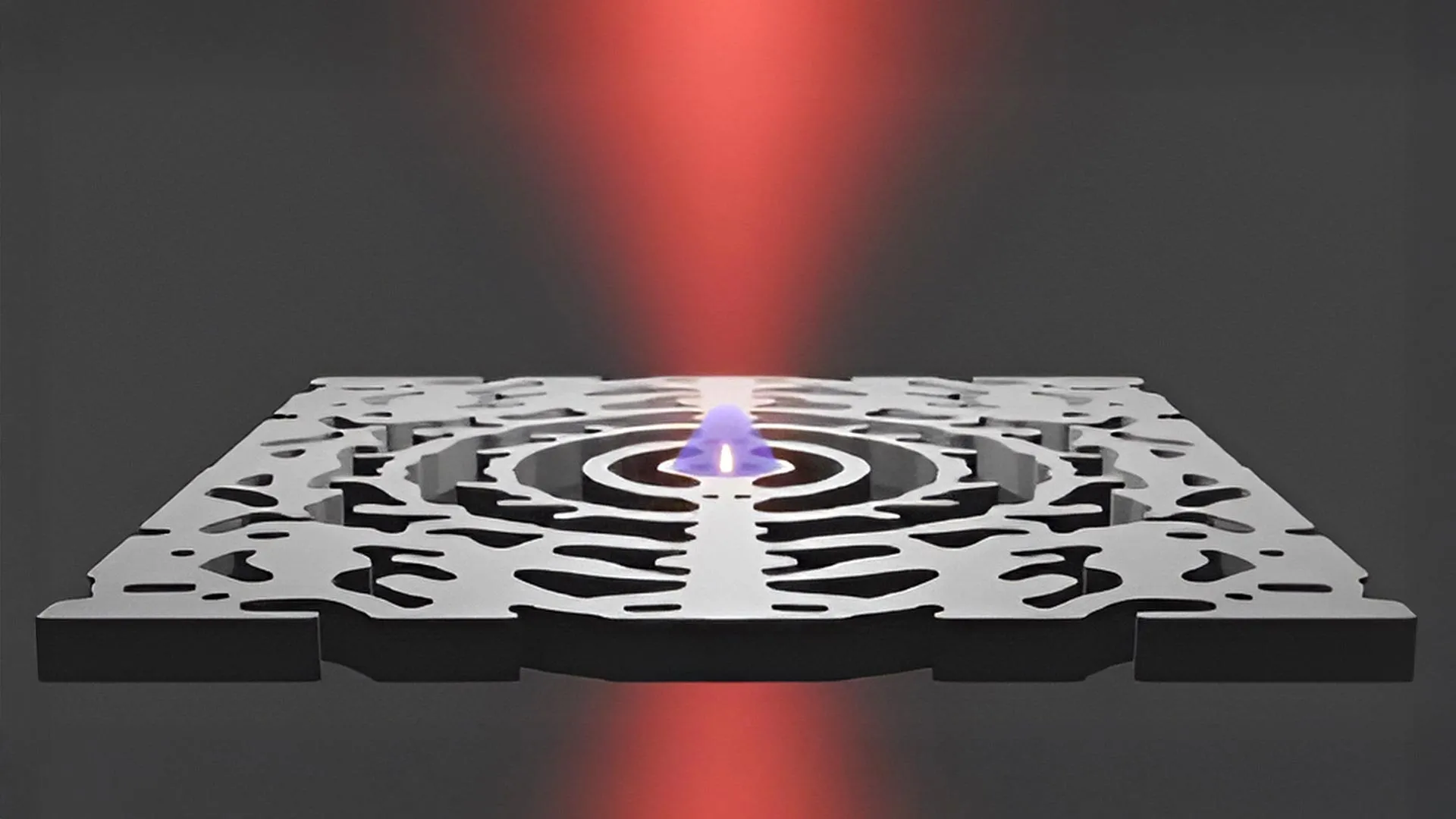
The Aalto University researchers have successfully created the world’s first superconducting quantum heat engine, an incredibly compact device meticulously engineered within a superconducting circuit. This ingenious system integrates three key quantum components: a transmon qubit, a superconducting resonator, and a quantum refrigerator. The transmon qubit acts as the core working element, analogous to the gas in a conventional engine. The resonator functions as a tunable energy reservoir, and the quantum refrigerator is a sophisticated device capable of precisely controlling heat flow at the quantum level.
Operating under extremely cold, ultracold quantum conditions – close to absolute zero – this quantum heat engine has demonstrated the remarkable ability to repeatedly generate positive work from minuscule amounts of available heat. This achievement of cyclic operation has been a long-standing objective for researchers in the field of quantum thermodynamics. The successful demonstration serves as a powerful validation for the concept of superconducting heat engines, offering a tangible pathway towards their integration into future quantum computing architectures.
The research, spearheaded by Academy Professor Mikko Möttönen and published in the prestigious journal Nature Communications, meticulously details the experimental setup and findings. The team’s innovative approach involved recreating an Otto cycle within the superconducting circuit. The Otto cycle, a thermodynamic process familiar from internal combustion engines, involves four distinct stages: intake, compression, power, and exhaust. By precisely orchestrating these stages at the quantum level, the researchers were able to observe and quantify the conversion of heat into usable work.
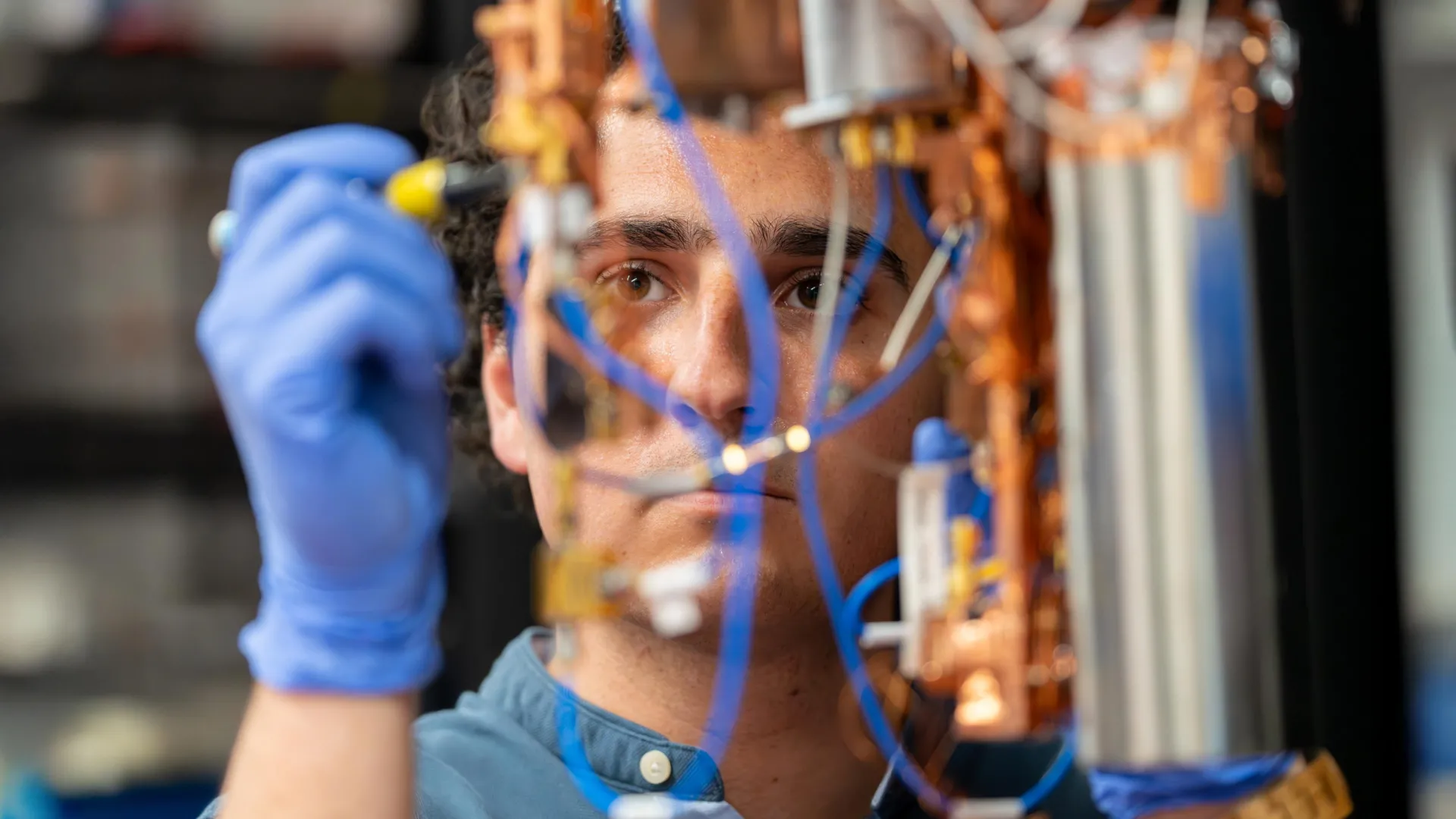
"In our experiment, we built a nanofabricated heat engine using superconducting circuits and operated it in a cryostat near absolute zero," explains Tuomas UusNäkki, the study’s lead author. "At its heart is a transmon qubit, one of the basic building blocks of modern quantum technologies." The qubit, a quantum bit capable of representing both 0 and 1 simultaneously, is central to quantum computation. In this engine, its quantum states are manipulated to facilitate the thermodynamic cycle.
The critical innovation lies in the integration of the transmon qubit with a quantum circuit refrigerator. This sophisticated refrigerator allows for unprecedented control over heat flow at the quantum scale. Unlike conventional heat engines that require distinct hot and cold reservoirs, the quantum refrigerator in this system can be dynamically tuned to act as both a heating and cooling source for the qubit. "Our quantum-circuit refrigerator can be tuned to both heat and cool the qubit on demand," UusNäkki elaborates. "Using carefully timed control pulses, we drove the engine in an Otto cycle and monitored the qubit state as the engine ran."
The meticulous measurements confirmed that heat passing through the qubit during the cycle was indeed producing positive work. This observation is a pivotal moment, signifying the first experimental realization of a cyclic quantum heat engine implemented within superconducting circuits. The elegance of using a single, controllable quantum refrigerator as both the hot and cold environment is highlighted by UusNäkki: "Using a single controllable quantum refrigerator as both the hot and cold environment of the engine makes it simpler and more versatile." This simplified design is crucial for scaling up such devices.
The implications of this breakthrough extend far beyond fundamental scientific curiosity, pointing towards a future of more efficient and robust quantum computing hardware. The researchers envision this technology evolving towards fully autonomous heat engines integrated directly into superconducting circuits. One particularly exciting potential application is in the readout of qubits. Currently, reading out the state of a qubit often requires sending microwave pulses from the room-temperature environment all the way down to the millikelvin temperatures where quantum computers operate. This process is not only energy-intensive but also a significant source of noise that can corrupt delicate quantum computations.
Autonomous devices, such as these quantum heat engines, could revolutionize this process. By integrating the heat engine directly into the superconducting circuit, it could potentially perform qubit readout without the need for long, noisy microwave cables. This capability becomes increasingly vital as quantum computers scale up to handle the vast number of qubits required for complex computations.
Finland’s ambitious Quantum Technology Strategy aims to develop a quantum computer with one thousand logical qubits by 2035. Achieving this goal will likely necessitate hundreds of thousands of physical qubits. The current technological paradigm for interconnecting such a massive number of qubits relies on millions of individual microwave cables, each costing thousands of euros. These cables not only represent an enormous financial and engineering challenge but also introduce significant noise into the sensitive quantum systems. "Doing that with current technology requires millions of microwave cables costing thousand euros each," explains Möttönen. "The cables also introduce noise into the system. Using autonomous devices instead would mostly eliminate the need for those cables."
Therefore, the development of these autonomous superconducting heat engines offers a dual solution: addressing the immense hardware requirements for large-scale quantum computers and mitigating the detrimental noise introduced by traditional cabling. This advancement could significantly reduce both the cost and complexity of building and operating future quantum machines, accelerating the timeline for realizing their transformative potential.
The pioneering experiment was conducted at OtaNano, Finland’s national research infrastructure dedicated to nano, micro, and quantum technology, underscoring the importance of collaborative, state-of-the-art research facilities. Funding for this groundbreaking work was provided by the Research Council of Finland and the Finnish Cultural Foundation, highlighting the strategic investment in advancing quantum technologies. This research not only deepens our understanding of fundamental physics but also lays the groundwork for a new era of quantum computing, bringing us closer to unlocking its immense computational power.