Imroatul Nasiyah
In a landmark study, published with significant fanfare on March 26, 2026, in the prestigious scientific journal Science, a dedicated team of researchers, spearheaded by Joshua Yang, the Arthur B. Freeman Chair Professor at the Ming Hsieh Department of Electrical and Computer Engineering within the USC Viterbi School of Engineering and the USC School of Advanced Computing, has unveiled a novel class of memory device engineered to defy extreme thermal stress. This revolutionary component demonstrably continues to function flawlessly at a staggering 700 degrees Celsius (approximately 1300 degrees Fahrenheit). To put this into perspective, this temperature far exceeds that of molten lava and represents an unprecedented achievement for any electronic device of this nature. Crucially, the researchers observed no degradation or failure in the device; indeed, 700 degrees Celsius was merely the upper limit of their testing apparatus, hinting at even greater potential. Professor Yang himself characterized the breakthrough with an emphatic statement, suggesting, "You may call it a revolution. It is the best high-temperature memory ever demonstrated."
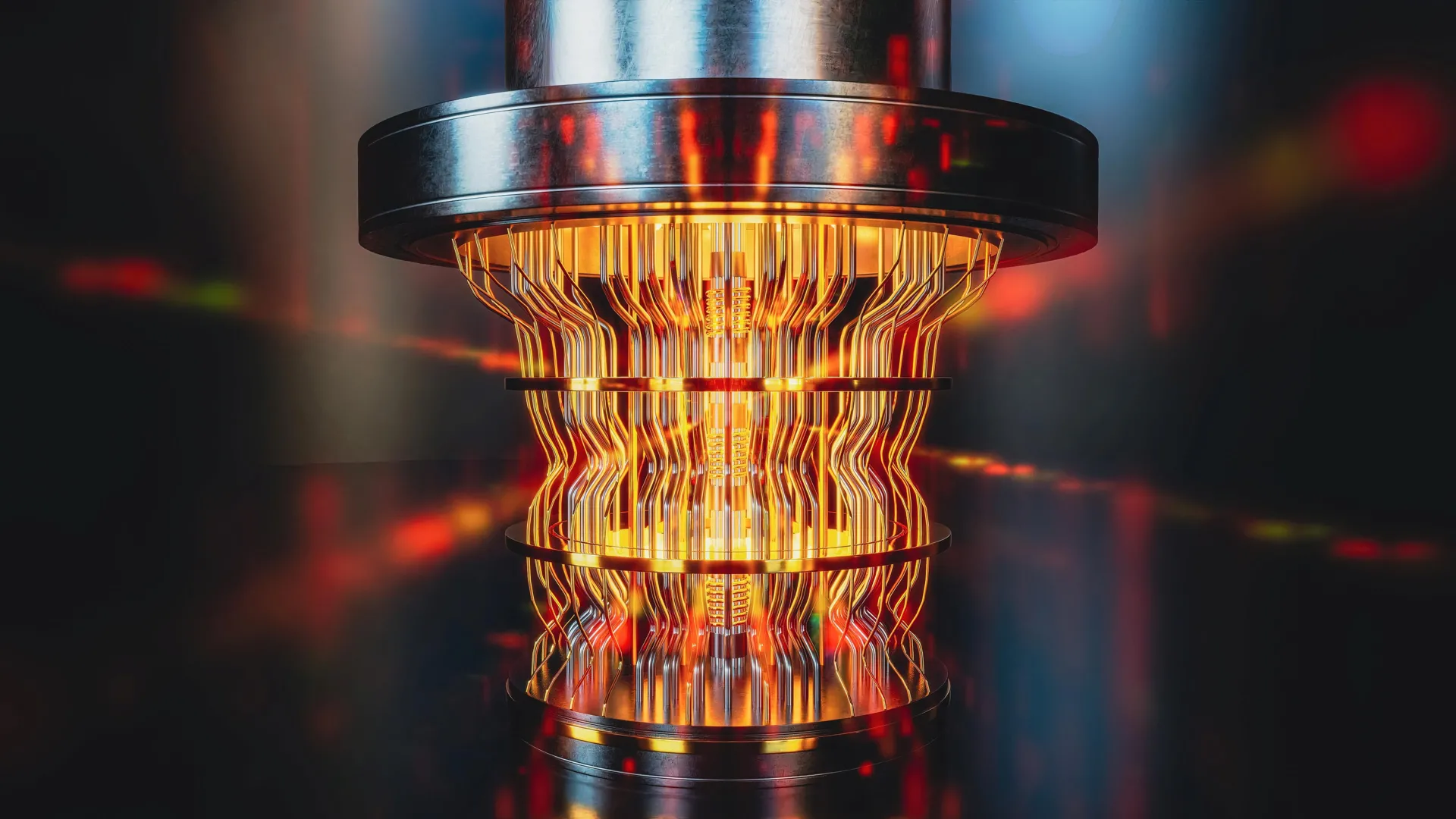
At the heart of this remarkable innovation lies a sophisticated nanoscale component known as a memristor. Unlike traditional memory or processing units, a memristor possesses the unique duality of being able to both store data and perform computations within a single unit. Its construction is elegantly simple yet extraordinarily robust, forming a microscopic layered architecture. This structure consists of two conductive electrodes positioned on either side of a thin, specialized ceramic layer. The genius of the USC team’s design lies in the meticulous selection and arrangement of these constituent materials.
Jian Zhao, the lead author of the study, was instrumental in fabricating the device, employing tungsten for the top electrode. Tungsten, renowned for possessing the highest melting point of any known element, provides an unparalleled foundation for thermal stability. The central layer is composed of hafnium oxide ceramic, a material chosen for its dielectric properties and resilience. The bottom electrode is ingeniously crafted from graphene, a single-atom-thick sheet of carbon. Graphene is celebrated not only for its extraordinary strength but also for its exceptional thermal conductivity and resistance to heat, making it an ideal candidate for extreme environment applications.
This judicious combination of materials has yielded performance metrics that are nothing short of astonishing. The memristor was able to retain stored data for an impressive duration exceeding 50 hours, even while subjected to the extreme temperature of 700 degrees Celsius, all without requiring any refresh cycles. Furthermore, it withstood over one billion switching cycles at this formidable temperature, a testament to its enduring mechanical and electrical integrity. The device operated with remarkable efficiency, requiring a mere 1.5 volts, and demonstrated operational speeds measured in the tens of nanoseconds, showcasing its rapid response capabilities even under duress.
The genesis of this profound discovery was, perhaps fittingly, an accidental one. The research team was not initially pursuing the development of a high-temperature memory device. Their original objective was to engineer a different type of graphene-based component, a project that, by their own admission, did not yield the anticipated results. It was during this exploratory phase, while grappling with the unexpected outcomes, that they stumbled upon the extraordinary properties of their current invention. "To be honest, it was by accident, as most discoveries are," Professor Yang candidly admitted. "If you can predict it, it’s usually not surprising, and probably not significant enough." This serendipitous encounter underscored the unpredictable nature of scientific advancement, where unforeseen detours can lead to the most significant breakthroughs.
Subsequent in-depth investigation by the researchers meticulously unraveled the underlying reasons for the device’s exceptional thermal performance. In conventional electronic architectures, elevated temperatures exert a detrimental effect by inducing the gradual migration of metal atoms from the top electrode through the intervening ceramic layer. Over time, these migrating atoms can reach the bottom electrode, forming a permanent conductive bridge. This phenomenon effectively creates a short circuit, permanently locking the device in the "on" state and rendering it inoperable.
The inclusion of graphene in the USC team’s memristor design acts as a critical bulwark against this failure mechanism. The interaction between tungsten and graphene, as described by Professor Yang, bears a striking resemblance to the immiscible nature of oil and water. Tungsten atoms that approach the graphene surface are inherently unable to adhere to it. Lacking a stable anchoring point, these atoms are repelled and drift away, rather than forming the detrimental conductive bridge. This crucial atomic-level interaction effectively prevents short circuits, thereby preserving the device’s operational integrity even when exposed to extreme thermal environments. The researchers meticulously validated this atomic mechanism through a battery of sophisticated analytical techniques, including advanced electron microscopy, spectroscopy, and simulations at the quantum level. By achieving a profound understanding of the atomic interactions at the interface between the materials, they have transformed an accidental observation into a foundational principle that can now guide the design of future generations of robust electronic components. This newfound knowledge opens the door to identifying other materials with similar surface properties, paving the way for the scalable industrial production of this transformative technology.
The implications of electronics capable of withstanding such extreme temperatures are vast and far-reaching, particularly in specialized fields. For decades, space exploration has been yearning for electronics that can operate reliably above 500 degrees Celsius. Consider the planet Venus, with its surface temperatures hovering around this perilous threshold. Every lander ever dispatched to its infernal surface has succumbed, at least in part, to the overwhelming heat, rendering its silicon-based circuitry useless. The USC team’s achievement, exceeding 700 degrees Celsius, represents a monumental leap forward. "We are now above 700 degrees, and we suspect it will go higher," Professor Yang optimistically stated, hinting at further advancements.
Beyond the realm of space missions, the potential applications extend to other demanding environments. Geothermal energy systems, for instance, require electronics that can function deep within the Earth’s crust, where surrounding rock can reach incandescent temperatures. Nuclear power and fusion research facilities also present environments with intense heat, posing significant challenges for equipment reliability. Even in more conventional settings, the enhanced durability offered by such a device would be a substantial advantage. An electronic component rated for 700 degrees Celsius would exhibit exceptional robustness at the approximately 125-degree Celsius (257 degrees Fahrenheit) temperatures commonly encountered within the confines of automotive electronics, leading to significantly longer lifespan and greater reliability.
Perhaps the most transformative potential of this high-temperature memristor lies in its profound implications for the field of artificial intelligence (AI). In addition to its core function as a data storage unit, the device offers a significant advantage for AI computation. Many modern AI systems, particularly those involved in complex tasks like image recognition and natural language processing, rely heavily on a mathematical operation known as matrix multiplication. Traditional computing architectures perform these calculations sequentially, a process that is inherently energy-intensive and time-consuming.
Memristors, however, offer a fundamentally different approach to computation. By leveraging Ohm’s Law, which describes the relationship between voltage, conductance, and current (V = IR, or more relevantly here, current = voltage * conductance), the memristor can perform calculations directly as electrical current flows through it. This analog computation allows the result to be obtained instantaneously as a measured current, bypassing the need for step-by-step digital processing. Professor Yang highlighted the significance of this capability, stating, "Over 92 percent of the computing in AI systems like ChatGPT is nothing but matrix multiplication. This type of device can perform that in the most efficient way, orders of magnitude faster and at lower energy."
Recognizing the immense commercial potential of this technology, Professor Yang, along with three co-authors of the Science paper—Qiangfei Xia, Miao Hu, and Ning Ge—have already established a company named TetraMem. This venture is dedicated to the commercialization of memristor-based AI chips, initially targeting room-temperature applications. The team is already actively employing working chips from TetraMem for machine learning tasks. The high-temperature variant detailed in this research promises to extend these advanced AI capabilities into environments where conventional electronics are simply not viable, enabling onboard data processing for devices such as spacecraft, deep-sea exploration vehicles, or industrial sensors operating in harsh conditions.
Despite the exhilarating promise of these laboratory findings, Professor Yang is keen to temper expectations regarding immediate widespread adoption. He emphasizes that practical, real-world applications are still some distance away. The current devices represent a critical memory component, but a complete computing system requires the development and integration of high-temperature logic circuits as well. Furthermore, the existing devices were meticulously hand-crafted at very small scales within a laboratory setting. The transition to large-scale manufacturing will undoubtedly require considerable time and innovation. "This is the first step," Yang stated, underscoring the journey ahead. "It’s still a long way to go. But logically, you can see: now it makes it possible. The missing component has been made."
From a manufacturing perspective, the path forward appears more navigable due to the choice of materials. Tungsten and hafnium oxide, two of the key components in the memristor, are already widely utilized in established semiconductor production processes. Graphene, while a relatively newer material in large-scale manufacturing, is actively being developed by major industry players like TSMC and Samsung, and has already been successfully produced at wafer scale in research environments, indicating its potential for industrial integration.
The foundational research for this groundbreaking work was conducted under the auspices of the CONCRETE Center, an acronym for the Center of Neuromorphic Computing under Extreme Environments. This multi-university Center of Excellence, led by USC, receives crucial support from the Air Force Office of Scientific Research and the Air Force Research Laboratory. Key experimental work was undertaken in close collaboration with Dr. Sabyasachi Ganguli’s team at the AFRL Materials Lab in Dayton, Ohio. The theoretical underpinnings and advanced analysis involved researchers from USC as well as collaborators at Kumamoto University in Japan, highlighting the international and interdisciplinary nature of this significant scientific endeavor.
For Professor Yang, the publication of this research in Science signifies more than just a single scientific achievement; it represents a pivotal moment in the advancement of technology. "Space exploration has never been so real, so close, and at such a large scale," he declared, envisioning a future where human and robotic endeavors can push the boundaries of exploration further than ever before. "This paper represents a critical leap into a much larger, more exciting frontier." The development of electronics that can withstand extreme heat is not merely an incremental improvement; it is a foundational shift that promises to unlock new possibilities across a multitude of scientific and industrial domains, potentially reshaping our technological landscape for generations to come.