Imroatul Nasiyah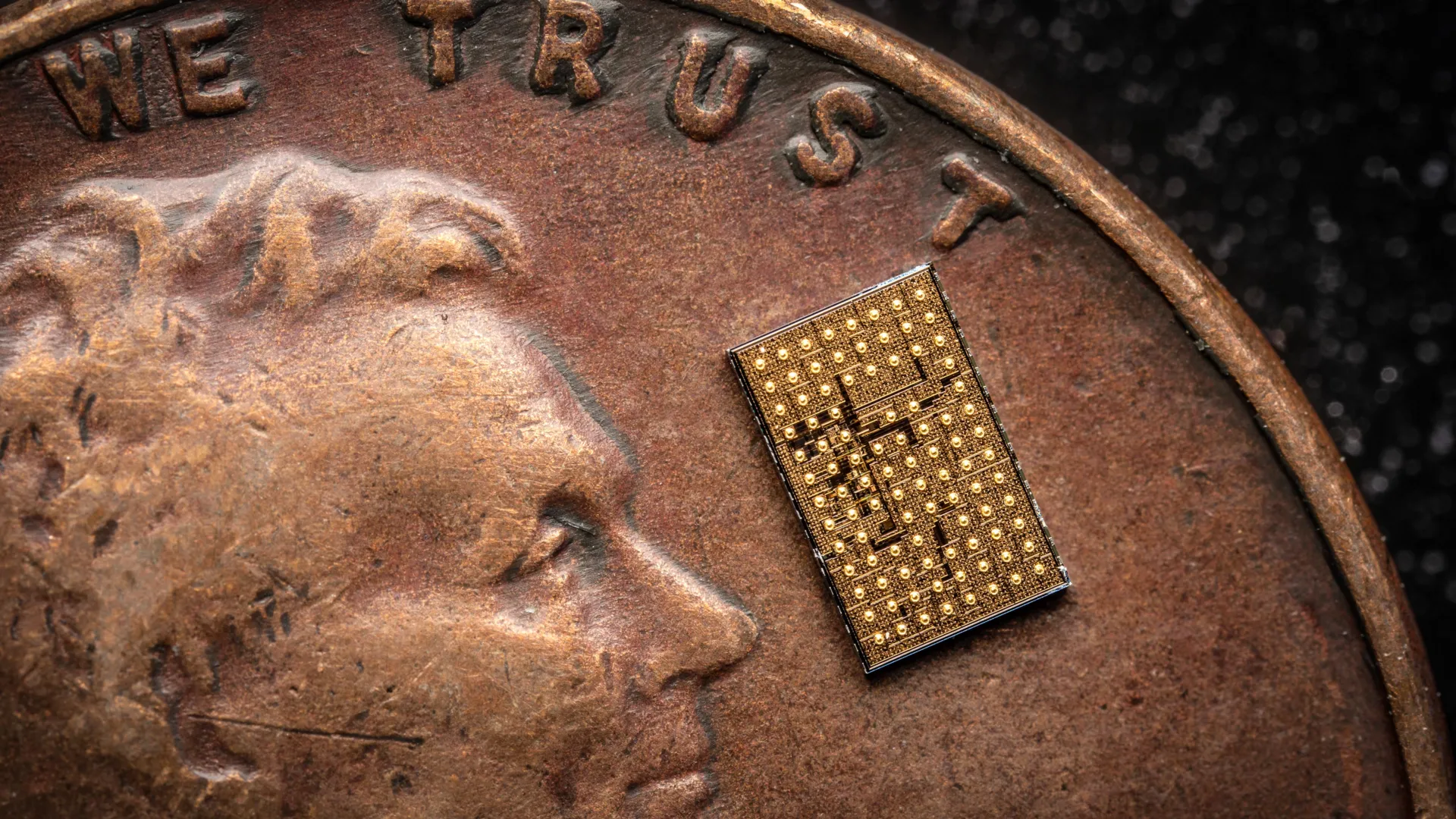
The implications of this research, meticulously detailed in the prestigious journal Nature Communications, extend beyond mere incremental improvements, suggesting a future where advanced computing environments can be powered by systems that are not only smaller but also substantially more energy-efficient. This is a crucial development as the world’s reliance on digital services, from cloud computing and artificial intelligence to streaming media and online gaming, continues its exponential growth, placing an ever-increasing strain on global energy resources and contributing to significant carbon emissions. The current model of powering these data-intensive operations is inherently inefficient, with a substantial portion of energy being lost as heat during the voltage conversion process. This new design offers a promising pathway to reclaiming a significant portion of that lost energy, translating directly into reduced operational costs for data centers and a more sustainable digital future.
At the core of this revolutionary design lies a sophisticated enhancement of a ubiquitous electronic component: the DC-DC step-down converter. These converters are the unsung heroes of modern electronics, silently performing their essential duty in virtually every device we use, from our smartphones and laptops to the massive server farms that power the internet. Their fundamental role is to take a higher voltage from a power source and meticulously reduce it to the exact, safe operating voltage required by the intricate circuitry within. Without these converters, sensitive microprocessors and other electronic components would be instantly destroyed by excessive voltage.
In the context of data centers, a significant energy challenge arises from the typical power distribution system. Electricity is commonly distributed at a relatively high voltage, often around 48 volts, to minimize energy loss during transmission over long distances. However, the processors within these data centers, particularly the power-hungry GPUs that are essential for high-performance computing tasks like machine learning and scientific simulations, operate at much lower voltages, typically in the range of 1 to 5 volts. This substantial voltage differential, a drop from 48 volts down to a mere few volts, necessitates a highly efficient conversion process. As computing systems become more powerful and are increasingly housed in denser, more compact configurations, the challenge of managing this large voltage drop efficiently and dissipating the resultant heat becomes exponentially more difficult. Inefficient converters not only waste energy but also contribute to overheating, requiring more robust and energy-intensive cooling systems, further exacerbating the energy consumption problem.
Traditional step-down converters, while having been refined over decades, are increasingly hitting their performance ceilings when faced with these extreme voltage differences. Their efficiency tends to plummet as the gap between the input and output voltage widens. This inefficiency translates directly into wasted energy, which is dissipated as heat. Furthermore, as efficiency decreases, it becomes more challenging for these converters to supply the substantial current that high-performance processors demand. The majority of these conventional designs rely heavily on magnetic components, specifically inductors. While these magnetic components have been the workhorses of power conversion for a long time and have undergone extensive optimization, they are approaching their fundamental physical limits. Achieving significant further improvements in their size, efficiency, or power handling capabilities has become an increasingly arduous task.
Professor Patrick Mercier, the senior author of the study and a distinguished professor in the Department of Electrical and Computer Engineering at the UC San Diego Jacobs School of Engineering, articulated this predicament with clarity: "We’ve gotten so good at designing inductive converters that there’s not really much room left to improve them to meet future needs." This statement underscores the critical need for a paradigm shift in power conversion technology, a departure from the incremental improvements of existing methods towards a more fundamentally different approach.
Seeking to break free from the limitations of magnetic components, Professor Mercier and his dedicated team, including the first author Jae-Young Ko, an electrical and computer engineering Ph.D. student at UC San Diego, turned their attention to an alternative technology: piezoelectric resonators. These remarkable devices operate on a different principle altogether, storing and transferring energy not through magnetic fields but through carefully controlled mechanical vibrations. This fundamental difference opens up a new realm of possibilities for power conversion.
Converters built using piezoelectric components hold the promise of several significant advantages. They have the inherent potential to be considerably smaller and more compact than their magnetic counterparts, a critical factor in the design of ever-shrinking electronic devices and densely packed data center infrastructure. Moreover, they can achieve higher energy density, meaning they can store and deliver more energy for their size. The prospect of greater energy efficiency is also a major draw, leading to less wasted power. From a manufacturing perspective, piezoelectric components are often easier and more cost-effective to produce at scale, paving the way for widespread adoption. As Professor Mercier optimistically stated, "They have a lot of room to grow and have the potential to deliver better performance than anything that’s come before them."
However, the journey to harnessing the full potential of piezoelectric converters has not been without its hurdles. Earlier iterations of these devices faced significant challenges in maintaining high efficiency and delivering sufficient power, particularly when tasked with bridging large voltage gaps. This limitation has historically prevented them from being a viable alternative for high-power applications like data centers.
To overcome these persistent issues, the UC San Diego researchers ingeniously developed a hybrid converter design. This innovative approach cleverly combines a piezoelectric resonator with a carefully orchestrated arrangement of small, readily available commercial capacitors. This synergistic configuration allows the system to manage the significant voltage conversion more effectively and efficiently than previous piezoelectric-only designs. The capacitors play a crucial role in distributing the voltage stress and facilitating the energy transfer, working in concert with the vibrating piezoelectric element.
The team meticulously integrated this hybrid design into a functional prototype chip and subjected it to rigorous performance evaluations. The results were highly encouraging: the device successfully converted a challenging 48-volt input down to 4.8 volts, a voltage level commonly required within data center operations. Astonishingly, it achieved a peak efficiency of an impressive 96.2 percent. Furthermore, the prototype demonstrated a remarkable improvement in power delivery, supplying approximately four times more output current than previous generations of piezoelectric-based converters. This substantial increase in current capability is critical for powering the high-performance processors that are the backbone of modern data centers.
This hybrid architecture offers a multifaceted set of benefits that contribute to its exceptional performance. By creating multiple pathways for energy to flow through the system, it effectively distributes the electrical load and reduces the overall strain on the piezoelectric resonator. This distributed energy flow not only enhances efficiency but also significantly improves the power delivery capability. Crucially, these advancements are achieved with only a marginal increase in the overall size of the chip, making it a practical and scalable solution. The reduction in wasted power translates directly into less heat generation, which in turn reduces the demand on cooling systems, further contributing to energy savings.
Despite the highly promising results and the clear potential of this technology, it is important to acknowledge that it remains in the early stages of development. The researchers themselves view this achievement as a pivotal step towards overcoming the inherent constraints of existing power conversion systems, but emphasize that further refinement is necessary before widespread real-world implementation. Future research efforts will be strategically focused on several key areas: optimizing the materials used in the piezoelectric resonators to enhance their performance and longevity, refining the intricate circuit designs to further boost efficiency and power handling, and developing more advanced and robust packaging methods to ensure the reliable integration of these components into complex electronic systems.
One of the unique challenges associated with piezoelectric resonators stems from their inherent mechanical vibration. This physical movement means that they cannot be integrated into electronic circuit boards using conventional soldering techniques, which rely on heat to create electrical connections. Consequently, novel integration strategies and manufacturing processes will need to be developed to seamlessly incorporate these vibrating components into the sophisticated architectures of modern electronic systems. Professor Mercier highlighted this specific challenge, stating, "Piezoelectric-based converters aren’t quite ready to replace existing power converter technologies yet. But they offer a trajectory for improvement. We need to continue to improve on multiple areas — materials, circuits and packaging — to make this technology ready for data center applications." This candid assessment underscores the commitment to a phased approach, moving from foundational research to practical application.
The significant progress made in this research project was made possible through the generous support of the Power Management Integration Center (PMIC), a collaborative Industry-University Cooperative Research Center funded by the National Science Foundation under award number 2052809. This funding has been instrumental in enabling the dedicated team to explore novel avenues in power electronics and to push the boundaries of what is currently achievable, paving the way for a more sustainable and energy-efficient future for data centers and the digital world they support.