isnaini azizah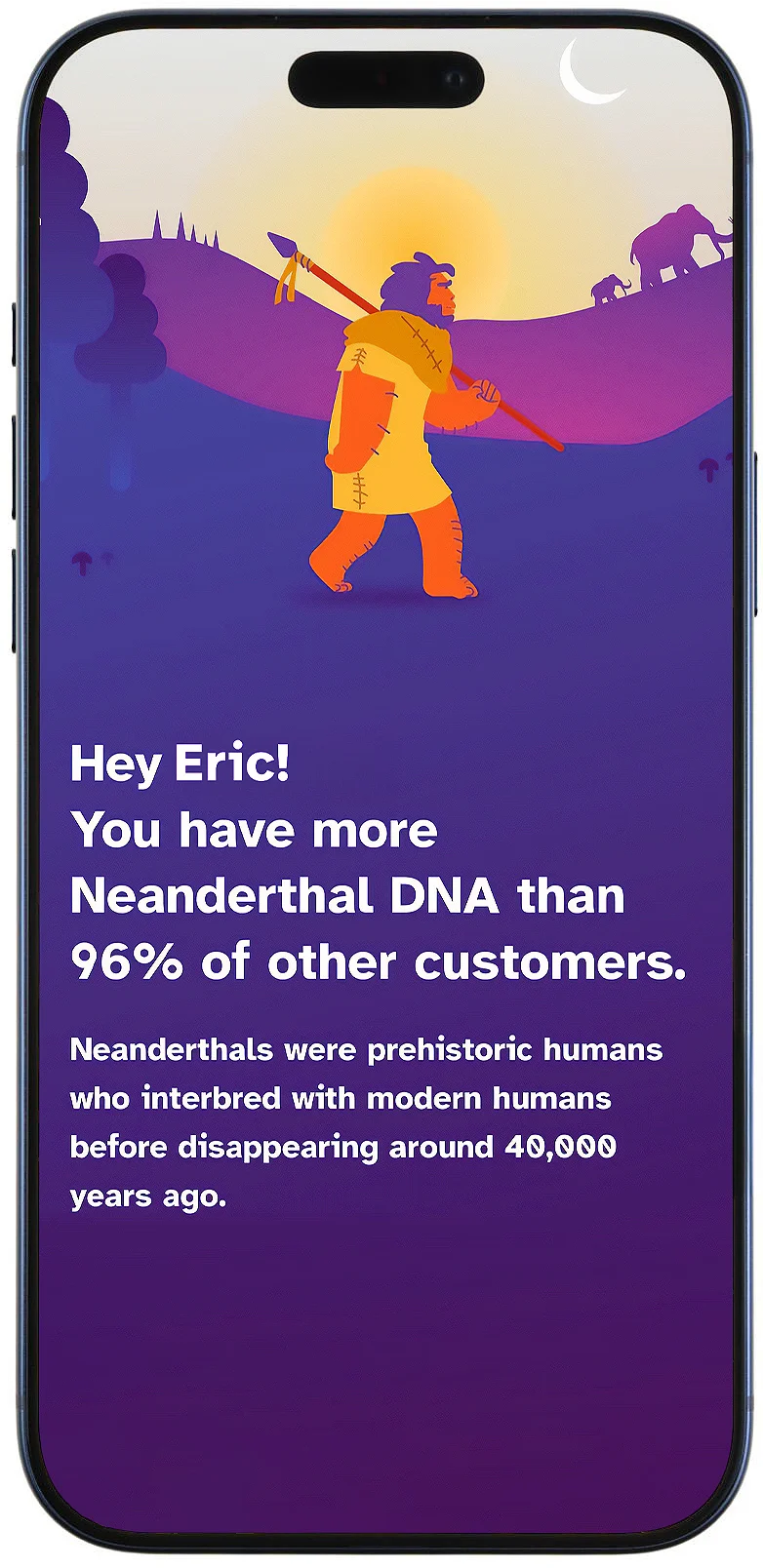
At the heart of this challenge lies a critique of the statistical models employed in evolutionary biology, particularly the long-held assumption of randomly mating populations. French population geneticists Lounès Chikhi and Rémi Tournebize, formerly of the Université de Toulouse, have proposed an alternative explanation for the observed genomic patterns. Their argument centers on the crucial concept of "population structure," a phenomenon that describes how real-world populations are not uniform, continent-wide mating pools but rather intricate networks of smaller, geographically and culturally isolated groups. Archaeological, fossil, and genetic evidence overwhelmingly indicates that Homo sapiens evolved in Africa in a mosaic of small, disconnected groups, with gene flow primarily occurring within these localized communities. This inherent structure means that genes do not distribute evenly but can concentrate in certain areas and be absent in others, creating a complex tapestry of genetic diversity far removed from the idealized random mating scenario.
Chikhi and Tournebize contend that the initial interpretation of Neanderthal admixture was based on a simplified statistical model that overlooked the profound impact of population structure. When this structural reality is incorporated into evolutionary models, the genomic signatures attributed to interbreeding between Homo sapiens and Neanderthals can be explained through alternative pathways that do not necessitate direct interspecies sexual reproduction. Chikhi, a seasoned researcher with decades of experience studying population structure across diverse species, emphasizes that this is not an isolated issue but a systemic "failure of our field to compare our results in a clear way with alternative scenarios." He argues that evolutionary science has become overly reliant on simplified models, a tendency that can lead to premature conclusions.
The implications of this methodological critique extend far beyond the single question of Neanderthal admixture. William Amos, a population geneticist at the University of Cambridge, echoes this concern, noting that while scientists may believe they possess sophisticated algorithms for deciphering evolutionary history, these models are often built upon "simple assumptions that are often wrong." If these foundational assumptions are flawed, then the conclusions drawn from them, no matter how captivating or personally resonant, could be fundamentally inaccurate, jeopardizing our understanding of a crucial chapter in human evolution and potentially impacting how we perceive ourselves and our genetic heritage.
The story of the "inner Neanderthal" began with a remarkable scientific feat. In 2010, Svante Pääbo’s team achieved the seemingly impossible by extracting and sequencing DNA from ancient Neanderthal bones, yielding a draft of the entire Neanderthal genome. Their comparative analysis, contrasting this genome with those of five present-day individuals from various global populations, revealed a shared genetic heritage between Neanderthals and modern humans of non-African descent, a heritage absent in modern Africans and chimpanzees. This finding was interpreted as direct evidence of interbreeding between ancient Homo sapiens migrating out of Africa and the Neanderthals they encountered. Pääbo’s own words, "Neanderthals are not totally extinct. In some of us, they live on a little bit," captured the public imagination. This discovery effectively overturned an earlier conclusion based on mitochondrial DNA, which had suggested little to no interbreeding.
Following Pääbo’s landmark publication, a torrent of research emerged, solidifying the concept of Neanderthal admixture as scientific canon. Prestigious journals published numerous studies that not only supported the interbreeding hypothesis but also proposed its significance for human adaptation to colder climates in Eurasia. Further genomic analyses, employing similar methodologies, uncovered genetic traces of interbreeding with other archaic hominin groups, such as the Denisovans in Asia, and even suggested a mysterious "ghost lineage" in Africa. The application of these analytical techniques extended to other species, revealing evidence of hybridization in animals like chimpanzees and bonobos, and polar and brown bears, further reinforcing the perceived ubiquity of interspecies mating in evolutionary history.

The "inner Neanderthal" narrative then took a deeply personal turn. Scientific studies began linking Neanderthal DNA to a wide array of human traits and health conditions, including alcoholism, asthma, autism, ADHD, depression, diabetes, heart disease, skin cancer, and severe COVID-19. Researchers speculated about its influence on hair and skin color, and some commercial entities developed "NeanderScores" to correlate genetic markers with skull shape and schizophrenia susceptibility. Companies like 23andMe began offering personalized reports on an individual’s Neanderthal ancestry. This personalizes the scientific findings, transforming abstract genetic data into a narrative about individual destiny and predispositions. The "inner Neanderthal" became a convenient explanation for personal struggles or unique characteristics, a way to externalize perceived flaws and genetic vulnerabilities, as humorously illustrated by a Radiolab host imagining Neanderthals causing his Crohn’s disease.
Lounès Chikhi, whose parents were Algerian immigrants, found the implications of DNA research on human origins particularly compelling. Early genomic studies demonstrated Africa’s unparalleled genetic diversity, supporting the "Out of Africa" model of human evolution. For Chikhi, this was a powerful counter-narrative to prevailing ideas about race and deep-seated evolutionary differences based on origin. He saw DNA as a tool for dismantling, rather than reinforcing, such pernicious notions. However, he also harbored a skepticism about the tendency to treat DNA as the ultimate arbiter of evolutionary debates. He recalled being surprised by Pääbo’s 1997 conclusion, based on limited mitochondrial DNA, that interbreeding was unlikely, believing that the absence of evidence in one part of the genome didn’t preclude its presence elsewhere.
Chikhi’s own research in the 2000s began to illuminate the discrepancies between historical reality and evolutionary models. He observed that the animals he studied, contrary to the assumption of random mating, exhibited highly structured mating patterns. Orangutans, for instance, were confined by fragmented habitats, limiting their mate choices, while female birds often displayed stringent mate selection criteria. These real-world complexities posed a challenge to the traditional statistical tools of evolutionary biologists. He identified a particular issue with methods used to estimate historical population sizes from single-genome data. These methods, which often indicated sharp population declines, could be misleading if applied to structured populations, potentially misinterpreting localized growth within subgroups as a general population bottleneck. "This is completely counterintuitive," he notes.
This understanding of population structure’s impact on genetic interpretation made Chikhi wary of the 2010 Neanderthal genome findings, despite acknowledging their technical brilliance. He felt the conclusion of hybridization was reached "too quickly based on genetic data." While Pääbo’s work briefly mentioned population structure as an alternative, it was not pursued. It was later, in 2012, that Anders Eriksson and Andrea Manica picked up this thread, developing a model that explicitly excluded admixture and incorporated simple population structure. Their simulations of human evolution, starting from 500,000 years ago, generated genomic patterns that mirrored those interpreted by Pääbo’s group as evidence of hybridization. Eriksson, now a professor at the University of Tartu, acknowledges that "working with structured models is really out of the comfort zone of a lot of population geneticists."
Chikhi was impressed by Eriksson and Manica’s work, expecting it to shift the focus in human evolutionary studies. Instead, he witnessed the "inner Neanderthal" hypothesis gain momentum, with new methods designed to quantify admixture but rarely questioning whether population structure could yield similar results. Chikhi perceived this as a slide back into "storytelling," akin to the older narratives that sought to explain racial differences through evolutionary divergence. This motivated Chikhi and his colleague Rémi Tournebize to undertake their own investigation. "We make a lot of assumptions, and the models we use are very simplistic," stated Tournebize, now a researcher at the French National Research Institute for Sustainable Development. Their 2024 paper in Nature Ecology & Evolution detailed a sophisticated model that replaced continent-wide random mating with numerous small, interconnected populations. After running a million simulations, they identified 20 scenarios that closely matched actual Homo sapiens and Neanderthal genomes. Crucially, many of these scenarios generated long DNA segments similar to those previously attributed solely to hybridization, demonstrating that existing statistical measures could not definitively distinguish between admixture and population structure. Furthermore, their model revealed that many hybridization-supporting models failed to accurately predict other known aspects of human evolutionary diversity.
"A model will say there was admixture but then predict diversity that is totally incompatible with what we actually know of human diversity," Chikhi observed, lamenting the apparent lack of attention to such inconsistencies. Their research suggests a more parsimonious explanation: the shared Neanderthal DNA in living humans might have been inherited from a common ancestor that lived at least half a million years ago, predating the divergence of Neanderthals and Homo sapiens. If the sapiens groups that migrated out of Africa carried these genetic variants, then the DNA would have been present in both species upon their encounter, negating the need for interbreeding. "The interpretation of genetic data is not straightforward," Chikhi maintains. "We always have to make assumptions. Nobody takes data and magically comes up with a solution."

The majority of population geneticists interviewed acknowledged the ingenuity of Chikhi and Tournebize’s work, recognizing its value in prompting critical reevaluation of their models. Aaron Ragsdale, a population geneticist at the University of Wisconsin–Madison, noted that their paper "forces us to think more critically about the model we use for inference and consider alternatives." His own research also points to structured early Homo sapiens populations in Africa as a likely explanation for genomic patterns previously attributed to hybridization with a mysterious African hominin lineage.
Despite this, many researchers continue to believe that interbreeding between modern humans and Neanderthals did likely occur. They cite evidence that ancient Homo sapiens DNA exhibits longer segments of apparent Neanderthal DNA than modern humans, a pattern consistent with a more recent common ancestor. Chikhi and Tournebize, however, incorporated ancient human DNA into their study and found that their structured model also accounted for these observations. David Reich, a Harvard population geneticist involved in the original 2010 study, declined an interview but dismissed Chikhi and Tournebize’s model as "weak" and "very contrived," asserting that "there are multiple lines of evidence for Neanderthal admixture into modern humans that make the evidence for this overwhelming." Nevertheless, the scientific community is increasingly embracing the development of "spatially explicit" models that acknowledge the reality of local relatedness within populations.
Beyond population structure, other assumptions in population genetics are also coming under scrutiny. Natural selection, which can mimic the genetic patterns of hybridization, is often underrepresented in models. Similarly, the assumption of a constant mutation rate is being questioned. William Amos suggests that the mutation rate may have significantly slowed in the Homo sapiens population that migrated to Europe, potentially creating genomic patterns misinterpreted as evidence of interbreeding. The core message is not that complex models are inherently superior, but that simplified models require reevaluation of their assumptions as new data emerges. Mark Thomas, a population geneticist at University College London, highlights the evolving perspective on random mating, shifting from a simplifying assumption to a "limiting assumption."
The shift towards complex terminology like "population structure" and "mutation rates" can feel counterintuitive to the scientific pursuit of clarity. It risks obscuring the excitement of discovery with nuanced uncertainty. Ludovic Slimak, an archaeologist, has lamented how the "inner Neanderthal" narrative has "domesticated" our image of Neanderthals, hindering a full appreciation of their distinct humanity. The allure of investigating Neanderthal DNA, with its promise of immediate genetic insights, can overshadow the more labor-intensive but equally vital work of archaeological and fossil evidence that illuminates how Neanderthals actually lived.
Ultimately, Chikhi and Tournebize advocate for embracing the inherent complexity of life’s history, suggesting that loosening our grip on certain evolutionary narratives can open doors to greater wonder. They do not present their findings as an either/or scenario but rather as a call to recognize that both population structure and hybridization may have played roles in human evolution. "Our structured model does not necessarily mean that no admixture ever took place," they stated in their study. "What our results suggest is that, if admixture ever occurred, it is currently hard to identify using existing methods." Future advancements in methodology may allow for a clearer disentanglement of these factors. However, Chikhi emphasizes the ongoing importance of scientific transparency regarding assumptions and the rigorous testing of alternative hypotheses. "There’s still so much uncertainty on so many aspects of the demographic history of Neanderthals and Homo sapiens," he concludes.
The next time you encounter a story about your "inner Neanderthal," it’s worth remembering that while the association between certain DNA segments and health conditions might be real, the narrative connecting them to Neanderthal ancestry may be a product of compelling storytelling rather than definitive scientific fact. As Chikhi implies, the allure of interspecies romance, even in science, can be a powerful, and perhaps misleading, narrative driver.