Imroatul Nasiyah
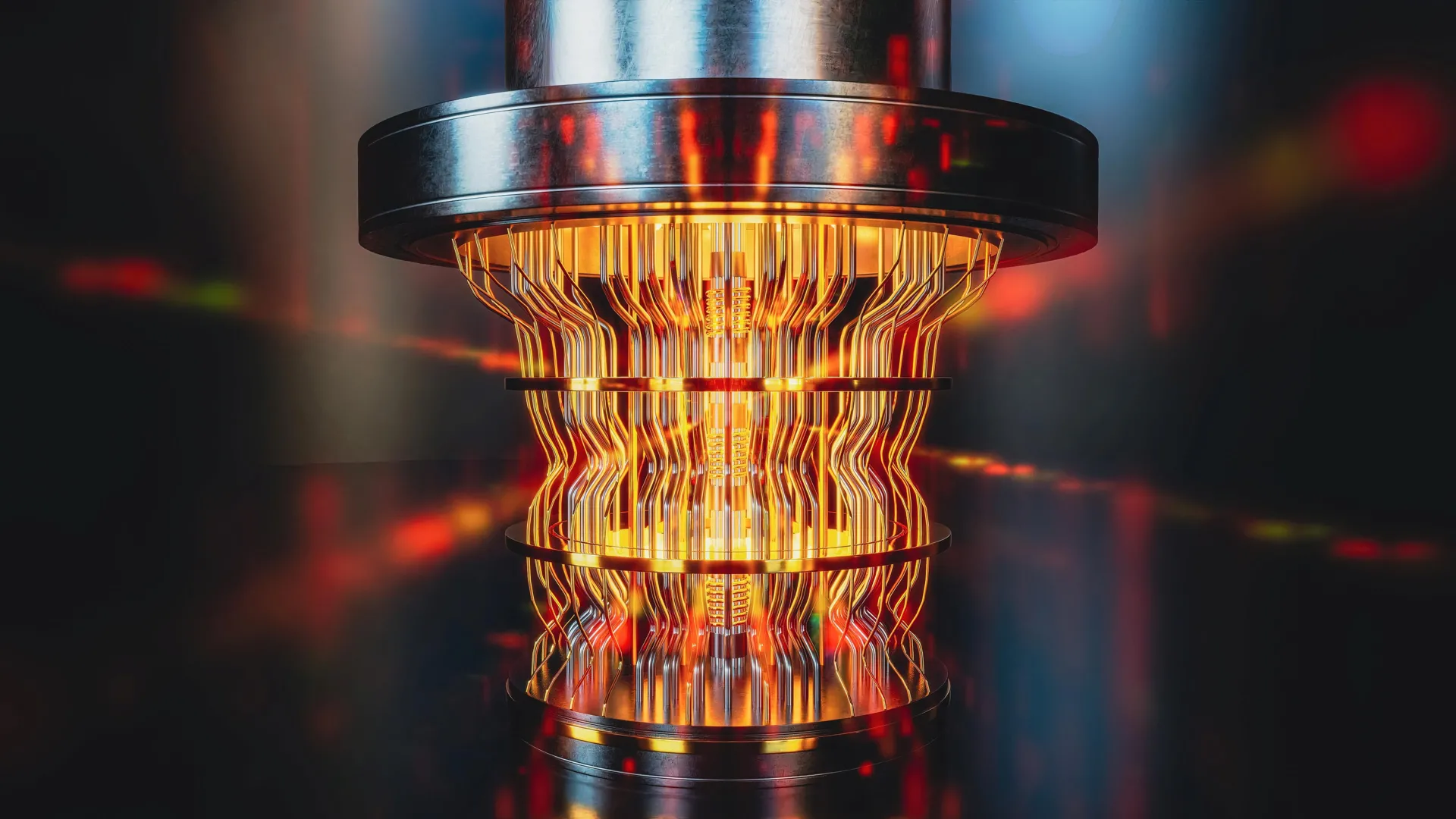
In a monumental feat of computational prowess, scientists have harnessed the immense power of nearly 7,000 graphics processing units (GPUs) to create an extraordinarily detailed simulation of a tiny quantum chip. This groundbreaking work, conducted by researchers at Berkeley Lab, aims to revolutionize the design and development of next-generation quantum hardware by providing an unprecedented window into the intricate workings of these nascent technologies. The ability to meticulously model quantum chips before they are physically built is paramount, allowing scientists to proactively identify and rectify potential design flaws, thereby ensuring that these complex devices will perform precisely as intended. This forward-thinking approach not only accelerates the pace of innovation but also significantly reduces the cost and time associated with experimental prototyping.
At the heart of this ambitious undertaking are Zhi Jackie Yao and Andy Nonaka, researchers from Berkeley Lab’s Applied Mathematics and Computational Research (AMCR) Division, who are spearheading the development of advanced electromagnetic simulations through the Quantum Systems Accelerator (QSA). Their sophisticated models are meticulously crafted to predict the nuanced behavior of electromagnetic waves within the quantum chip, a critical factor in ensuring the integrity of signal coupling and preventing detrimental crosstalk between components. "The computational model predicts how design decisions affect electromagnetic wave propagation in the chip," explained Nonaka, underscoring the vital role of these simulations in safeguarding signal fidelity. "This is crucial to make sure proper signal coupling occurs and avoid unwanted crosstalk."
To achieve this remarkable level of detail, the team leveraged ARTEMIS, a cutting-edge exascale modeling tool. This powerful software was employed to simulate and refine a quantum chip that emerged from a collaborative effort between Irfan Siddiqi’s esteemed Quantum Nanoelectronics Laboratory at the University of California, Berkeley, and Berkeley Lab’s own Advanced Quantum Testbed (AQT). The fruits of this intensive research will be presented by Yao at the forthcoming International Conference for High Performance Computing, Networking, Storage, and Analysis (SC25) in a compelling technical demonstration.
The intricate process of designing quantum chips inherently blends the principles of microwave engineering with the profound complexities of physics operating at cryogenic temperatures. This unique confluence of disciplines makes a classical electromagnetic simulation platform like ARTEMIS, which was originally developed under the auspices of the Department of Energy’s Exascale Computing Project, an ideal and well-suited tool for thoroughly investigating these sophisticated systems.
A Colossal Supercomputer Tackles a Microscopic Marvel
While not every simulation necessitates such colossal computing resources, this particular project pushed the boundaries of what was previously conceivable. To meticulously capture the fine-grained details of a highly intricate quantum chip, the research team relied on the almost unbridled power of the Perlmutter supercomputer. Over a continuous 24-hour period, they deployed a staggering 7,168 NVIDIA GPUs, dedicating nearly the entire processing capacity of this formidable machine to model a multilayer quantum chip. This chip, remarkably small in physical dimensions – measuring a mere 10 millimeters across and a scant 0.3 millimeters thick – contained features as infinitesimal as one micron in size.
"I’m not aware of anybody who’s ever done physical modeling of microelectronic circuits at full Perlmutter system scale. We were using nearly 7,000 GPUs," stated Nonaka, emphasizing the unprecedented nature of their undertaking. "We discretized the chip into 11 billion grid cells. We were able to run over a million time steps in seven hours, which allowed us to evaluate three circuit configurations within a single day on Perlmutter. These simulations would not have been possible in this time frame without the full system." This extraordinary precision sets their work apart from conventional approaches. Many existing simulation methods resort to simplifying quantum chips into "black boxes" due to inherent computational limitations. However, the researchers’ access to thousands of GPUs empowered them to model the actual physical structure and intricate behavior of the device in its entirety.
Yao elaborated on the depth of their analysis: "We do full-wave physical-level simulation, meaning that we care about what material you use on the chip, the layout of the chip, how you wire the metal – the niobium or other type of metal wires – how you build the resonators, what’s the size, what’s the shape, what material you use. We care about those physical details, and we include them in our model." This meticulous attention to physical detail extends beyond mere structural representation; the simulation is also designed to accurately recreate how the chip would behave during real-world experimental conditions, including the complex interactions between qubits and the broader circuitry.
Capturing the Nuances of Real-Time Quantum Behavior
By ingeniously combining detailed physical modeling with time-based simulation, the researchers have achieved a truly uncommon and powerful capability. Their innovative approach employs Maxwell’s equations in the time domain, a methodology that enables them to account for nonlinear effects and precisely track the evolution of signals within the chip. This unique combination of factors – a deep focus on the physical chip design coupled with the ability to simulate in real time – is what distinguishes this simulation as truly exceptional, according to Yao. "The combination is instrumental, because we use the partial differential equation, Maxwell’s equation, and we do it in the time domain so we can incorporate nonlinear behavior. All this adds up to give us one-of-a-kind capability."
The project received vital support from the National Energy Research Scientific Computing Center (NERSC) through its Quantum Information Science @ Perlmutter program, which thoughtfully allocates precious computing time to promising quantum research initiatives. Even within this specialized program, this particular simulation stood out for its sheer scale and ambitious objectives. Katie Klymko, a NERSC quantum computing engineer who actively contributed to the project, remarked, "This effort stands out as one of the most ambitious quantum projects on Perlmutter to date, using ARTEMIS and NERSC’s computing capabilities to capture quantum hardware detail over more than four orders of magnitude."
Charting the Future of Quantum Chip Modeling
Looking ahead, the research team is focused on expanding the scope and precision of their simulations. Their immediate goal is to gain an even more refined understanding of the quantum chip’s performance within larger, more complex systems. "We’d like to do a more quantitative simulation so that we can do a post-process and quantify the spectral behavior of the system," stated Yao. "We’d like to see how the qubit is resonating with the rest of the circuit. In the frequency domain, we’d like to benchmark it with other frequency-domain simulations to give us greater confidence that, quantitatively, the simulation is correct." Ultimately, the rigorous validation of their model will occur when the fabricated chip is experimentally evaluated. The researchers will then meticulously compare the real-world results with their predictions, using any discrepancies to further refine and enhance their simulation capabilities.
Yao and Nonaka were keen to emphasize that this significant achievement was the direct result of close and synergistic collaboration across various entities within Berkeley Lab and its esteemed partners. This included crucial contributions from AMCR, QSA, AQT, and NERSC, which provided not only the indispensable computing power but also invaluable technical expertise. Bert de Jong, the director of QSA, echoed the sentiment, highlighting the project’s profound impact: "This unprecedented simulation, made possible by a broad partnership among scientists and engineers, is a critical step forward to accelerate the design and development of quantum hardware. More powerful, more performant quantum chips will unlock new capabilities for researchers and open up new avenues in science."