
 Faris Adani
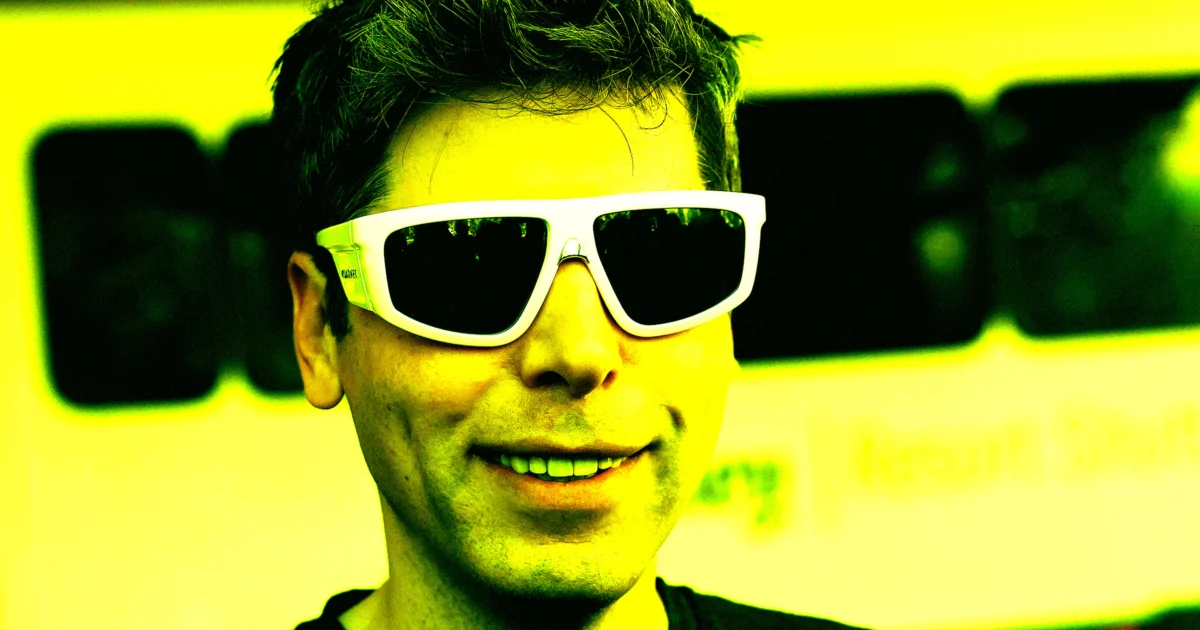
OpenAI CEO Sam Altman, a pivotal figure in the current artificial intelligence revolution, recently voiced a rather pointed critique of Gen Z, suggesting they are "lame" for not fully embracing and "worshipping" AI. While Altman expresses a degree of sympathy for younger generations navigating a tumultuous job market, his perspective starkly contrasts with the lived realities and growing skepticism surrounding the very tools he champions. His remarks, made during an interview at Stanford’s Graduate School of Business and later quoted by Fortune, underscore a significant generational and philosophical divide on the future of work and technology.
Altman acknowledges the profound disruption AI is causing, stating, "It’s totally true that huge numbers of tasks that people do today will be done better, cheaper, and faster by AI — and completely differently." This admission, coming from the leader of a company at the forefront of this disruption, is hardly revelatory. The burgeoning capabilities of large language models and generative AI systems are indeed automating vast swathes of human tasks, from content creation and customer service to data analysis and even coding. For many entering the workforce, this translates directly into increased job insecurity, the need for rapid reskilling, and a sense of unease about their future prospects.
Yet, Altman frames this disruption not as a threat, but as an unparalleled "opportunity." He argues that the current upheaval is a boon for ambitious Gen Zers willing to integrate AI into their careers or leverage it to launch new businesses. "I think you want to be starting your career at a time of the highest degree of change," he posited, advocating for a mindset that views transformation as a catalyst for innovation. From his vantage point, the current technological paradigm shift offers a fertile ground for entrepreneurial spirit, allowing individuals to "catapult their careers" by being early adopters and innovators.
However, Altman’s enthusiasm quickly veered into a dismissive tone towards those who don’t align with his vision. He expressed "chronic disappointment with MBA students," whom he characterized as perpetually wanting "to go do the thing that was cool five years ago and not do the new thing." For Altman, "the new thing" is unequivocally AI, and any hesitation or reluctance to dive headfirst into it is, by implication, a failure to grasp the moment. This sentiment suggests a binary worldview: either you’re an AI evangelist, or you’re stuck in the past, missing out on the future.
The interviewer, however, deftly highlighted the inherent irony in Altman’s argument. "So go do the new thing, even if AI is the cool thing right now," she remarked, eliciting laughter from the audience. This seemingly innocuous comment cuts to the heart of the issue: the rapid commodification and saturation of AI. The initial fervor ignited by ChatGPT’s public release in November 2022, which sparked a wave of AI optimism and a gold rush mentality, already feels like a distant memory. What was once novel and exciting has quickly become ubiquitous, shifting from a "cool new tool" to an "inescapable reality."
Public perception of AI has indeed soured considerably since its initial hype cycle. Artists and creative professionals, far from "worshipping" AI, have often viewed it with suspicion and outright hostility, seeing it as a threat to intellectual property, artistic integrity, and human creativity. Ethical concerns around data privacy, algorithmic bias, and the potential for deepfakes and misinformation have proliferated. The narrative quickly moved beyond awe at AI’s capabilities to a critical examination of its societal implications.
Meanwhile, businesses, driven by bottom-line considerations, rapidly integrated AI tools not out of a sense of "coolness," but to "economize their operations." This has manifested in various ways: automating repetitive tasks, streamlining customer service, enhancing data analytics, and even, more controversially, surveilling workers and justifying layoffs. The promise of increased efficiency often comes at the cost of human jobs and the quality of work life. For many workers, AI is not a liberating force but a constant reminder of potential redundancy, a tool wielded by management to extract more value while diminishing human input.
Consequently, AI is no longer a niche, cutting-edge phenomenon; it’s a pervasive, often invisible, part of modern life. Programmers widely use AI assistants like GitHub Copilot. Job seekers increasingly face AI-powered applicant tracking systems and even AI interviewers. Customer service often involves interacting with sophisticated chatbots. This widespread integration means that for Gen Z, AI isn’t some revolutionary "new thing" to be discovered and worshipped; it’s simply there, an integral, often unavoidable, component of their digital and professional landscape.
The fatigue with AI is even reaching the upper echelons of the tech world. Paul Graham, cofounder of the influential startup accelerator Y Combinator, served as a "weathervane" for this sentiment when he declared that he views AI writing in startup pitches as a sign of "laziness." This signals a crucial turning point: when the very architects and funders of innovation start to see AI overuse as a negative, it suggests a market saturation and a loss of the initial magic. It implies that genuine human insight, creativity, and effort still hold unique value, perhaps even more so in an AI-saturated environment.
Altman’s exhortation for Gen Z to "worship" AI overlooks several critical aspects of this generation’s unique perspective and the broader ethical implications of unchecked technological advancement. Gen Z, having grown up in an era of constant technological change, economic precarity, and heightened awareness of social and environmental issues, tends to approach technology with a more critical lens. They are often more attuned to issues of privacy, data ethics, algorithmic bias, and the human cost of technological progress. Their reluctance to "worship" AI might stem not from a lack of ambition or a desire to cling to the past, but from a more nuanced understanding of its potential downsides and a stronger demand for responsible innovation.
Moreover, the idea of "worshipping" technology itself raises philosophical questions. Is AI a neutral tool, a benevolent force, or something that demands a critical, perhaps even cautious, engagement? For a generation inheriting a world grappling with climate change, social inequality, and mental health crises, the imperative might be to leverage technology for societal good and human flourishing, rather than to simply adopt and revere it for its own sake. Their "disappointment" with AI might not be about its existence, but about how it’s being deployed and the societal outcomes it’s producing – often benefiting corporations and entrenched power structures more than the average individual.
The current economic climate, marked by fears of an "AI bubble burst" and a stock market reacting to earnings reports, further complicates Altman’s optimistic narrative. Over-reliance on AI as a panacea for all economic woes could lead to significant market corrections if the promised productivity gains don’t materialize or if the societal costs become too high. For Gen Z, who have witnessed multiple economic downturns, a cautious approach to the latest tech boom might be a pragmatic survival strategy rather than a sign of being "lame."
Ultimately, the friction between Sam Altman’s vision and Gen Z’s reality highlights a deeper tension. On one side, there’s the tech evangelist’s belief in relentless innovation and the transformative power of AI as a universal good and opportunity. On the other, there’s a generation grappling with the practical, ethical, and existential implications of these powerful tools, often feeling the brunt of their disruptive force. To dismiss their hesitation as mere backwardness or a failure to "get with the times" is to ignore the complex challenges and critical perspectives that Gen Z brings to the table, perspectives that might be essential for navigating the true future of AI responsibly.