

 Pradipta eManuel
U.S. federal investigators are probing a disturbing connection between ransomware negotiation firms and the notorious ShinyHunters hacking collective, with evidence suggesting at least one executive actively assisted the group in operating an extortion website. This revelation comes as ShinyHunters, responsible for numerous high-profile data breaches since 2019, has escalated its activities, even targeting the FBI’s own recruitment portal, fbijobs.gov. The group, now reportedly led by a teenage hacker known as "Rey" from Jordan, has amassed over $70 million in ransoms this year alone.
The FBI’s recent vulnerability was exposed when ShinyHunters exfiltrated sensitive employee data, including medical records and personal identifiers. This brazen act prompted swift action from the agency, leading to the detention of Rey in Jordan, who is now cooperating with investigators. The apprehension of Rey followed the arrest of Pepijn van der Stap, a key alleged member of ShinyHunters, in the Netherlands on September 15, 2026. Van der Stap’s communications, particularly via Signal, provided crucial leads, reportedly uncovering a murder-for-hire plot and revealing close ties to ransomware negotiators.

Among those under scrutiny is Edward Dubrovsky, a Canadian cybersecurity executive arrested on October 9, 2026, in connection with the ShinyHunters investigation. Dubrovsky, author of a book advocating engagement with hackers, faces charges of threatening to disclose stolen data and interfering with interstate commerce through extortion. Court records indicate prosecutors are seeking his detention pending trial, with case details sealed. Investigations suggest Dubrovsky was aware of the FBI data breach and failed to report it.
Further deepening the investigation is the alleged involvement of an executive from a prestigious U.S.-based consulting firm in operating the now-defunct ShinyHunters victim extortion website, shinywire[.]com. This site, active from May 3 to October 16, 2026, listed nearly 100 hacked organizations, urging victims to negotiate ransom payments and threatening to publish stolen files if demands were ignored. A cached version of the site for Intuitive Surgical, a medical technology company breached in March 2026, exemplifies the site’s aggressive tactics. Victims refusing to engage within seven days faced public shaming on a Tor-accessible blog.
Adding another layer to the unfolding narrative is a legal dispute involving Edward Dubrovsky and his former business partner, Daniel Tobok, former CEO of the global cybersecurity firm Cypfer. Dubrovsky alleges Tobok sought to "destroy" him, while Tobok counters with claims of data access and unfair competition. This conflict highlights the contentious landscape within the cybersecurity industry.

The alias "Ghostbyte" has also emerged, reportedly linked to Daniel Tobok for at least eight years among ransomware purveyors. In 2018, a victim of Dharma ransomware was advised to contact an IT firm via an email address associated with "[email protected]" for guarantees regarding ransom payments. While Tobok has not commented, Constella Intelligence data links his frequently used email, [email protected], to online accounts where "ghostbyte" was a chosen username, including a Snapchat account. The email address of the Dharma representative, [email protected], is linked to a cryptocurrency address that processed significant transactions. Cypfer has stated its business does not involve facilitating ransomware payments and that it was unaware of Dubrovsky’s arrest.
The legality of paying ransoms is a complex issue. While not illegal to pay for decryption keys or data deletion promises, doing so with sanctioned groups can lead to legal trouble. ShinyHunters is not currently sanctioned. Experts note a conflict of interest arises when incident response firms, often recommended by insurers, also facilitate ransom payments, as their financial incentive lies in larger payouts rather than minimizing them.
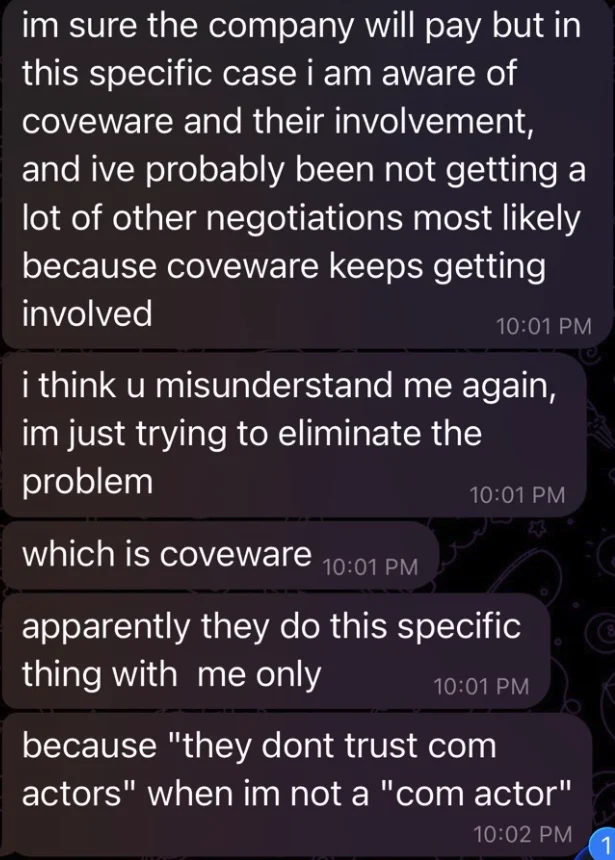
Leading cybersecurity firms like Coveware and Unit 221B have consistently advised against paying ShinyHunters, citing the likelihood of data being retained, resold, or reused for further extortion. The FBI echoed this warning in a May 15, 2026 alert. ShinyHunters members have reportedly harassed and threatened employees of these firms for their advice. Internal communications reveal ShinyHunters expressing frustration with Coveware’s efforts to dissuade victims, viewing it as detrimental to their profitability. The group even discussed "eliminating the problem" of Coveware’s influence.

Mark Camillo, CEO of CyberAcuView, highlights the inherent conflict of interest for negotiators charging a percentage of the ransom paid. He advocates for greater transparency in these transactions, arguing that no entity should profit solely from the size of a ransomware payment. While some firms claim higher fees are due to cryptocurrency acquisition costs and exchange rates for high-risk transactions, Camillo insists on clarity to align incentives.
The U.S. Department of Justice has been actively prosecuting ransomware negotiators accused of defrauding clients. Zohar Pinhasi, CEO of MonsterCloud, was charged with wire fraud and conspiracy for allegedly charging customers for remediation services without paying hackers, while secretly paying $8 million to ransomware groups and charging clients $19 million. In July, Angelo Martino, a Florida-based ransomware negotiator, received a 70-month prison sentence for conspiring with the Blackcat/ALPHV group to extort victims by providing confidential information about his employer’s clients’ negotiating positions.