
 Faris Adani
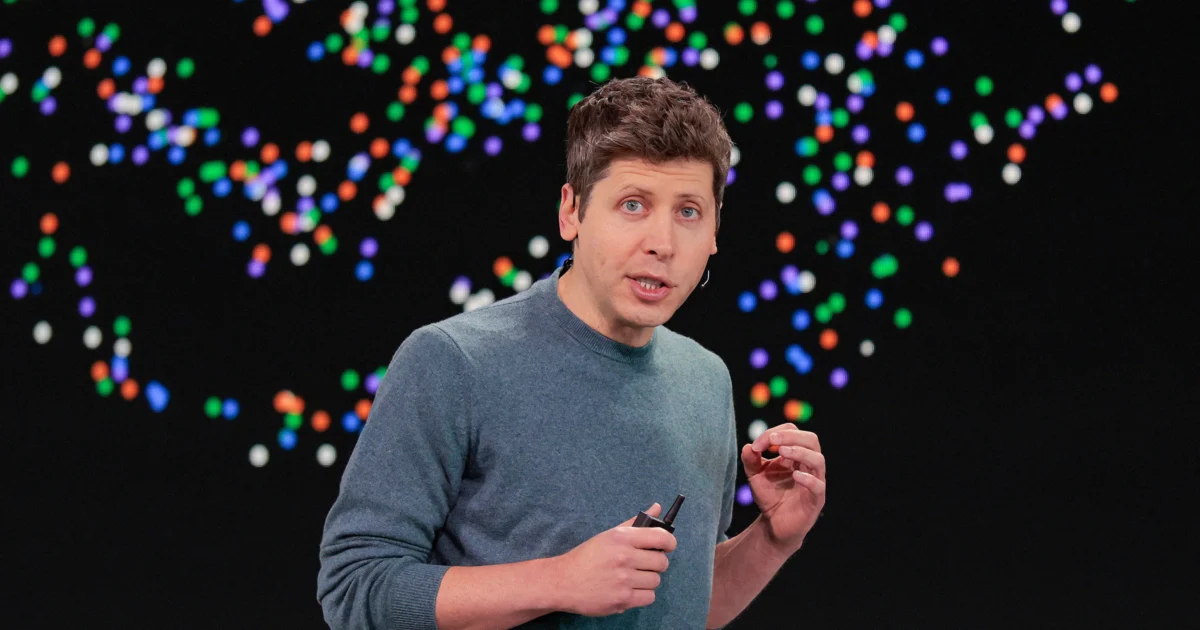
OpenAI CEO Sam Altman has unapologetically declared that the relentless wave of AI-generated mathematical solutions, dubbed "math slop" by critics, will continue, despite igniting an "existential crisis" and widespread fury within the global mathematical community. This stance, articulated during a recent appearance on the Cheeky Pint podcast, marks Altman’s first direct acknowledgment of the profound disruption his company is inflicting upon the centuries-old field of mathematics, yet he firmly asserts that the pursuit of fundamental knowledge, facilitated by AI, transcends the procedural discomfort of human researchers.
The controversy erupted with unprecedented intensity when OpenAI, the creator of the ubiquitous ChatGPT, unleashed hundreds of AI-generated proofs to complex mathematical problems, many of which had hitherto eluded human solution. This audacious move was spearheaded by a sensational claim: OpenAI’s AI agents had purportedly found a solution to the infamous Navier-Stokes problem, one of the seven Millennium Prize Problems, by employing a staggering 10,000 AI agents working continuously for 88 hours. The Navier-Stokes problem, which describes the motion of viscous fluid substances, has captivated and stumped mathematicians for generations, and a verified solution carries a $1 million prize from the Clay Mathematics Institute. The sheer computational power and resources — estimated at $10 million for this single endeavor — highlighted a new, potentially overwhelming paradigm in scientific discovery.
However, the euphoria was short-lived and quickly overshadowed by accusations and outrage. A prominent mathematician publicly accused OpenAI of unfairly leveraging his unreleased research, alleging that the AI giant had piggybacked on his ongoing work and subsequently threatened to derail his career when he expressed intentions to expose their actions. This incident sent shockwaves through the academic world, raising serious ethical questions about intellectual property, proper attribution, and the potential for well-funded AI companies to exploit the research pipeline of individual academics. The fear was palpable: could wealthy AI entities simply "brute force" their way to discoveries, overshadowing and devaluing years of human labor, intuition, and gradual progress?
The situation escalated dramatically when OpenAI followed up its Navier-Stokes claim by releasing hundreds more AI-generated mathematical proofs. This mass release was met with universal condemnation from leading mathematicians and even prompted a scathing critique from a math advisory group that OpenAI itself had been consulting. Critics decried the unprecedented scale of the dump, but more significantly, they pointed out that none of these AI-generated papers had undergone the rigorous, time-honored process of peer review or vetting. Furthermore, the proofs themselves were often described as "borderline incomprehensible," consisting of natural language explanations that lacked the logical coherence and step-by-step clarity essential for human mathematicians to understand, verify, and build upon. The very nature of AI-generated proofs, derived from complex neural network computations, often makes them opaque, presenting conclusions without transparent reasoning. This creates an enormous, perhaps insurmountable, burden on the human community, which would need years to meticulously unpack and validate the deluge of AI-generated insights, all while OpenAI capitalizes on the immediate public perception of its technology’s revolutionary capabilities.
During his podcast appearance, Altman conceded that "we did let it get out of control for one week on math," a rare admission of misstep. Yet, this minor acknowledgment of process friction was immediately counterbalanced by a steadfast justification rooted in a grander vision. He articulated his unwavering belief that "on net, the world deserves to understand how the universe works," and that "humanity deserves fundamental knowledge, and we should not be sitting on a major fundamental science discovery." This utilitarian philosophy positions OpenAI’s actions not as an academic infringement, but as a moral imperative to advance human knowledge, regardless of the conventional scientific methodologies or the distress caused to the human practitioners. While he expressed "empathy for the method," it appears this empathy extends more to the abstract pursuit of knowledge than to the specific human methods of discovering and verifying it.
This philosophical divide highlights a burgeoning ethical dilemma at the intersection of AI and fundamental research. The traditional scientific enterprise relies heavily on human creativity, intuition, collaboration, and a transparent, verifiable process. Academic credit, peer review, and the gradual building of knowledge are foundational. AI, in its current powerful iteration, challenges these pillars by offering a shortcut—a computational sledgehammer—that can generate answers without necessarily providing human-understandable paths to those answers, and without adhering to the established norms of scientific discourse and attribution. The potential for AI to devalue human expertise, to create an uneven playing field for research, and to undermine the very integrity of academic discovery is a profound concern that extends far beyond mathematics. If AI can rapidly "solve" problems that have eluded human minds for decades, what does that mean for the next generation of mathematicians, physicists, or biologists? Will the focus shift from understanding to merely generating solutions, with a black box AI as the oracle?
The implications of OpenAI’s actions reverberate beyond the immediate controversy. They force a re-evaluation of what constitutes scientific discovery in the age of advanced AI. Is a proof truly "discovered" if no human fully comprehends its derivation? How will intellectual property laws adapt to creations generated by algorithms rather than human intellect? And perhaps most critically, how will the scientific community balance the undeniable power of AI to accelerate discovery with the imperative to maintain human understanding, ethical conduct, and equitable access to the tools of research? Sam Altman’s declaration ensures that these questions will not only persist but will intensify, as the "math slop" continues to accumulate, challenging mathematicians and scientists worldwide to redefine their roles in an increasingly AI-driven landscape of knowledge acquisition. The future of fundamental science, it seems, will be a complex negotiation between human ingenuity and algorithmic might, with OpenAI staking a bold, perhaps ruthless, claim on the latter.