
 Faris Adani
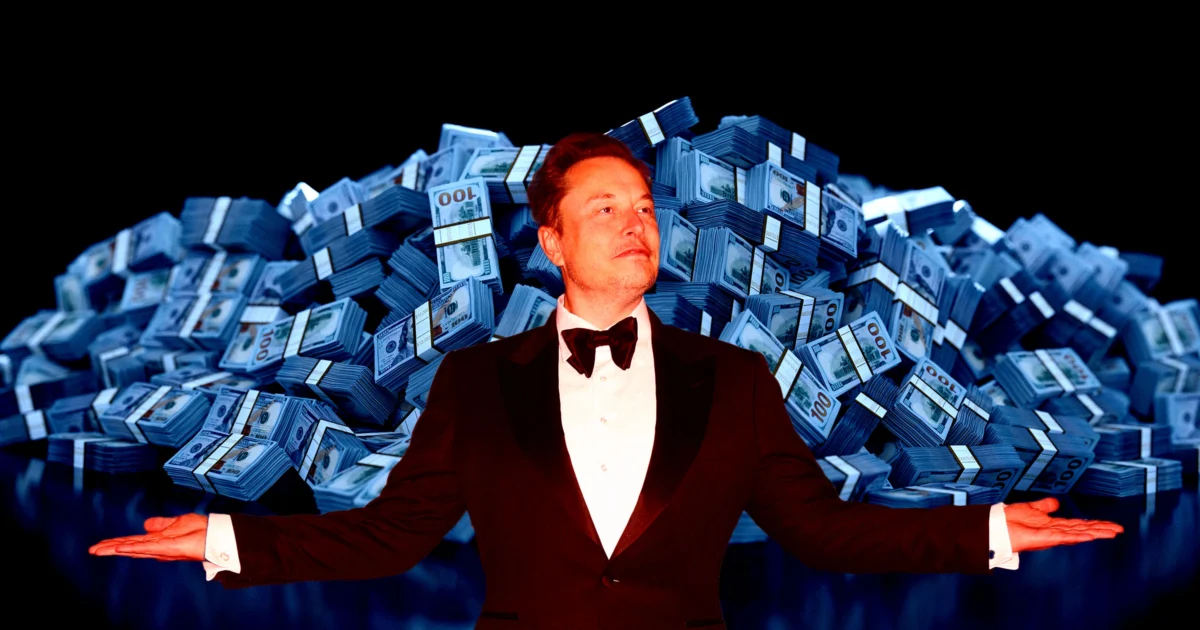
Is Elon Musk a business genius, as his fervent admirers and eager investors frequently declare, or is he, as his own AI chatbot Grok once famously, and perhaps predictably, averred, "among the top ten minds in history, rivaling polymaths like da Vinci or Newton"? Whatever grand title one might bestow upon him, one thing is abundantly clear: self-awareness does not appear to be among his most prominent traits. This inherent disconnect from the lived realities of the vast majority of the global population was on full display early Thursday morning when Musk, from the opulent perch of his social media platform X, dispensed a piece of unsolicited financial wisdom to the masses struggling to make ends meet: don’t bother saving money for the future, because, in his estimation, it’s "pointless."
"Saving money for the distant future is pointless with the advent of super intelligent abundance," Musk confidently proclaimed in a tweet, a statement that immediately ignited a firestorm of incredulity and criticism across the digital landscape. The sheer audacity of such advice emanating from a man whose personal fortune has, at times, flirted with the trillion-dollar mark – a net worth spectacularly catapulted past the $900 billion threshold following the massively hyped initial public offering (IPO) of his pioneering space exploration company, SpaceX – represents a feat of hypocrisy as staggering as the scale of his accumulated wealth. To put his financial standing into perspective, if Elon Musk were to embark on an extravagant spending spree, blowing $100 million every single day, it would take him well over two decades to even begin to deplete the colossal sums he has amassed. For the average person, the concept of such unimaginable wealth, let alone the ability to spend it at such a rate, is utterly beyond comprehension, making his advice on saving not just tone-deaf but offensively dismissive of everyday financial struggles.
The irony of a man who presides over an empire built on capital accumulation, investment, and strategic financial planning advising others against saving is not lost on observers. His own businesses, Tesla and SpaceX, are monuments to long-term investment, deferred gratification, and the strategic deployment of vast sums of capital towards ambitious future goals. The very rockets SpaceX launches are the result of billions of dollars saved, invested, and meticulously managed over years. Yet, for the "peons" living paycheck to paycheck, grappling with inflation, stagnant wages, rising housing costs, and the ever-present specter of unexpected expenses, Musk’s pronouncement sounds less like visionary foresight and more like the detached musings of someone entirely insulated from economic hardship. For millions, saving isn’t a luxury; it’s a desperate necessity for a down payment, a child’s education, medical emergencies, or the faint hope of a dignified retirement.
Beyond his personal wealth, Musk’s approach to philanthropy further underscores his perceived miserliness when compared to many of his fellow elites. While other billionaires engage in high-profile charitable initiatives, pledging significant portions of their fortunes to address global challenges, Musk has historically shown little inclination towards large-scale charitable giving. His philanthropic endeavors are conspicuously few, and the sums he donates to charitable causes often pale in comparison to his net worth. Instead, a considerable portion of his financial contributions seems to be directed towards political ends. He notably enjoys pouring money into Republican election campaigns, including a reported $300 million contribution towards Donald Trump’s 2024 presidential run, a strategic investment that often yields influence and favorable regulatory environments rather than direct humanitarian aid.
The charity he does operate, the Musk Foundation, has itself come under intense scrutiny for its opaque structure and what critics describe as "shady donations." Investigations have revealed that much of its nearly $15 billion in assets has been channeled towards organizations with close ties to Musk and his extensive network of businesses, raising questions about whether these donations serve genuine philanthropic purposes or primarily benefit his own commercial interests and public image. The New York Times reported that, in 2023, the Musk Foundation failed to disburse the minimum amount of money it was legally required to give away by a staggering margin of $421 million, further fueling doubts about its charitable bona fides. This behavior aligns with Musk’s previously expressed sentiment that charities are, in fact, a "net negative" on the world, a viewpoint that perhaps explains his foundation’s apparent reluctance to genuinely engage in widespread, impactful philanthropy.
Musk’s latest tirade against saving money is not merely a testament to his profound detachment from common economic realities, but also a reflection of his almost messianic, and some would argue "delusional," optimism regarding the advent of artificial intelligence. He has consistently and vehemently insisted that AI will soon usher in an era of untold "abundance" for all of humanity. In a now infamous interview with The Economist this past summer, Musk asserted that "there really won’t be anything AI won’t be able to do better than humans, apart from being human, perhaps," framing this as an unequivocally positive development. He continued, "I think AI may exceed the sum of human intelligence in around five years. The most likely outcome is an age of amazing abundance where anyone can have anything they can think of."
This utopian vision of an AI-powered future, where scarcity is eradicated and material desires are instantly fulfilled, forms the bedrock of his "pointless to save" philosophy. If AI truly ushers in an era where goods and services are limitless and universally accessible, then the traditional concept of saving for future needs or retirement would indeed become obsolete. However, this optimistic outlook glosses over a multitude of complex and critical questions. How would this "amazing abundance" be distributed? Who would control the super-intelligent AI systems that generate this wealth? What would be the societal implications of widespread job displacement, where human labor becomes largely redundant? And what about the existential risks and ethical dilemmas posed by increasingly powerful AI, concerns that Musk himself has occasionally acknowledged before pivoting back to his preferred narrative of limitless prosperity? Critics argue that his vision lacks a realistic framework for governance, wealth redistribution, or addressing the potential for increased inequality and social unrest during the transition to such a future.
This isn’t the first instance where Musk has advised against traditional financial prudence in anticipation of this AI-driven future. In a January podcast appearance, he echoed similar sentiments, stating, "Don’t worry about squirrelling money away for retirement in like 10 or 20 years — it won’t matter. You won’t need to save for retirement. If any of the things that we’ve said are true, saving for retirement will be irrelevant." This consistent messaging reveals a deeply held, albeit highly speculative, belief system that informs his public pronouncements. It suggests that, in his mind, the technological singularity is not just probable but imminent, and its implications so profound that they render traditional economic models, including the very concept of personal savings, utterly meaningless.
Adding another layer to his complex and often contradictory public persona, earlier this month, Musk made a grand, yet unverified, pledge to give "every kid in America" a single share of SpaceX stock. This announcement was widely perceived as a direct, competitive response to his AI rival, Anthropic, which had previously vowed to divert a significant portion of its shares into a philanthropic "public benefit fund." While the gesture, if realized, could be seen as a step towards broader wealth distribution, it also plays into Musk’s pattern of making ambitious promises that frequently fail to materialize. His track record is replete with unfulfilled pledges, from "full self-driving" Tesla vehicles that remain elusive, to promises of Martian colonies that are still decades away. The skepticism surrounding whether he will follow through on this particular promise is thus well-founded, reinforcing the notion that his pronouncements often serve more as public relations maneuvers or provocations rather than concrete commitments.
Ultimately, Musk’s assertion that saving money is "pointless" serves as a stark reminder of the profound chasm separating the world’s ultra-rich from the everyday realities of billions. It highlights a troubling lack of empathy and an uncritical embrace of a speculative future, while conveniently ignoring the present-day struggles that make financial prudence not a choice, but a necessity for survival and stability. For those striving to build a secure future in an uncertain world, the advice from a man hoarding nearly a trillion dollars to simply stop saving rings not with wisdom, but with an almost comical level of detachment. It underscores the ongoing debate about the responsibilities of immense wealth and the often-perilous gap between technological optimism and social reality.