Imroatul Nasiyah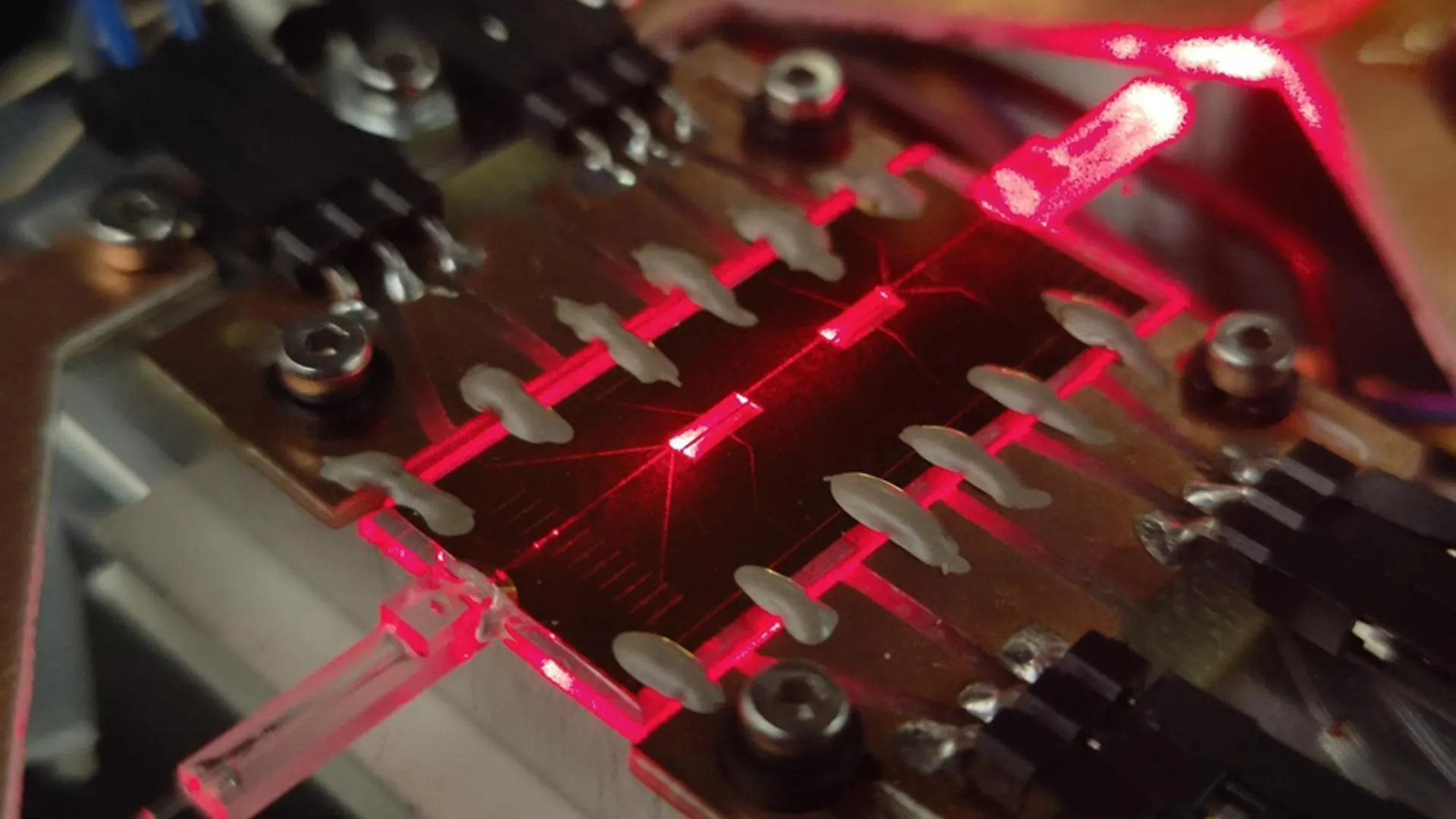
The core of their achievement lies in the creation of a high-performance quantum coherent receiver, ingeniously fabricated directly within the glass itself using a sophisticated femtosecond laser writing technique. This advanced manufacturing process bestows upon the device exceptionally low optical loss, remarkable stability over time and varying conditions, and crucially, seamless compatibility with the vast existing infrastructure of fiber-optic networks. These attributes are not merely incremental improvements; they represent essential advancements that are poised to propel quantum technologies out of the confines of specialized laboratories and into practical, real-world applications.
Why Glass Outperforms Silicon in the Quantum Realm
At the heart of continuous-variable (CV) quantum information processing, the technology underpinning crucial applications like quantum key distribution (QKD) and quantum random number generation (QRNG), lies the precise measurement of the amplitude and phase of light waves. To achieve this, a quantum coherent receiver plays a pivotal role. It works by skillfully combining a faint quantum signal with a stronger, stable reference beam and then meticulously analyzing the subtle interference patterns that emerge from their interaction.
Historically, integrated receivers have predominantly been constructed from silicon. While silicon is an incredibly versatile and widely adopted material in the electronics industry, supporting high levels of integration, it presents significant challenges when applied to quantum systems. Silicon-based devices often exhibit a problematic sensitivity to polarization – the orientation of the light wave’s oscillations – and tend to suffer from higher optical losses. These inherent limitations can severely compromise the performance, reliability, and ultimately, the practical deployment of sensitive quantum communication systems.
Glass, however, emerges as a superior alternative for these demanding quantum applications. Its intrinsic properties offer a distinct advantage. Naturally insensitive to polarization, glass provides a stable platform for optical signals. Furthermore, it allows for the creation of intricate, three-dimensional light-guiding paths, known as waveguides, with minimal signal degradation. The advanced femtosecond laser micromachining technique employed by the researchers enables them to precisely sculpt these optical circuits directly within the bulk of the glass material. This elegant fabrication method circumvents the complex and often costly processes associated with semiconductor manufacturing, resulting in remarkably compact and efficient photonic circuits.
The Intricate Design of the Laser-Written Quantum Receiver
The research team successfully engineered a fully tunable heterodyne receiver, a critical component for both CV-QKD and CV-QRNG, by directly inscribing the complete optical circuit within a block of borosilicate glass. This sophisticated chip incorporates a suite of essential elements, meticulously arranged to facilitate precise quantum signal manipulation. These include a high-quality beam splitter, crucial for dividing and recombining light beams; precisely shaped waveguides, designed to guide light with minimal loss and distortion; and an integrated optical coupler, responsible for controllably merging the quantum signal with the reference beam. The inclusion of an electro-optic modulator further enhances the device’s tunability, allowing for dynamic adjustment of the phase and amplitude of the reference beam.
These integrated features empower the quantum signal and the reference beam to interact in a highly controlled and predictable manner. This controlled interaction is fundamental to enabling the simultaneous measurement of two conjugate quadratures of the quantum light – a key requirement for extracting meaningful quantum information. The fabricated device has demonstrated exceptional performance characteristics, including an impressively low optical loss of less than 0.5 dB per centimeter for the waveguides, a high extinction ratio of over 30 dB for the integrated Mach-Zehnder interferometer, and a tunable bandwidth of up to 10 GHz, surpassing the capabilities of many existing silicon-based photonic receivers.
One Chip, Two Quantum Technologies: A Versatile Solution
The exceptional combination of low optical loss, precise tunability, and inherent stability makes this glass-based receiver remarkably versatile. It is capable of supporting multiple quantum communication tasks without the need for specialized, single-purpose hardware. In one groundbreaking demonstration, when configured as a heterodyne detector, the chip facilitated the operation of a source-device-independent QRNG system. This means the generated random numbers remain secure and trustworthy, even if the incoming optical signal is compromised or untrusted – a critical feature for real-world security. The system achieved a record-breaking secure random bit generation rate of an astonishing 42.7 Gbit/s, setting a new benchmark for this advanced type of quantum random number generator.
In another compelling application, the same versatile chip was employed in a QPSK-based CV-QKD protocol. This protocol encodes information within a four-point constellation of quantum states, offering increased data capacity. When tested over a simulated 9.3-km fiber link, the system demonstrated a robust secret key rate of 3.2 Mbit/s. These results unequivocally prove that a glass-based photonic front end can effectively support sophisticated CV-QKD protocols, overcoming the inherent drawbacks often encountered with silicon platforms.
Glass Photonics Moves Toward Real-World Deployment
Beyond its impressive performance metrics, the study highlights several compelling practical advantages of employing glass in integrated quantum photonics. The femtosecond laser writing technique is a direct, maskless fabrication method, significantly simplifying the manufacturing process and reducing production costs. This approach also offers exceptional scalability, allowing for the mass production of complex photonic circuits. Furthermore, the inherent robustness of glass makes these devices highly resistant to environmental factors such as temperature fluctuations and mechanical vibrations, ensuring long-term reliability and durability. These qualities are paramount for real-world deployment, extending even to the demanding conditions of potential space-based quantum communication systems. The researchers are optimistic that this glass-based approach can significantly bridge the gap between the controlled environment of laboratory experiments and the robust infrastructure required for practical quantum networks.
Towards Scalable Quantum Communication Networks
By strategically leveraging the inherent advantages of glass photonics, the research team has successfully showcased two major quantum applications on a single, integrated chip. The first is a source-device-independent QRNG system, achieving a record-high secure generation rate of 42.7 Gbit/s, offering unparalleled security for generating truly random numbers. The second is a QPSK-based CV-QKD system, which demonstrated a secure key rate of 3.2 Mbit/s over a simulated 9.3-kilometer fiber link, paving the way for secure communication over significant distances.
These remarkable achievements underscore the potential of glass-based integrated photonics as a durable, versatile, and cost-effective platform for the next generation of quantum technologies. The inherent stability, resistance to harsh environments, and ease of scalability offered by glass make it an ideal candidate for the widespread deployment of quantum communication infrastructure. This innovative approach promises to accelerate the transition of quantum communication from highly controlled laboratory settings to the complex and demanding realities of global, real-world networks, marking a pivotal step towards realizing the full promise of a quantum-enabled future.