Imroatul Nasiyah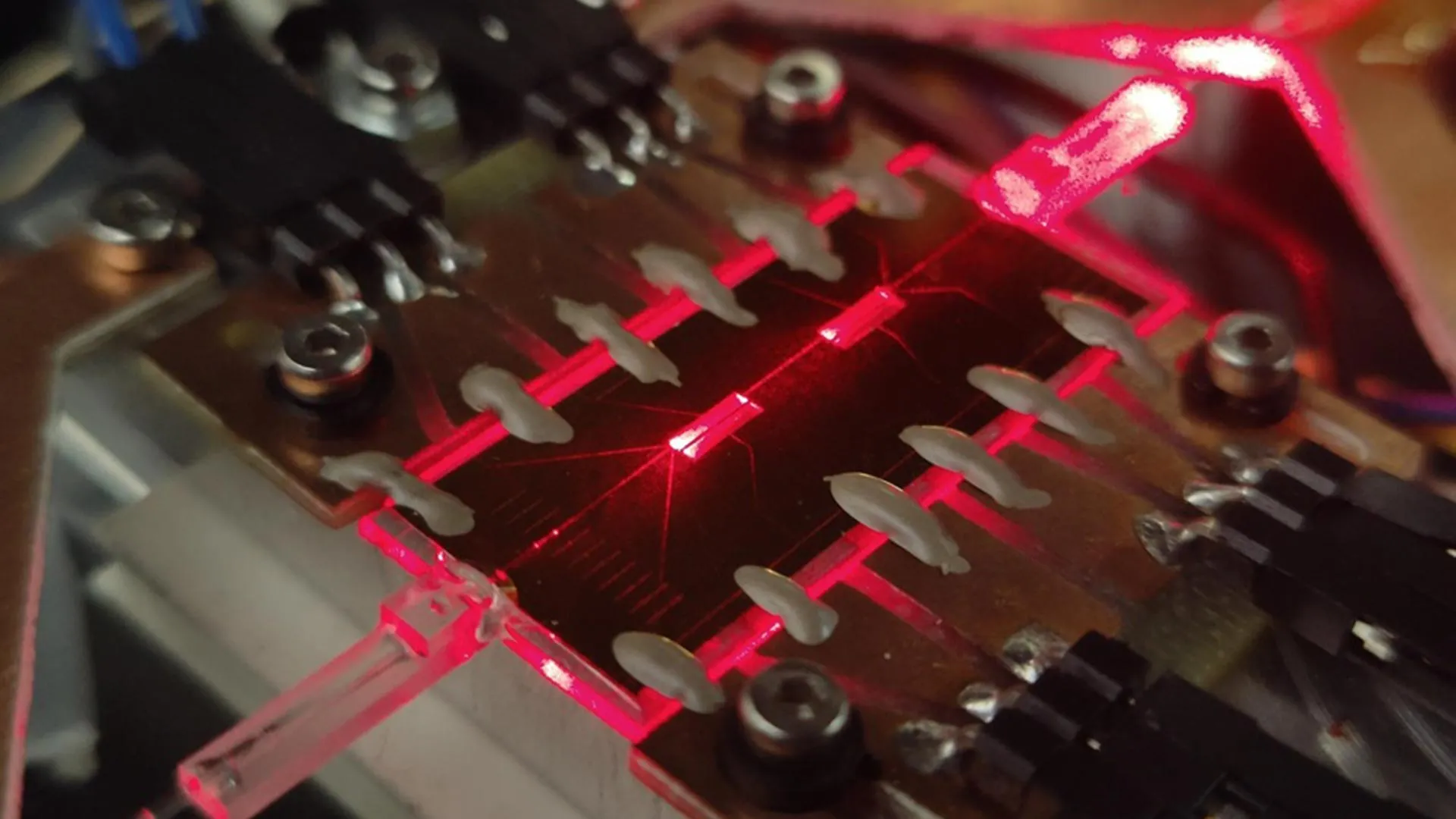
In a groundbreaking development reported in the esteemed journal Advanced Photonics, researchers from the University of Padua, Politecnico di Milano, and the CNR Institute for Photonics and Nanotechnologies have unveiled a novel approach that harnesses an unassuming yet remarkably capable material: borosilicate glass. Their pioneering work centers on the creation of a high-performance quantum coherent receiver, meticulously engineered directly within the glass substrate using the precision of femtosecond laser writing. This innovative fabrication technique bestows upon the device an array of crucial attributes, including exceptionally low optical loss, unwavering operational stability, and seamless compatibility with the vast and existing infrastructure of fiber-optic communication systems. These combined advantages are not merely academic achievements; they represent critical enablers for the crucial transition of quantum technologies from the confines of controlled laboratory environments to the messy, real-world deployment scenarios that are essential for building the quantum internet.
Why Glass Outperforms Silicon in the Quantum Realm: A Material Advantage
At the heart of many cutting-edge quantum information processing techniques, particularly those employed in quantum key distribution (QKD) and quantum random number generation (QRNG), lies the principle of continuous-variable (CV) quantum information processing. This sophisticated methodology relies on the precise measurement of both the amplitude and phase of light waves, two fundamental properties that carry quantum information. To achieve this, a coherent receiver plays a pivotal role. It meticulously combines a faint quantum signal, often carrying sensitive information, with a stronger, precisely controlled reference beam. The subsequent analysis of how these two beams interfere, a phenomenon known as interference or superposition, allows for the extraction of the encoded quantum information.
Historically, the predominant material choice for integrated receivers in this field has been silicon. Silicon’s ubiquity in the electronics industry and its well-established semiconductor manufacturing processes have made it a natural and accessible platform for integration. Indeed, silicon-based devices offer remarkable capabilities for miniaturization and complex circuit design. However, when it comes to the nuanced demands of quantum communication, silicon exhibits inherent limitations. It is notably susceptible to polarization variations, meaning its performance can be significantly affected by the orientation of the light waves. Furthermore, silicon-based waveguides often suffer from higher optical losses, where a portion of the light signal is dissipated as it travels through the material. These losses can severely degrade the performance and reliability of quantum systems, particularly when dealing with the extremely weak signals characteristic of quantum communication.
Glass, on the other hand, presents a compelling suite of advantages that make it an exceptionally well-suited material for quantum photonic devices. Its inherent insensitivity to polarization means that the orientation of the light signal has a negligible impact on its performance, simplifying device design and operation. Glass also boasts remarkable thermal and environmental stability, ensuring consistent performance over time and under varying conditions. Crucially, the advent of femtosecond laser micromachining has unlocked the ability to sculpt intricate light-guiding paths, known as waveguides, directly within the bulk of the glass in three dimensions. This remarkable capability allows for the creation of compact, highly efficient photonic circuits with minimal signal loss, bypassing the complex and often costly fabrication processes associated with semiconductor manufacturing.
Inside the Laser-Written Quantum Receiver: Precision Engineering in Glass
The research team has masterfully demonstrated the potential of this glass-based approach by fabricating a fully tunable heterodyne receiver, a critical component for both CV-QKD and CV-QRNG applications. The optical circuit, designed to precisely manipulate and measure quantum signals, is etched directly into a piece of borosilicate glass using the focused energy of femtosecond laser pulses. This sophisticated chip incorporates a series of meticulously designed features, including:
- Beam Splitters: These precisely fabricated structures divide incoming light beams, enabling the controlled mixing of the quantum signal and the reference beam.
- Waveguides: Intricately patterned channels guide the light throughout the chip, ensuring minimal loss and maintaining the integrity of the quantum states.
- Phase Shifters: These elements allow for precise adjustment of the phase of the light beams, a crucial step for accurate interference measurements.
- Interferometer Structures: Carefully designed configurations of beam splitters and waveguides create the conditions necessary for constructive and destructive interference, the hallmark of coherent detection.
These integrated features work in concert to orchestrate the interaction between the quantum signal and the reference beam in a highly controlled manner. This precise control enables the simultaneous measurement of two conjugate quadratures of the light field. Quadratures are essentially different ways of looking at the wave properties of light, and measuring conjugate quadratures provides a complete picture of the quantum state. The device has demonstrated exceptional performance characteristics, including:
- Low Insertion Loss: The amount of light lost as it passes through the optical components is remarkably low, ensuring that the faint quantum signals are preserved.
- High Quadrature Purity: The measurements accurately reflect the intended properties of the light, minimizing noise and errors.
- Broadband Operation: The receiver can operate effectively across a wide range of optical frequencies, enhancing its versatility.
- Excellent Stability: The device exhibits minimal drift in its performance over time and under varying environmental conditions.
Collectively, these performance metrics meet or even surpass the capabilities of many state-of-the-art silicon-based photonic receivers, underscoring the significant advantages offered by the glass platform.
One Chip, Two Quantum Technologies: A Versatile Quantum Front-End
The remarkable synergy of low optical loss, inherent tunability, and robust stability embodied in this glass-based receiver opens up exciting possibilities for its application in a multitude of quantum communication tasks without the need for specialized hardware for each. This versatility is a significant step towards simplifying the quantum technology ecosystem.
In one demonstration, the chip was configured as a heterodyne detector to facilitate a source-device-independent QRNG system. This means that the generated random numbers are secure even if the source of the quantum signal is untrusted or compromised, a crucial consideration for real-world security applications. The chip achieved an impressive secure random bit generation rate of 42.7 Gbit/s, setting a new benchmark for this advanced type of QRNG system. This rate is remarkably high and indicates the practical viability of generating truly random numbers at speeds suitable for high-bandwidth applications.
Furthermore, the same integrated device was successfully employed in a quantum key distribution (QKD) protocol utilizing quadrature amplitude modulation (QAM), specifically Quadrature Phase Shift Keying (QPSK). In this protocol, information is encoded onto a four-point constellation of quantum states, allowing for efficient data transmission. When tested in a simulated fiber optic link spanning 9.3 kilometers, the QPSK-based CV-QKD system achieved a secure key rate of 3.2 Mbit/s. This result is particularly noteworthy as it demonstrates that a glass-based photonic front-end can effectively support advanced CV-QKD protocols, overcoming some of the inherent limitations and drawbacks previously encountered with silicon platforms.
Glass Photonics Moves Toward Real-World Use: Durability and Scalability
Beyond its impressive performance metrics, the study highlights a compelling array of practical benefits that solidify the potential of using glass in integrated quantum photonics for real-world applications:
- Cost-Effectiveness: Glass is a relatively inexpensive material, and the femtosecond laser writing process can be scaled for mass production, driving down the cost of quantum devices.
- Environmental Robustness: Glass exhibits excellent resistance to temperature fluctuations, humidity, and radiation, making it ideal for deployment in harsh or demanding environments.
- Ease of Manufacturing: The direct writing capability of femtosecond lasers simplifies the fabrication process, reducing the need for complex cleanroom facilities and multi-step lithography.
- Longevity: The inherent stability of glass ensures that devices built within it will have a long operational lifespan, reducing maintenance and replacement costs.
These qualities collectively contribute to the long-term reliability and durability of the quantum devices, making them suitable for a wide range of real-world applications, including potentially even for use in space-based quantum communication systems where harsh environmental conditions are a significant challenge. The researchers emphasize that the adoption of glass-based photonics has the potential to significantly bridge the gap between the highly controlled and often cumbersome experimental setups currently used in laboratories and the practical, user-friendly quantum networks of the future.
Toward Scalable Quantum Communication Networks: A Durable and Versatile Platform
By ingeniously leveraging the inherent advantages of glass and the precision of femtosecond laser writing, the research team has successfully demonstrated two major quantum applications on a single, integrated chip. This dual functionality is a testament to the platform’s versatility. Firstly, they showcased a source-device-independent QRNG system boasting a record-breaking secure generation rate of 42.7 Gbit/s, a significant leap forward in generating truly unpredictable random numbers for cryptographic purposes. Secondly, they implemented a QPSK-based CV-QKD system that achieved a secure key rate of 3.2 Mbit/s over a simulated 9.3-kilometer fiber link, proving its efficacy in establishing secure communication channels.
More broadly, this pioneering work firmly establishes glass-based integrated photonics as a durable, versatile, and highly promising platform for the development of next-generation quantum technologies. The inherent stability of glass, coupled with its cost-effectiveness and resilience in the face of environmental challenges, makes it exceptionally well-suited for the large-scale deployment that will be necessary to build a global quantum communication infrastructure. This innovative approach has the potential to accelerate the transition of quantum communication from specialized laboratory experiments to robust, real-world infrastructure, marking a pivotal and exciting step towards the realization of truly secure and interconnected global quantum networks.