Faris Adani
The ambitious vision of an AI-powered future, fueled by an unprecedented construction boom of enormous data centers, is currently colliding with the harsh realities of global supply chains and economic pressures. Despite grand pronouncements of allocating hundreds of billions of dollars, the artificial intelligence industry, particularly in the United States, is struggling to transform these lofty ambitions into tangible infrastructure. Recent investigations by prominent financial news outlets like Bloomberg and critical analyses from industry observers such as Ed Zitron reveal a significant slowdown: approximately half of the AI data centers initially slated for opening in the US are now either facing severe delays or have been canceled outright. This infrastructure bottleneck, stemming from massive electric component shortages and rapidly escalating costs, has decelerated the promised build-out to a mere trickle, causing considerable frustration among tech leaders who had envisioned a rapid expansion.
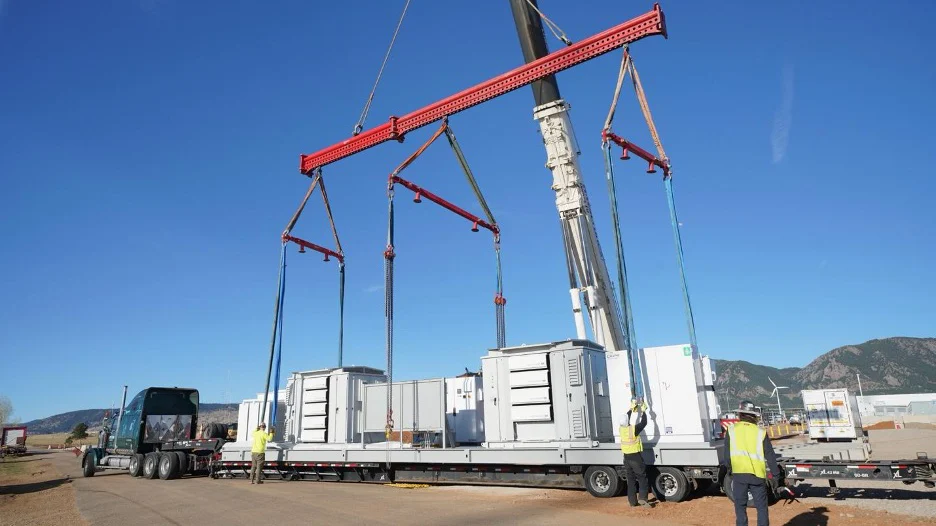
The underlying issue is multifaceted. The construction of a modern data center, especially one designed for the immense demands of AI training and inference, is an incredibly complex undertaking. It requires a vast array of specialized components: high-performance graphics processing units (GPUs), sophisticated networking equipment, massive power transformers, switchgear, advanced cooling systems, and reliable energy sources. Many of these components are produced by a limited number of manufacturers globally, leading to significant supply chain vulnerabilities. For instance, the Bloomberg report highlighted a concerning reliance on Chinese electrical equipment imports, creating potential geopolitical and logistical headaches. Beyond the hardware, the sheer scale of these projects demands immense capital, skilled labor, vast tracts of land, and, critically, gargantuan amounts of electrical power. The "soaring costs" encompass not just the components but also the increasing price of land in desirable locations, the scarcity of specialized construction labor, and the ever-rising cost of electricity itself. These interwoven challenges have created a "morass" where the once-unstoppable momentum of the AI infrastructure boom has faltered.
In this environment of stalled progress and mounting pressure, AI companies have resorted to increasingly bold claims to maintain investor confidence and keep the "hype train" rolling. OpenAI, a frontrunner in the generative AI space, has particularly distinguished itself with its penchant for "braggadocio." Its latest boast, however, has struck many as rather poignant, even "sad," given the broader industry context. In a confidential memo obtained by Bloomberg, the Sam Altman-led company proclaimed its intention to achieve an astounding 30 gigawatts (GW) of compute capacity by 2030. To put this figure into perspective, 30 GW is roughly equivalent to the power consumption of over 22 million average US households, or the output of several dozen large nuclear power plants. It represents a staggering increase from OpenAI’s reported 1.9 GW of computing capacity in 2025. This ambitious target stands in stark contrast to its rival, Anthropic, which, according to the same memo, is planning for a more modest seven to eight gigawatts by the end of 2027, up from its 1.4 GW in 2025.
OpenAI’s memo explicitly underlined the perceived advantage: “Even at the high end of that range, our ramp is materially ahead and widening.” The company further asserted that it was outpacing Anthropic by "rapidly and consistently" adding computing capacity. The underlying rationale for this aggressive pursuit of raw compute power was laid bare: “That gap matters because compute is now a product constraint.” This statement is profoundly telling. It signifies that for OpenAI, the primary bottleneck to developing more advanced and capable AI models is no longer solely algorithmic innovation or data availability, but rather the sheer physical capacity to process information – the raw computational "brute force."
This emphasis on "brute force" is precisely what makes OpenAI’s boast somewhat "sad" in the eyes of many critics and observers. Instead of highlighting an amazing new technical breakthrough, perhaps an innovative algorithmic design that could achieve impressive AI capabilities with significantly less computing power, OpenAI is essentially declaring its intent to overwhelm the competition through sheer scale. This strategy carries significant implications. Environmentally, the demand for 30 GW of continuous power, coupled with the immense cooling requirements for such data centers, would translate into a colossal carbon footprint and place unprecedented strain on energy grids and water resources. Socially, it raises concerns about resource allocation and the potential for a widening gap between well-funded AI giants and smaller, more innovative startups that cannot compete on a compute-scale level. The "compute race" threatens to become an arms race of infrastructure, potentially stifling diversity in AI research and development.
The timing of OpenAI’s memo also adds a layer of intrigue to this competitive narrative. It was disseminated just after Anthropic, a company co-founded by former OpenAI employees and known for its focus on AI safety, showcased its latest AI model, Claude Mythos. Reports, including one from Global News, indicated that Anthropic staffers themselves were raising concerns that Mythos was "too powerful" and therefore posed "too much of a risk to cybersecurity" to be released in its full form. This public display of caution and responsibility by Anthropic stands in stark contrast to OpenAI’s aggressive, scale-driven strategy. It suggests a divergence in philosophies: while Anthropic wrestles with the ethical implications of advanced AI and potentially opts for a more measured deployment, OpenAI appears to be doubling down on the conviction that more compute simply equals better AI, and that acquiring it is paramount.
Anthropic, in its response to Bloomberg, subtly pushed back against OpenAI’s narrative, emphasizing "our disciplined approach to scaling infrastructure." The company highlighted a recent strategic deal it had struck with Broadcom and Google, framing it as part of its commitment to "keep pace with this unprecedented growth" in a measured way. This suggests Anthropic is pursuing a strategy of strategic partnerships and potentially more efficient hardware designs (like custom AI chips) rather than solely relying on a massive, rapid expansion of generic data center capacity.
OpenAI’s financial commitments further underscore the immense pressures at play. The company has publicly stated it will spend a colossal $600 billion on AI infrastructure through 2030. However, this figure is notably "less than half" of its original, even more extravagant promises, hinting at internal adjustments to its projections, perhaps due to the very infrastructure challenges plaguing the industry. This reduction in projected spending, coupled with the "precarious point of inflection" the Sam Altman-led company finds itself in, with investors reportedly "antsy" ahead of a rumored blockbuster IPO, paints a picture of intense scrutiny and the need to constantly demonstrate progress and dominance. Reports of OpenAI "melting down disaster" and "consolidated its plans to pursue many of the same goals" as Anthropic suggest a company navigating complex internal dynamics while simultaneously trying to project an image of unstoppable growth and market leadership.
Ultimately, the central premise driving OpenAI’s strategy, and indeed much of the AI industry’s current trajectory, is starkly simple: the more compute, the more powerful the AI. As OpenAI articulated in its memo, “Each new generation of infrastructure lets us train more capable models, making every token more intelligent than the one before.” This statement reflects a belief in the direct correlation between computational scale and AI capability. Intriguingly, the memo also added a nuance: “At the same time, algorithmic gains and hardware improvements reduce the cost to serve each token, lowering the cost per unit of intelligence.” This acknowledges that while raw compute is critical, efficiency gains through better algorithms and specialized hardware are also part of the equation, working to make the expanding compute more cost-effective.
This "compute-first" philosophy, while seemingly logical in the pursuit of ever-more-powerful AI, raises fundamental questions about the future of the field. Is this an inevitable, albeit resource-intensive, path to superintelligence, or does it represent a temporary reliance on brute force while more elegant and efficient solutions remain elusive? As other tech giants, such as Meta, also pour billions into their own "wildly expensive superintelligence labs," the race for compute capacity is intensifying. The current struggle to build the necessary infrastructure, coupled with the aggressive boasting of companies like OpenAI, highlights a critical tension: the boundless ambitions of artificial intelligence developers colliding head-on with the finite resources and complex realities of the physical world. Whether raw processing power or truly innovative, resource-efficient design will ultimately define the next era of AI remains an open and pressing question.