Faris Adani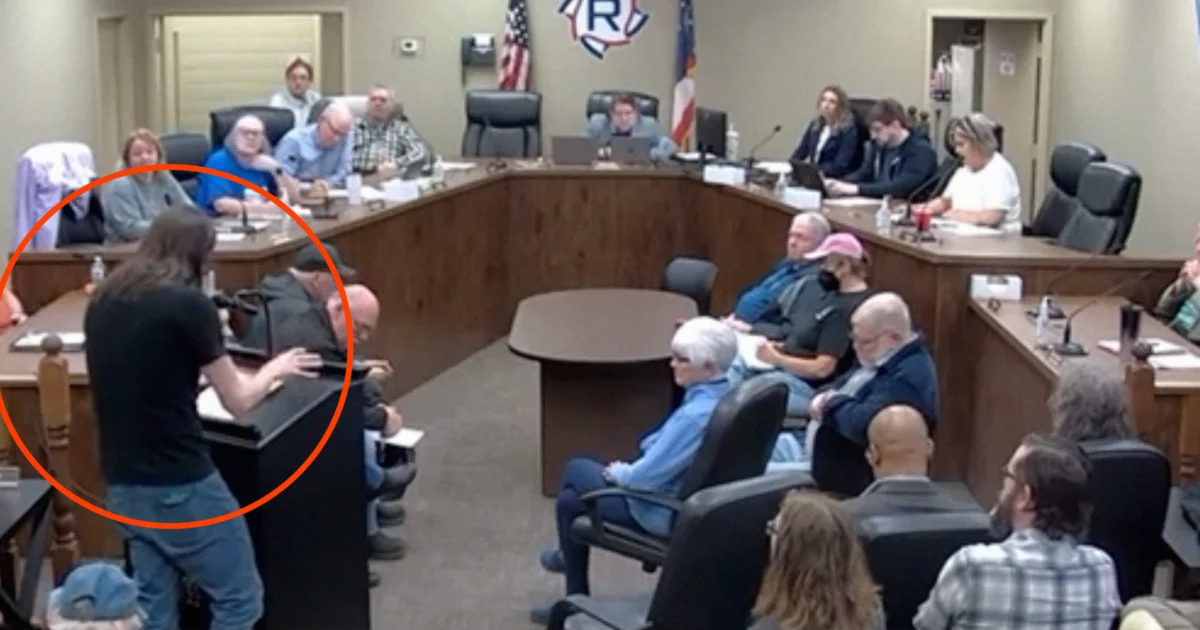
The rising tide of public discontent regarding the artificial intelligence industry’s relentless pursuit of building colossal, resource-guzzling data centers across the United States has reached an unprecedented peak. This palpable anger stems from widespread concerns over the environmental footprint, economic strain, and diminished quality of life these facilities impose on local communities.
A comprehensive survey recently conducted by the Pew Research Center starkly illuminated these public anxieties. The study revealed significant apprehension among Americans concerning the environmental impact of data centers, including their immense energy demands and the subsequent pressure on local power grids. Beyond environmental worries, respondents voiced concerns over the potential for these facilities to spike home energy costs, as well as their detrimental effects on the overall quality of life for residents living in proximity to these industrial-scale operations. These facilities, often sprawling complexes of servers and cooling equipment, demand continuous, high-volume energy, which can lead to increased utility rates for an entire region, placing an undue burden on household budgets.
Such fears are far from unfounded, as corroborated by numerous expert analyses. Data centers are indeed found to be substantial contributors to elevated local electricity prices, often requiring the construction of new power infrastructure or the diversion of existing capacity. Furthermore, they generate prodigious quantities of greenhouse gases, primarily due to their insatiable energy consumption and reliance on fossil fuel-derived electricity in many regions. This contributes directly to climate change and localized air pollution. Perhaps most critically, these facilities place a major strain on freshwater resources, utilizing millions of gallons daily for their elaborate cooling systems. As AI models become increasingly complex and ubiquitous, the demand for these resource-intensive data centers is projected to skyrocket, exacerbating these already critical issues.
Into this contentious landscape stepped Will Hollingsworth, a self-described content creator and digital artist, whose impassioned plea during a city council meeting in Ravenna, Ohio, captured national attention. Ravenna, a modest town of approximately 11,000 residents, became an unlikely epicenter for this debate. During the April 10 meeting, the council chambers were overwhelmed by a crowd of nearly 100 concerned citizens. They had gathered to debate a proposed 12-month moratorium on data center construction in the area, a measure inspired by a similar moratorium enacted by a neighboring community grappling with its own potential data center developments.
Hollingsworth’s four-minute speech, delivered with a potent blend of personal conviction and articulate reasoning, perfectly encapsulated why the backlash against data centers is rapidly reaching a critical tipping point. His arguments resonate deeply as more and more politicians, from local council members to state legislators, are calling for moratoria on new construction. This growing movement reflects a broader societal reckoning with the hidden costs of the AI revolution, particularly as its environmental and social impacts become increasingly difficult to ignore.
“These facilities can use millions of gallons of water per day,” Hollingsworth declared, his words resonating through the chamber and later, across the internet, in a video that went viral over the weekend. He vividly illustrated the perceived absurdity of this resource drain: “We are being asked to drain our reservoirs so a chatbot can write a poem or so our sheriff can generate a picture of himself standing next to Bigfoot.” The room erupted in laughter, a testament to the effectiveness of his pointed analogy, which underscored the triviality of many AI applications when weighed against such profound environmental sacrifices. His words struck a chord, highlighting the stark contrast between the perceived societal value of generative AI and the very tangible, irreplaceable resources it consumes.
Hollingsworth’s perspective carried particular weight given his professional background. He revealed that he once heavily relied on AI in his previous role overseeing video content production at a mattress company. He explained how he would feed image-generating AI applications like Midjourney “prompts to create the perfect commercial, training the very machine that would eventually replace me as three months later they would lay me off.” This personal experience of technological displacement, a narrative increasingly common in the era of AI, transformed him from a user into a vocal critic. His story lent authenticity and a deeply human dimension to his arguments, demonstrating that the adverse impacts of AI extend beyond environmental concerns to directly affect human livelihoods.
Now, having personally experienced the sharp edge of AI’s economic disruption, Hollingsworth has emerged as a formidable opponent of the technology’s unchecked expansion. He challenged the industry’s claims with a skeptical eye, stating, “They want us to trust a trillion-dollar industry that tells us with a straight face that they can suck five million gallons of water out of our ground a day,” only “to use it as a liquid heat sink, and return it to our rivers without a single consequence.” His questioning highlighted the perceived disconnect between corporate assurances and environmental realities, particularly in the context of a public increasingly wary of greenwashing and corporate rhetoric.
He meticulously debunked the myth of a closed-loop water system, explaining that the water “does not stay in the loop” but instead “evaporates into the sky by millions of gallons” through evaporative cooling processes, which are essential for preventing server overheating. Beyond the sheer volume of water lost to evaporation, Hollingsworth warned of the less visible, yet equally insidious, problem of “forever chemical runoff.” These per- and polyfluoroalkyl substances (PFAS) are often used in cooling systems to “bleed the lines to remove toxic sludge,” posing a long-term threat to water quality and ecosystem health. He emphasized the stark difference between laboratory conditions and real-world applications: “They say the water is filled once and recycled forever. In a laboratory, that might be true. But we aren’t living in a laboratory. We’re living in Ohio.” This simple yet powerful statement resonated with the audience, underscoring the practical realities and potential dangers that theoretical models often fail to capture.
The content creator also directly confronted the misleading narrative surrounding job creation by data centers. Despite their massive footprint and resource consumption, these facilities notoriously offer a very limited number of highly specialized jobs, often fewer than a dozen for operations that consume resources equivalent to a small city. “A big employer who uses the water of 50,000 people… which only hires about ten people is not an employer,” Hollingsworth argued passionately. “They are an extraction.” This reframing positioned data centers not as engines of local prosperity but as colonial-like enterprises, siphoning off communal resources for distant corporate gain with minimal local benefit.
Hollingsworth concluded his address with a profound statement of values: “I am not a cynic when it comes to technology. I am a believer in community. I believe that a drop of clean water for a Ravenna child is worth more than a billion AI generated images. Let us choose the child.” This ethical appeal, pitting human well-being and fundamental resources against the abstract outputs of generative AI, served as a powerful capstone to his argument, transforming the debate from a technical discussion into a moral imperative.
His powerful speech clearly struck a resonant chord. Not only did the assembled committee in Ravenna vote overwhelmingly for a one-year moratorium on all new data centers in the area, but his message also garnered widespread acclaim across social media platforms. Netizens lauded him for his courage and eloquence, turning his speech into a rallying cry for similar community actions. “There it is right there,” one Reddit user wrote, expressing a common sentiment. “Lies, lies and more lies from megacorps invested up to their eyeballs in having just a few people in government believe them.” Another user exclaimed, “God damn that was good. Seriously this should be used as a script in every county these corporations are hustling.” These reactions underscore a deep-seated public mistrust of large corporations and a hunger for transparent, accountable governance.
The battle, however, is far from over. Ravenna is but one of several locations across Ohio currently being eyed for significant data center expansion projects. The state, with its relatively affordable land and robust energy infrastructure, has become a prime target for AI giants seeking to build out their computational backbone. This makes the local struggles in places like Ravenna microcosms of a much larger, ongoing conflict. Furthermore, similar battles are being fiercely fought in numerous other parts of the country, as the collective anger and resistance to these developments continue to swell.
Just days prior to Hollingsworth’s viral speech, voters in a small town outside of St. Louis, Missouri, demonstrated the immense power of community mobilization. Local residents were left furious after their city council controversially approved a colossal $6 billion data center project despite significant public opposition. As Politico reported, these incensed residents responded by turning out in droves to the polls, successfully unseating four incumbent council members mere days after the contentious vote. This direct electoral consequence serves as a stark warning to politicians who disregard the will of their constituents on such high-stakes development issues.
Inspired by the resonance of his message and the tangible impact in Ravenna, Hollingsworth remains hopeful for broader change. “I do hope other towns stand up and speak out like I did,” he later asserted in a comment on Reddit. “I know I’m not the only good orator here in the country, maybe this will inspire a wave of political action!” His sentiment reflects a growing grassroots movement, one that challenges the unchecked growth of the AI industry and demands a more sustainable, community-centric approach to technological development. The debates surrounding data centers are becoming a crucial battleground for defining the future relationship between technology, environment, and society.
More on data centers: Almost Half of US Data Centers That Were Supposed to Open This Year Slated to Be Canceled or Delayed