Faris Adani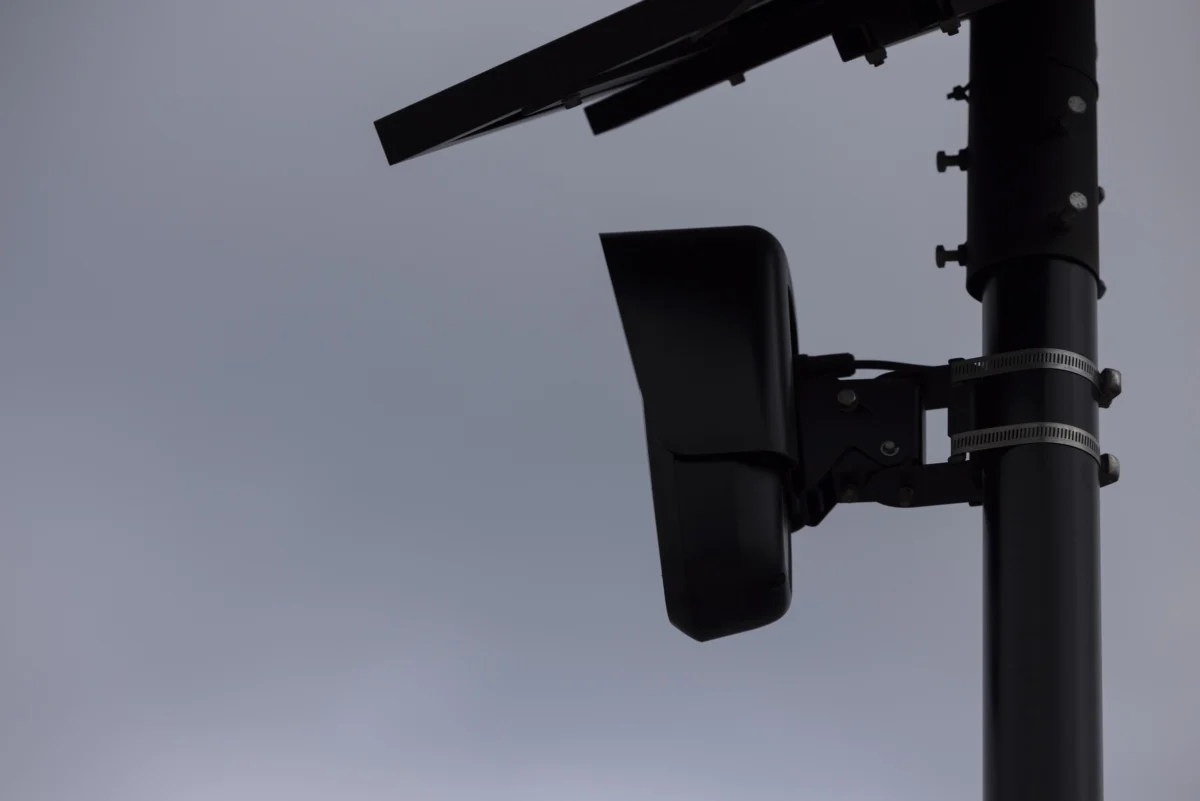
In a bizarre and dramatic escalation of the ongoing battle against pervasive surveillance technology, a man in Georgia is facing a litany of felony charges after authorities allege he deployed a highly unusual, flaming projectile to reduce automatic license plate readers (ALPRs) to smoldering heaps of metal and plastic. The incident has ignited further debate surrounding the controversial deployment of these cameras and the lengths to which some individuals will go to resist what they perceive as an encroaching surveillance state.
The individual at the center of this fiery controversy is 25-year-old Colby Williams, who was apprehended and subsequently booked into jail following an investigation into the destruction of multiple ALPR units. According to reports from Fox5 in Atlanta, Williams is accused of targeting and setting ablaze three such devices, all installed by Flock Safety, a company that has become synonymous with the widespread proliferation of ALPR technology across the United States. The nature of the weapon used remains a subject of intense speculation, with one camera reportedly discovered "completely melted," bearing a grim testament to the projectile’s destructive power. Adding a defiant, almost theatrical, touch to the scene, a "DeFlock" sticker was found affixed to the remnants of the pole that once supported the incinerated device, clearly signaling the perpetrator’s anti-surveillance motive. Furthermore, a fourth camera in close proximity was found riddled with two bullet holes, suggesting a broader, multi-pronged attack on the surveillance infrastructure.
The irony of Williams’ capture is palpable and stark: he was reportedly identified and apprehended precisely through video evidence collected by the very ALPR network he allegedly sought to dismantle. This paradoxical turn of events underscores both the efficacy and the omnipresence of Flock’s surveillance system, even in the face of direct, aggressive opposition. Williams now faces a daunting array of criminal charges, including four counts of criminal damage to property, four counts of arson, reckless conduct, and interference with government property. The charge of "interference with government property" raises an interesting legal nuance, given Flock Safety’s operational model as "hardware-as-a-service." Under this model, law enforcement agencies rent, rather than outright own, the ALPR devices. However, because these cameras are deployed to serve governmental functions and are often installed on public land or with municipal approval, their destruction can still be construed as impeding governmental operations, regardless of the direct ownership structure.
The method of destruction employed in this case—using fire to disable Flock ALPRs—marks a significant and alarming departure from previous acts of anti-surveillance vigilantism. Historically, activists and concerned citizens protesting the expansion of ALPR networks have typically resorted to less destructive, albeit still illegal, means. Reports from various regions have documented individuals utilizing common tools such as hand saws and power drills to physically dismantle cameras, or employing spray paint to obscure their lenses and render them inoperable. The alleged use of a "flaming projectile" suggests a heightened level of intent and a more sophisticated, or at least more destructive, approach, transforming the cameras into "smoldering heaps of metal and plastic," or even "slag"—a glassy, often metallic waste product from smelting or intense heat. The precise nature of this projectile remains a mystery, prompting speculation ranging from highly concentrated incendiary devices like thermite to sophisticated Molotov cocktail variants or even custom-engineered projectiles designed for maximum thermal damage. Such a method indicates a deliberate attempt not just to disable, but to utterly obliterate the technology.
To fully grasp the context of Williams’ alleged actions and the strong public reactions they have elicited, it is crucial to understand the technology itself and the deep controversies surrounding Flock Safety. Automatic License Plate Readers (ALPRs) are high-speed cameras equipped with optical character recognition (OCR) software. These devices are typically mounted on utility poles, streetlights, or police vehicles, constantly scanning and recording every license plate that passes within their field of view. Beyond just capturing the plate number, ALPRs log the date, time, and precise GPS location of each scan. This data is then uploaded to a centralized database, often managed by companies like Flock Safety, which can be accessed by law enforcement agencies. These databases are not ephemeral; they can retain vehicle location data for months or even years, creating a vast, searchable record of individuals’ movements.
Flock Safety has rapidly become the dominant player in the ALPR market, boasting an extensive network of cameras deployed in thousands of communities across all 50 U.S. states. Their "hardware-as-a-service" model makes it attractive to cash-strapped municipalities, offering a seemingly low-cost solution to enhance public safety. However, this widespread adoption has come at a considerable cost to privacy and civil liberties, fueling a robust and vocal opposition movement.
The primary concern revolves around mass surveillance. ALPRs do not discriminate; they scan every vehicle, irrespective of whether its owner or occupant is suspected of any wrongdoing. This means that innocent citizens are routinely tracked, their daily movements logged and stored in vast databases. Critics argue that this ubiquitous tracking creates a "chilling effect," where individuals may self-censor their activities or avoid certain locations for fear of being monitored, thereby infringing upon fundamental rights like freedom of assembly and speech. The potential for misuse of this data, including unauthorized access, data breaches, or its sale to third parties, further exacerbates privacy anxieties. Moreover, the lack of transparency regarding data retention policies, sharing agreements with other agencies (including federal entities like ICE), and auditing mechanisms for data access has deepened public distrust.
The effectiveness of ALPRs in reducing crime is also a contentious issue. While proponents tout their utility in apprehending suspects in stolen vehicle cases, amber alerts, or identifying vehicles linked to serious crimes, critics argue that they often lead to disproportionate arrests for minor infractions, traffic violations, or outstanding warrants, rather than significantly impacting violent crime rates. They question whether the immense cost in terms of privacy and financial investment truly yields a commensurate benefit in public safety, suggesting that resources could be better allocated to community policing or other crime prevention strategies. The argument that ALPRs are a "dragnet" rather than a precision tool for law enforcement resonates deeply with those who feel their constitutional rights are being eroded.
Against this backdrop, the "DeFlock" movement has emerged as a grassroots response, advocating for the removal or prevention of Flock camera installations. This movement encompasses a diverse group of privacy advocates, civil libertarians, and community members who believe that such pervasive surveillance is antithetical to a free society. The acts of vandalism, from hand saws to spray paint, are symptoms of this growing frustration and perceived lack of agency in controlling the expansion of surveillance technology.
Williams’ alleged actions, particularly the use of a destructive flaming projectile, have resonated strongly within certain segments of social media. Supporters have "fanned the flames" online, expressing solidarity with Williams and vehemently criticizing law enforcement agencies for deploying the devices. Comments under news posts highlight the depth of public anger: "What it boils down to is this, either y’all can take them down or somebody will!" declared one Facebook user, echoing a sentiment of inevitable confrontation. Another commenter invoked a powerful symbol of American liberty, stating, "it wasn’t him, he was at the library rereading the Constitution!" These sentiments underscore a growing divide between those who prioritize security through surveillance and those who view it as an unacceptable infringement on personal freedom and constitutional rights. For some, Williams, despite the illegality of his alleged acts, may be seen as a defiant figure pushing back against an increasingly monitored society.
This incident, therefore, is not merely a local crime story but a potent symbol within a much larger, ongoing national and even global debate. It highlights the escalating tension between technological advancement in surveillance capabilities and the fundamental human desire for privacy and freedom from constant observation. As ALPR networks become more ubiquitous and sophisticated, the methods of resistance are also evolving, becoming more aggressive and, as demonstrated by the alleged "flaming projectile," potentially more dangerous. The arrest of Colby Williams, caught by the very technology he seemingly sought to annihilate, serves as a stark reminder of the challenges inherent in this conflict, and raises critical questions about the future of privacy, public safety, and citizen resistance in an increasingly surveilled world. The "DeFlock" sticker, now a melted relic, speaks volumes about the passion driving those who believe that liberty, once chipped away by constant monitoring, is incredibly difficult to reclaim. The incident forces communities and policymakers to confront whether the perceived benefits of such technology truly outweigh the profound concerns about privacy, accountability, and the potential for an ever-expanding, oppressive surveillance apparatus. As more and more Flock cameras go offline due to various forms of resistance, the value proposition for law enforcement continues to be challenged, hinting at a prolonged and often contentious struggle ahead.