Faris Adani
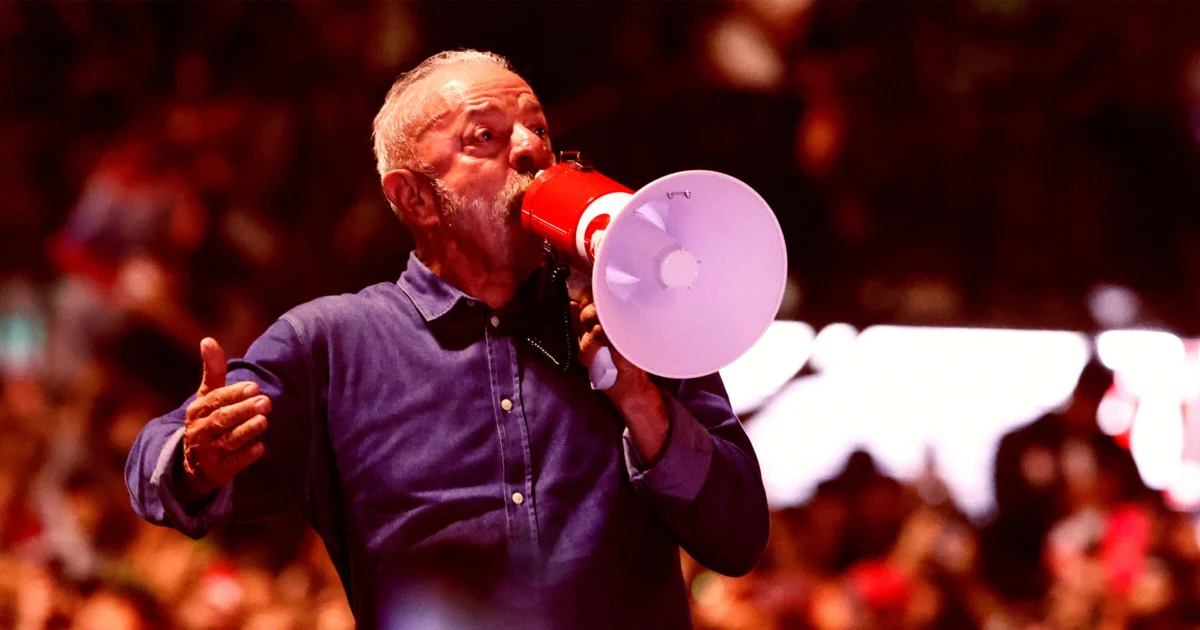
In a stunning political upset that sent shockwaves through the global political landscape and thoroughly discredited a burgeoning industry, Luiz Inácio Lula da Silva secured a dramatic victory over Flávio Bolsonaro in Brazil’s presidential runoff election on Sunday, October 25, 2026. This re-election marks a remarkable comeback for Lula and, more significantly, represents a catastrophic failure for the buzzy world of online prediction markets, which had confidently, and erroneously, forecast an entirely different outcome.
The 2026 Brazilian election was poised as a pivotal moment for the South American nation, still grappling with the lingering shadows of its recent turbulent past. Flávio Bolsonaro, the eldest son of the controversially divisive former president Jair Bolsonaro, sought to reclaim the presidential palace for his family. His father, Jair Bolsonaro, was, in this hypothetical future, serving a substantial 27-year sentence for orchestrating and leading a coup attempt following his 2022 electoral defeat. This severe conviction had cast a long, polarizing shadow over Brazilian politics, making Flávio’s candidacy a deeply symbolic and highly charged endeavor, aiming to restore the family’s political fortunes and perhaps even to challenge the legitimacy of the legal system that had imprisoned his father.
Against this backdrop, Lula da Silva, a former president himself, had mounted an extraordinary campaign, promising a return to social programs and economic stability, appealing to a populace weary of political extremism and social unrest. His narrative was one of redemption and national unity, a stark contrast to the populist rhetoric often associated with the Bolsonaro brand. The election was not just a contest between two individuals but a battle for the very soul of Brazil, determining its trajectory in a continent increasingly swayed by varying political currents. Lula’s triumph was seen by many as a significant rebuff to the rising tide of right-wing populism that had been gaining traction across Latin America.
Despite the palpable tension and the deeply divided electorate on the ground, platforms like Polymarket, which champion themselves as sophisticated prognosticators leveraging the "wisdom of the crowd," painted a picture of near certainty. After the first round of voting on October 4, 2026, Polymarket’s odds for Flávio Bolsonaro to win the presidency surged dramatically, settling at a commanding figure of over 80 percent. Conversely, Lula’s prospects were deemed dismal, bottoming out at a mere 12 percent. These highly favorable odds for Bolsonaro were not a fleeting phenomenon; they stubbornly held for over a week, solidifying the perception among many bettors and observers that a Bolsonaro victory was all but assured. Even on the very morning of the second-round runoff, Polymarket’s data steadfastly indicated an 81 percent chance of Flávio Bolsonaro securing the presidency. The platform’s confidence seemed unwavering, reflecting what it claimed was the collective intelligence of thousands of market participants.
However, what actually transpired on election day was a staggering upset, particularly for those who had placed their faith and fortunes in the seemingly infallible algorithms of prediction markets. The official election results revealed a decisive victory for Lula da Silva, who garnered 51.8 percent of the vote against Flávio Bolsonaro’s 48.2 percent. This narrow but clear margin signified a monumental shift in the political landscape and a profound miscalculation by the supposedly prescient prediction platforms. For the numerous bettors who had collectively wagered over $62 million on a Bolsonaro victory, the outcome was financially devastating. As early polls and official tallies began to trickle in throughout Sunday, the seemingly unshakeable odds for Bolsonaro rapidly collapsed, plummeting to as low as 15 percent, triggering a frantic rush as savvy bettors scrambled to place wagers on Lula, hoping to salvage some profit from the unfolding electoral drama.
This dramatic misfire in Brazil casts a long shadow over the credibility of prediction markets as reliable barometers of future events. While proponents might argue that a single instance of inaccuracy does not invalidate the entire concept—much like a meteorologist missing an 80 percent chance of rain doesn’t render weather forecasting useless—the sheer magnitude of Polymarket’s error in such a high-stakes election is difficult to dismiss. Crucially, this stark divergence between market predictions and reality becomes even more pronounced when contrasted with traditional polling methods. Many reputable, on-the-ground polls had consistently indicated that the Brazilian election would be a tight race, reflecting the deep divisions within the electorate. Polymarket’s "prediction data," by contrast, had presented Bolsonaro as an overwhelming favorite, creating a false sense of certainty.
This isn’t the first time prediction markets have drawn attention for their bold calls. Polymarket, for instance, had previously garnered significant acclaim for its successful prediction of a decisive Donald Trump victory over Kamala Harris in the 2024 US presidential election. At the time, this was heralded as a major coup, showcasing the market’s superior insight compared to traditional polling, which had largely depicted that race as a toss-up. It is only fair, then, that when Polymarket errs so drastically on a major election, its credibility should be scrutinized with equal rigor. The concept of the "wisdom of the crowd" — the idea that aggregated judgments from many individuals are often more accurate than those of a single expert — is the theoretical bedrock of these platforms. However, this ideal is frequently undermined by practical realities. Prediction markets have been identified as potential hotbeds of insider trading, where individuals with privileged information can disproportionately influence outcomes. Moreover, the inherent structure allows for massive wagers placed by a handful of wealthy bettors, which can easily distort the odds, overpowering the genuine collective sentiment of the majority of the crowd and transforming what purports to be an analytical tool into a sophisticated gambling platform. The line between informed prediction and pure speculation often blurs, raising ethical and regulatory questions about their true utility.
The utility of prediction markets as reliable indicators of public sentiment, let alone actual future outcomes, remains largely unproven, despite the confident assertions from the companies operating them. Their efficacy and ethical standing are continually debated, particularly concerning their susceptibility to manipulation and the potential for financial incentives to override genuine foresight. Stateside, their credibility will face yet another significant test during the upcoming midterm elections in November 2026, which will undoubtedly be watched closely by both advocates and critics. The ongoing saga of these platforms, including the notable instance of a senator who previously sought to ban prediction markets later being hired by Kalshi as a lobbyist, further highlights the complex and often contentious landscape surrounding this nascent industry.
In conclusion, Polymarket’s profound misjudgment in the 2026 Brazilian presidential election serves as a stark reminder of the limitations of algorithmic prognostication and the potential for overconfidence in emergent technologies. While the allure of leveraging collective intelligence to foresee the future is strong, this particular episode suggests that the "wisdom of the crowd" can sometimes be remarkably unwise, proving to be more of a glorified gambling platform susceptible to human biases and strategic manipulations than a truly insightful oracle.