Faris Adani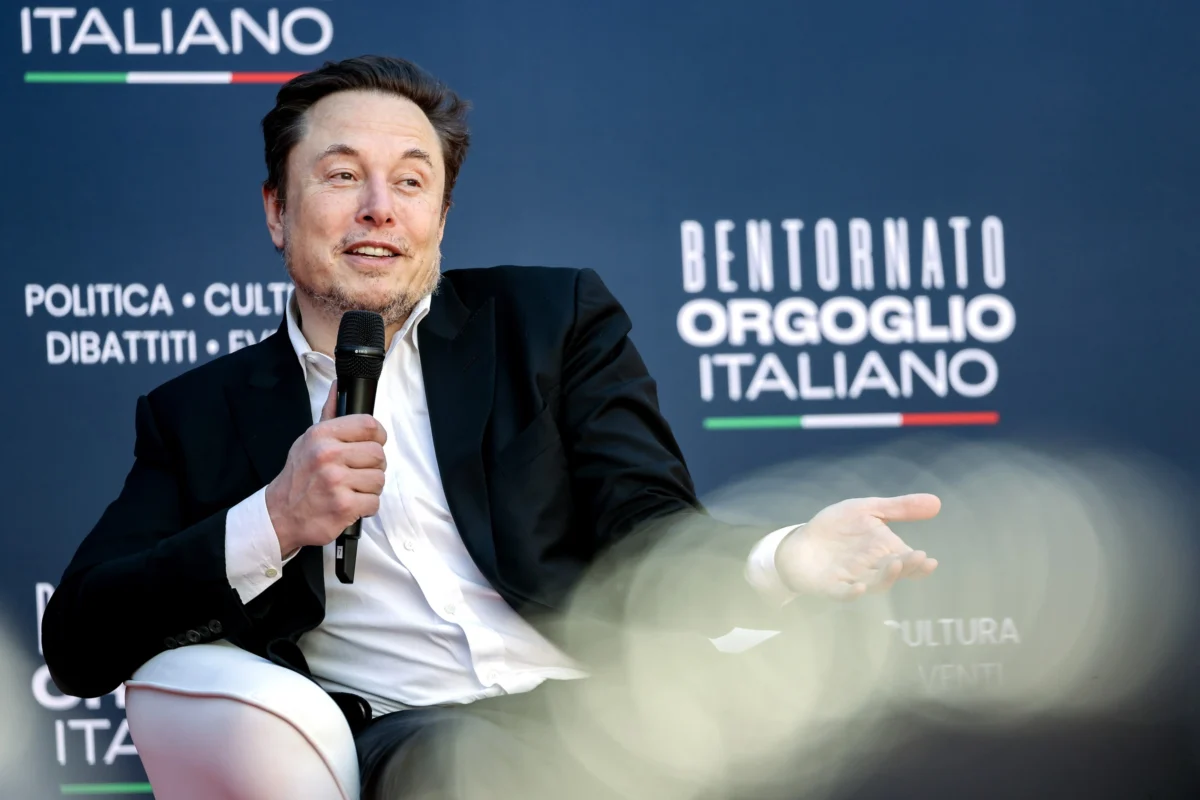
The peculiar debate ignited when Musk responded to a post illustrating the astronomical number of possible moves in chess – a figure often cited to underscore the game’s profound depth. To a mind as supposedly omniscient as Musk’s, however, this number, which is a staggering 40 orders of magnitude greater than the estimated number of atoms in the observable universe, simply wasn’t "large enough" to warrant sustained intellectual interest. "The actual number of moves that are not utterly stupid in chess is tiny," Musk claimed, dismissively, before adding, "and chess will be fully solved one day." This statement, delivered with characteristic finality, immediately drew the attention of Chess.com, whose official account, with millions of followers and a reputation built on deep expertise, fired back with a succinct, yet devastatingly effective, two-word retort: "skill issue."
The bait was swallowed whole. Musk, rarely one to back down from an online confrontation, doubled down on his initial assertion. "Chess is hard for humans, but not for computers. One day, it will be fully solved like checkers," he reiterated, seemingly oblivious to the nuanced difference between a game being computationally mastered by AI and being mathematically "solved" in a definitive sense. He continued, "Between now and then, or even after, have fun. People enjoy many games/sports where machines are vastly better." This condescending advice, offered by a man who often champions human ingenuity, ironically came as he chose to "waste his time arguing with some random intern." The "intern," as it turned out, was a "full-time employee" of Chess.com, a fact the account swiftly clarified, adding another layer of ironic absurdity to the exchange.
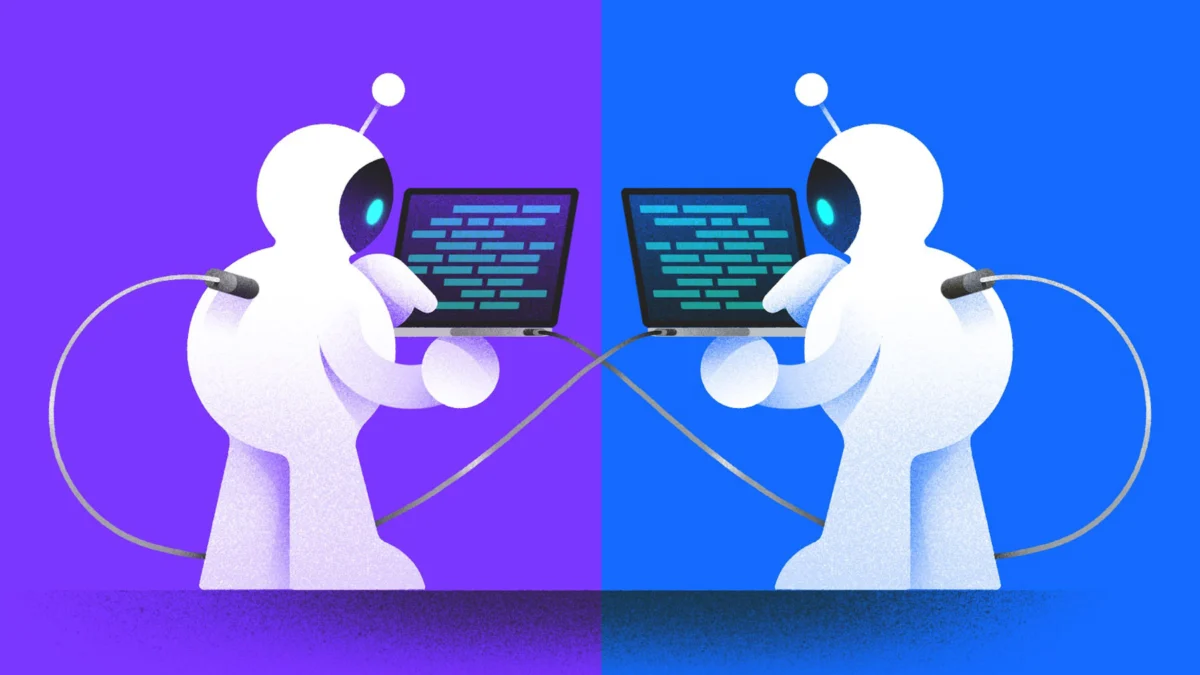
Musk’s arguments then veered into the realm of speculative artificial superintelligence (ASI), a concept whose very possibility is still a subject of intense scientific and philosophical debate. He posited that an ASI, if ever created, would "figure out ways to solve and compress that are far beyond what we could possibly comprehend." As if to lend unassailable authority to his conjecture, he cited "conversations he had with his personal AI chatbot, Grok," an xAI product still in its early stages of development, as proof. This invocation of a proprietary, nascent AI as a definitive authority on complex game theory and computational limits further underscored the self-referential nature of his claims.
To understand why Musk’s pronouncements, while superficially plausible to the uninitiated, ring hollow to experts, one must delve into the concept of "solving" a game. A game like chess can be "solved" in three ways:
- Strongly solved: A solution that provides optimal play from any position, allowing a player to always force a win or draw if one exists.
- Weakly solved: A solution that determines the outcome of the game from the initial position, assuming optimal play from both sides, and provides a strategy to achieve that outcome.
- Ultra-weakly solved: A solution that only determines the outcome of the game (win, loss, or draw) from the initial position, without providing a strategy.
Checkers, a game with approximately 5 x 10^20 possible positions, was weakly solved in 2007 by Jonathan Schaeffer’s team. They proved that with optimal play from both sides, the game always results in a draw. Chess, however, is on an entirely different scale of complexity. The estimated number of legal positions in chess is around 10^43, and the "Shannon Number" – an estimate of the game-tree complexity of chess (the number of possible move sequences) – is approximately 10^120. This dwarfs checkers and makes a strong or weak solution computationally intractable with current and foreseeable technology. Even with Zermelo’s Theorem proving that every finite perfect information game has a determined outcome (meaning chess is theoretically solvable), the practical computational resources required are beyond comprehension. The "tiny" number of "non-stupid" moves Musk refers to is a pragmatic heuristic used by human players and AI to prune the search space, but it doesn’t diminish the underlying theoretical complexity of the game.
Musk’s casual dismissal of chess also overlooks the monumental achievements in artificial intelligence that have leveraged the game without "solving" it. IBM’s Deep Blue famously defeated world champion Garry Kasparov in 1997, a landmark moment for AI. More recently, DeepMind’s AlphaZero, a self-learning AI, achieved superhuman performance in chess, shogi, and Go by playing against itself and developing novel strategies. These AI systems play chess at an incredibly high level, far surpassing human capabilities, but they do not "solve" the game in the mathematical sense of proving a definitive outcome from every position. They are expert strategists, not game theorists who have charted every possible optimal path. Musk conflating AI’s superior playing ability with the mathematical concept of a "solved" game reveals a fundamental misunderstanding, or at least a convenient oversimplification, of the computational challenges involved.
This isn’t the first time Musk has expressed his disdain for chess. In a now-infamous tweet from 2022, he declared that he stopped playing chess as a child because he "found it to be too simple to be useful in real life." He then went on to extol the virtues of Polytopia, a mobile strategy game, as the superior intellectual pursuit for the "cognoscenti." Such pronouncements fit a pattern of Musk presenting himself as an unconventional genius whose insights transcend traditional wisdom. His recent argument with Chess.com echoes this sentiment, with him again attempting to denigrate a game revered for millennia as a test of intellect and strategy.
The "transfer learning to understand reality" excuse Musk deployed in his latest exchange – claiming "diminishing returns from chess in terms of transfer learning to understand reality" – is particularly flimsy. Chess has long been celebrated for fostering critical thinking, strategic planning, foresight, pattern recognition, and decision-making under pressure. These are precisely the skills one might assume a tech titan would value for "understanding reality." To suggest that a game that demands such mental rigor offers "diminishing returns" is a peculiar assertion, especially from someone who frequently opines on complex global issues. Perhaps, next time your opponent checkmates you, you might try deploying Musk’s innovative excuse.
Ultimately, this latest online dust-up serves as another illuminating chapter in the public persona of Elon Musk. It’s a billionaire, one of the most influential figures on the planet, engaging in a petty argument with a verified chess account, showcasing a blend of intellectual arrogance, a penchant for self-promotion (via Grok), and a dismissive attitude towards established expertise. While the debate about the ultimate solvability of chess is a fascinating one for mathematicians and computer scientists, Musk’s contribution to it seems driven less by genuine intellectual curiosity and more by a need to assert his singular genius, even if it means picking a fight with a website that literally lives and breathes chess. The irony, as always with Musk, is palpable.