Faris Adani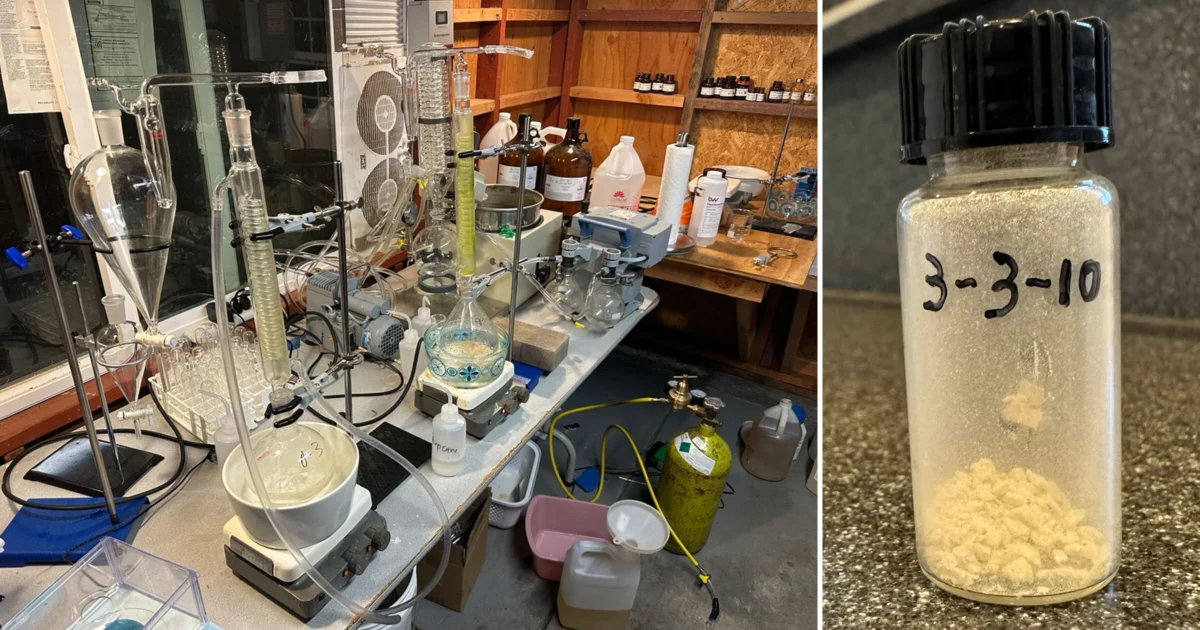
In a development that blurs the lines between groundbreaking innovation and profound delusion, a self-proclaimed biochemist named Douglas Yao has ignited a firestorm of debate across social media platforms, specifically X (formerly Twitter), with claims of synthesizing novel therapeutic drugs in a makeshift laboratory in his garage, guided by the artificial intelligence of ChatGPT. The audacious assertion, featuring a photograph of a small vial of yellow powder purportedly containing "PAC-3310," a new drug for schizophrenia, has been met with a mixture of awe, incredulity, and stark professional skepticism from the scientific and medical communities.
Yao’s viral post, dated September 8, 2026, showcases what he describes as the first sample of PAC-3310, a compound he claims was "designed by ChatGPT" and subsequently synthesized by himself in a home chemistry lab setup on mere folding tables. He enthusiastically pitches PAC-3310 as a "new selective M4 muscarinic receptor agonist for treating schizophrenia," drawing parallels to the recently authorized antipsychotic Cobenfy, but boldly asserting that his AI-devised creation is "improved." The image accompanying his post, sourced from Douglas Yao via X, depicts this humble vial, representing what he believes could revolutionize psychiatric medicine.
Further expanding on his extraordinary endeavors, Yao’s GitHub page elaborates on his methodology, stating that over the past year, he has leveraged AI to "design several thousand new small molecule drugs." Beyond the schizophrenia treatment, he also claims to be developing a "new Alzheimer’s drug" through the same unconventional process. He outlines his journey: "I then taught myself synthetic chemistry, built a chem lab in my garage, and synthesized a hundred of them. I’m now testing these compounds in cell lines and mice." These claims paint a picture of a singular, hyper-productive individual operating entirely outside the established norms of pharmaceutical research and development, aiming to disrupt an industry notorious for its complexity, cost, and stringent regulatory oversight.
To fully appreciate the gravity and contentious nature of Yao’s claims, one must understand the intricate landscape of modern drug discovery and development. The M4 muscarinic acetylcholine receptor has indeed emerged as a promising target for treating schizophrenia, particularly for its potential to alleviate both positive (hallucinations, delusions) and negative (apathy, social withdrawal) symptoms with fewer side effects compared to traditional antipsychotics. Cobenfy, the drug Yao references, represents a significant step forward in this area, demonstrating the therapeutic promise of selective M4 agonism. However, developing such a drug involves years of meticulous research, structural optimization, in vitro and in vivo testing for efficacy and toxicity, and exhaustive clinical trials – a far cry from a garage synthesis guided by an AI chatbot.
The fundamental disconnect lies in Yao’s perception of AI’s current capabilities versus the reality of drug design and validation. While large language models like ChatGPT can process vast amounts of scientific literature, suggest chemical structures, and even hypothesize mechanisms of action, they lack the intrinsic understanding, experimental validation, and real-world scientific rigor required for de novo drug discovery. AI can be a powerful tool in accelerating parts of the drug discovery pipeline, such as virtual screening for promising compounds or predicting molecular properties, but it does not independently "design" a drug in a manner that bypasses the need for empirical validation by human scientists and extensive testing. The journey from a hypothesized molecule to a safe and effective therapeutic agent is fraught with failures, requiring iterative synthesis, purification, characterization, and biological assays that a chatbot cannot perform or truly oversee.
Yao’s assertion that his "approach can do this at 1/1000 the cost" of the "tens of millions of dollars generating pre-clinical efficacy evidence for a new drug" underscores a profound misunderstanding of the drug development lifecycle. The path to bringing a new drug to market is a monumental undertaking, typically spanning 10-15 years and costing several billion dollars, not just millions. This staggering cost is distributed across multiple critical stages, each designed to ensure the drug’s safety, efficacy, and quality.
The journey begins with preclinical testing, involving extensive in vitro (cell culture) and in vivo (animal) studies to assess a compound’s pharmacological activity, pharmacokinetics (how the body affects the drug), pharmacodynamics (how the drug affects the body), and toxicology (potential harmful effects). These studies are highly regulated and must adhere to Good Laboratory Practice (GLP) standards, far beyond the scope of a garage lab. Following successful preclinical results, an Investigational New Drug (IND) application must be submitted to regulatory bodies like the FDA, detailing all available data and the proposed clinical trial plan.
The subsequent clinical trial phases are the most expensive and time-consuming. Phase 1 trials involve a small group of healthy volunteers to assess safety, dosage range, and side effects. Phase 2 expands to a larger group of patients to evaluate efficacy and further assess safety. Phase 3 involves hundreds or thousands of patients in randomized, controlled trials to confirm efficacy, monitor adverse reactions, and compare the new drug to existing treatments. Each phase is a multi-year, multi-million-dollar endeavor, requiring specialized facilities, expert medical personnel, and rigorous data collection and analysis. A mere 13.8 percent of drugs that enter clinical trials ultimately obtain full FDA approval, highlighting the immense difficulty and high failure rate.
Even if a drug successfully navigates these three phases, the process culminates in a New Drug Application (NDA) to the FDA, a comprehensive dossier requiring extensive documentation on everything from manufacturing processes (which must comply with Good Manufacturing Practice, or GMP, standards) to clinical data. The FDA also conducts inspections of manufacturing facilities, making a garage operation unequivocally unsuitable for producing pharmaceuticals for human consumption. The notion that one individual, even with AI assistance, could single-handedly replicate this gargantuan effort at a fraction of the cost is, at best, incredibly optimistic and, at worst, dangerously naive.
The historical context of drug discovery further highlights the dramatic shift in regulatory demands. While the mid-20th century saw pioneering chemists like Paul Adriaan Jan Janssen synthesize hundreds of novel compounds from private labs, the regulatory environment of today is vastly different. The thalidomide tragedy of the 1960s, for instance, spurred significant reforms, leading to much stricter regulations regarding drug safety and efficacy testing. Moreover, much of the "low-hanging fruit" in drug discovery – simpler compounds targeting well-understood biological pathways – has long since been picked. Modern drug development tackles far more complex diseases with more nuanced mechanisms, requiring advanced scientific understanding and highly specialized methodologies.
The landscape for Alzheimer’s disease treatments, specifically mentioned by Yao, is particularly bleak. As a 2019 study noted, no new drug had been approved for Alzheimer’s since 2003, despite over 200 proposed substances failing in clinical trials or being abandoned. The graveyard of failed Alzheimer’s treatments is so vast that renowned organic chemist Derek Lowe frequently documents these failures on his blog, "In the Pipeline." To suggest that ChatGPT alone could unlock a solution where billions of dollars and decades of concerted global scientific effort have largely failed is not just optimistic; it borders on the fantastical.
The irony of using ChatGPT, an AI known for occasionally generating "hallucinations" or leading users down unreliable information pathways, to design drugs for cognitive diseases like schizophrenia and Alzheimer’s, was not lost on social media users. Replies to Yao’s post quickly descended into pointed humor and sharp criticism. "Hello schizophrenic, take this medicine that chatgpt made for you," one poster quipped on X, highlighting the inherent absurdity. Another user articulated the broader skepticism, stating, "believing you single-handedly cured schizophrenia on a commercial laundry folding table in a garage is, ironically, a classic symptom of schizophrenia."
Beyond the irony, there are serious ethical and safety implications. The synthesis of potent pharmaceutical compounds in an unregulated home environment poses significant risks not only to the individual conducting the synthesis but potentially to anyone who might consider using such an unverified substance. Without proper chemical controls, quality assurance, and rigorous testing, there are no guarantees of purity, stability, or the absence of toxic byproducts. The dangers of unverified drug synthesis and the potential for self-medication based on unproven claims are profound, underscoring why the pharmaceutical industry is so heavily regulated. While the democratization of science and the potential of AI are exciting prospects, they must operate within a framework of scientific rigor, ethical responsibility, and public safety. Douglas Yao’s ambitious claims, while attention-grabbing, serve as a stark reminder of the immense chasm between theoretical design and validated medical reality.