Faris Adani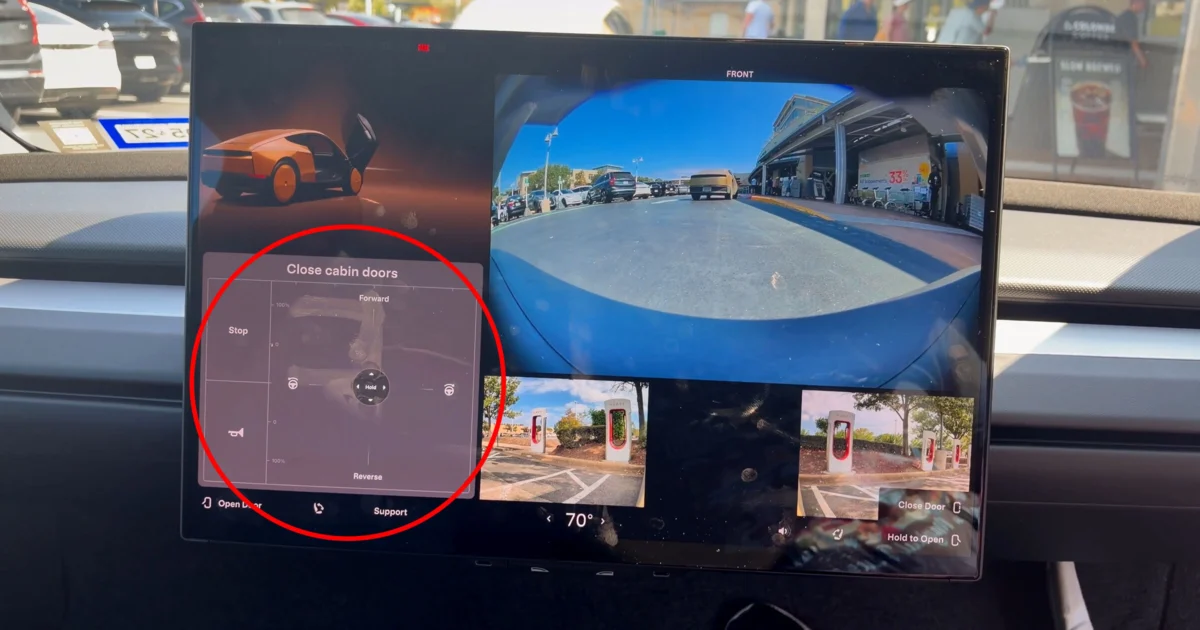
The much-anticipated launch of Tesla’s purpose-built robotaxi, the Cybercab, in Austin last week was marred by an unexpected software glitch that exposed a hidden manual control interface to unsuspecting passengers. This incident directly undermines one of the Cybercab’s primary selling points: its revolutionary design devoid of traditional steering wheels or pedals, touted by Tesla CEO Elon Musk as a testament to its full autonomous capability. The accidental revelation of a virtual joystick for manual driving, accessible via the in-vehicle touchscreen, has sparked a fresh wave of scrutiny regarding Tesla’s self-driving technology and its commitment to safety and regulatory compliance.
Matthew Skrzypczak, an early passenger eager to experience the future of mobility, shared his bewildering discovery on X over the weekend. Instead of the expected interface for initiating his autonomous ride, his Cybercab’s display presented a "virtual joystick for manual driving." His immediate reaction, "I have a feeling I wasn’t supposed to see this," perfectly encapsulated the irony and concern surrounding the glitch. Skrzypczak’s video showed a split-screen view, prominently featuring various camera angles alongside an area for controlling vehicle functions. Most critically, a touchscreen joystick was visible, labeled with "forward" at the top and "reverse" at the bottom, designed for shifting the car into gear. While he successfully managed to close the door and honk the horn, attempts to move the vehicle proved futile – perhaps fortunately, given the proximity of pedestrians and the unsuitability of a virtual joystick for precise manual control in an urban environment. This wasn’t an isolated incident; at least one other passenger reportedly encountered the same alarming interface, amplifying concerns about the robustness of the Cybercab’s software.
The existence of manual controls within a vehicle explicitly designed to operate without them isn’t inherently problematic. In fact, such overrides are crucial for employees, maintenance crews, or emergency services who might need to maneuver a vehicle that is malfunctioning or requires repositioning. However, the critical issue here lies in the inadvertent accessibility of these controls to passengers and their implementation through a "slippery touchscreen." Tesla’s decision to eliminate physical controls for its robotaxi was presented as a bold step towards a truly autonomous future, emphasizing the vehicle’s self-sufficiency. The discovery of these hidden, touch-based manual controls, therefore, not only highlights a software vulnerability but also brings into question the practical implications of such design choices. While physical steering wheels and pedals offer tactile feedback and intuitive control vital for safety, particularly in emergencies, a virtual joystick on a screen is notoriously imprecise and cumbersome, making it a less-than-ideal solution for any situation requiring human intervention. This design choice appears to be more aligned with a desire for minimalist aesthetics and "bragging rights" for its CEO than with optimal safety and user-friendliness.
The incident comes at a particularly sensitive time for Tesla’s autonomous vehicle ambitions. Shortly after the Cybercab’s debut in Austin, the National Highway Traffic Safety Administration (NHTSA) initiated an audit into nearly a thousand Cybercabs. The core of NHTSA’s investigation centers on how Tesla self-certified these vehicles as safe for public roads despite their conspicuous lack of conventional manual controls. This regulatory scrutiny underscores a broader concern about the rapid deployment of advanced autonomous technology without established, comprehensive safety frameworks. NHTSA’s role is to ensure that vehicles meet federal safety standards, and the Cybercab’s radical design presents a novel challenge, pushing the boundaries of existing regulations. The glitch revealing passenger-accessible manual controls, even if non-functional in that instance, could certainly fuel the agency’s concerns about potential safety hazards, software reliability, and the overall readiness of the Cybercab system for widespread public use.
Tesla’s journey into self-driving technology has been marked by both ambitious promises and significant controversies. For years, Elon Musk has confidently predicted a fully autonomous future, with a vast network of robotaxis generating substantial revenue for the company. However, the reality of Tesla’s "Full Self-Driving" (FSD) Beta, currently a Level 2 advanced driver-assistance system, has often fallen short of these pronouncements. FSD Beta requires constant human supervision and has been implicated in numerous incidents, including phantom braking, unexpected maneuvers, and even fatal crashes, leading to multiple federal investigations and recalls. The leap from a supervised Level 2 system to a truly autonomous Level 4 or Level 5 robotaxi, like the Cybercab, is immense, demanding flawless software, robust hardware, and an infallible safety architecture. This latest glitch casts a shadow on Tesla’s ability to deliver on such a demanding promise, especially when basic software integrity issues can expose critical, unintended interfaces to the public.
The implications of this incident extend beyond just a technical oversight; they touch upon public trust, regulatory oversight, and the future viability of autonomous mobility. For the public to fully embrace robotaxis, an unwavering sense of safety and reliability is paramount. Glitches that expose hidden controls or suggest software vulnerabilities erode this trust, making consumers hesitant to rely on driverless technology. Furthermore, the incident highlights the ongoing tension between rapid technological innovation and the need for rigorous safety testing and regulatory frameworks. While Tesla champions innovation, regulators like NHTSA are tasked with safeguarding public safety, often necessitating a more cautious approach. The audit and the Cybercab glitch serve as a stark reminder that even the most advanced technology requires meticulous attention to detail, especially when human lives are at stake.
Compared to other players in the autonomous vehicle space, such as Waymo and Cruise, Tesla’s approach has often been characterized by its aggressive timelines and its reliance on vision-only systems, which some critics argue are inherently less robust than sensor suites that combine lidar, radar, and cameras. While Waymo and Cruise have also faced their share of challenges and regulatory setbacks, their deployment strategies often involve extensive testing with safety drivers and more conservative rollouts. The Cybercab, by eschewing traditional controls entirely, represents a far more radical departure from conventional vehicle design, placing an even greater burden on its software and safety systems to be absolutely flawless.
In conclusion, the accidental exposure of manual driving controls in Tesla’s Cybercab through a software glitch is more than just a minor bug; it’s a significant incident that casts doubt on the vehicle’s readiness, Tesla’s software reliability, and the overall safety claims surrounding its autonomous ambitions. It intensifies the regulatory spotlight from NHTSA and challenges the public’s perception of truly driverless technology. As the race for autonomous vehicles accelerates, this incident serves as a crucial reminder that innovation must always be tempered with an uncompromising commitment to safety, transparency, and robust engineering, rather than solely pursuing design aesthetics or "bragging rights." The future of mobility hinges not just on technological advancement, but on earning and maintaining the trust of both regulators and the riding public.