Faris Adani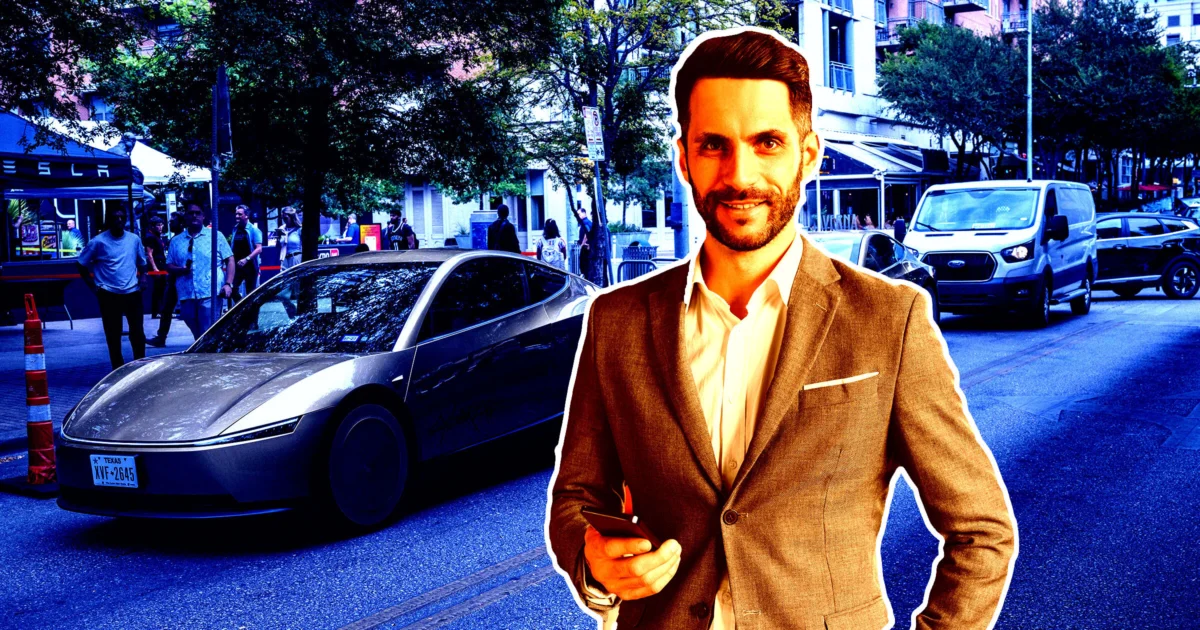
The futuristic vision of autonomous transportation is rapidly transitioning from concept to concrete reality, as Tesla’s sleek new Cybercab begins its phased rollout across major American cities this week. With initial sightings reported in Austin, Texas, quickly followed by appearances in bustling metropolises like New York, Washington D.C., and San Diego, the distinctive, gold-tinted coupes are marking a significant milestone in the evolution of self-driving taxi services. However, this technological leap forward is simultaneously triggering a predictable, albeit dubious, economic indicator: a burgeoning interest from personal injury attorneys nationwide, who are already positioning themselves to navigate the uncharted legal waters of autonomous vehicle (AV) accidents.
Indeed, the ink is barely dry on the Cybercab’s public debut, yet law firms are already making their intentions clear. Sarofiem and Antoun, a New Jersey-based law firm, has wasted no time publishing a blog post explicitly courting potential clients who may be "wronged by Cybercab accidents." Kerollos Antoun, branding himself as a "Tesla Cybercab accident lawyer," cuts directly to the core existential question facing this nascent industry: "if a driverless Tesla Robotaxi causes an accident, who is responsible when there is no human driver behind the wheel?"
While Antoun acknowledges that Cybercabs aren’t yet active in New Jersey, his firm’s proactive stance highlights the profound legal vacuum surrounding these vehicles. His blog outlines a comprehensive, albeit theoretical, laundry list of considerations for determining liability, underscoring the complexity inherent in assigning fault in a truly driverless scenario. "Could autonomous-driving software cause an accident?" Antoun asks, before cautiously concluding, "Potentially. If an accident occurs, attorneys may need to determine whether the autonomous system perceived the environment correctly and whether the vehicle’s response contributed to the crash." This brief exchange encapsulates the immense challenge facing the legal system: moving beyond traditional notions of human error to scrutinize the intricacies of artificial intelligence, sensor fusion, and algorithmic decision-making.
Similar preemptive strikes are being launched by other legal practices across the country. Funes Law in Miami and Angel Reyes and Associates in Austin are among those offering parallel pitches, unequivocally stating their readiness to litigate cases involving Cybercab collisions. These tailor-made Cybercab blogs, while undeniably opportunistic, are also a testament to the genuine legal complexities introduced by advanced autonomous technology. The underlying technology of Cybercabs, while groundbreaking, is still in a very early stage of development, and the legal precedent required to govern its operation is even younger, practically non-existent in many areas.
The stakes are exceptionally high. Whichever firm secures the first major Cybercab injury case stands to make legal history, presenting an unprecedented opportunity to shape jurisprudence around a brand-new product from one of the world’s most valuable and scrutinized companies. The implications extend far beyond a single verdict, potentially influencing regulatory frameworks, insurance models, and public perception of autonomous vehicles for decades to come.
While truly driverless robotaxis are new, self-driving car technology has already generated startling legal firsts. A pivotal moment occurred in August 2025, when a Miami jury delivered a landmark verdict against Tesla. The case involved a fatal crash where a Model S was operating in the company’s "Autopilot" mode. The jury’s decision, which resulted in a staggering $243 million in total damages, marked a significant precedent. While Autopilot is classified as a Level 2 driver-assistance system requiring active human supervision, the verdict highlighted the courts’ willingness to hold manufacturers accountable for claims regarding their vehicles’ autonomous capabilities, especially if those claims are perceived as misleading or if the system’s design is deemed flawed. This landmark judgment serves as a powerful beacon for accident attorneys, eager to replicate such success as Tesla’s fully autonomous Cybercab navigates public roads without any human oversight.
The shift from driver-assisted systems like Autopilot to fully autonomous robotaxis, where no human driver is present to take control, dramatically escalates the complexity of liability. In a traditional accident, determining fault usually involves assessing human factors: driver distraction, impairment, speed, or disregard for traffic laws. With Cybercabs, these human elements are replaced by a sophisticated array of sensors, AI algorithms, and intricate software architecture.
This paradigm shift opens up a dizzying array of potential defendants. Is it Tesla, as the manufacturer of the vehicle and its core autonomous driving system? What if a critical sensor, manufactured by a third party, malfunctions? Could the software, developed by an external contractor, contain a bug that leads to a catastrophic error? What about the fleet operator, responsible for maintenance, over-the-air updates, and ensuring the vehicles are in safe operating condition? Even the passenger could face liability if they interfere with the vehicle’s operation, for instance, by attempting to "drive" or disrupt the sensors.
The technical challenges underpinning autonomous vehicles directly translate into legal quagmires. AVs rely on complex perception systems (Lidar, radar, cameras) to "see" their environment. How do these systems perform in adverse weather conditions like heavy rain, snow, or fog? Can they reliably distinguish between a plastic bag and a child, or predict the erratic behavior of a pedestrian or cyclist? The "edge cases"—unusual, rare, or unforeseen scenarios—are particularly problematic. While AI systems can be trained on millions of miles of data, they inevitably encounter situations not covered in their training sets, leading to unpredictable decision-making. Attorneys will need to delve into the "black box" of the AI’s decision-making process, a task requiring specialized expertise in machine learning and data forensics.
Furthermore, the continuous software updates common in autonomous vehicles present another layer of complexity. If a system update introduces a bug that subsequently causes an accident, who is liable? The original manufacturer, the developer of the update, or the fleet operator who installed it? Data logging from these vehicles, often referred to as "black box" data, will become crucial evidence, but questions of ownership, access, and interpretability will undoubtedly arise.
The current legal framework in the United States is ill-equipped to handle these nuances. There is a patchwork of state laws regarding AV testing and deployment, but no comprehensive federal legislation clearly defines liability for truly driverless vehicles. Existing product liability laws, which traditionally focus on manufacturing defects, design defects, or failure-to-warn claims, will be stretched to their limits. The "reasonable person" standard, a cornerstone of negligence law, becomes challenging when applied to an artificial intelligence. What constitutes "reasonable" behavior for an AI in a split-second, life-or-death scenario? Ethical dilemmas, often framed as "trolley problems," where an AV might have to choose between two undesirable outcomes, will inevitably find their way into courtrooms, forcing society to confront profound moral questions.
The insurance industry, too, faces a radical overhaul. The traditional model, centered on individual drivers and their risk profiles, will gradually shift towards product-centric insurance, where manufacturers and fleet operators bear the primary liability. This will necessitate new actuarial models and policy structures, likely leading to a consolidation of risk and potentially higher premiums for AV manufacturers in the short term, until data unequivocally proves the superior safety record of autonomous vehicles compared to human-driven ones.
As Cybercabs become a more common sight, the public’s trust will be paramount. Each accident, particularly those involving injuries or fatalities, will be heavily scrutinized, influencing public acceptance and the pace of AV adoption. The transparency of accident investigations, the clarity of liability assignments, and the fairness of compensation for victims will all play critical roles in shaping this trust.
In conclusion, the rollout of Tesla’s Cybercab marks a thrilling leap into the future of transportation. Yet, it simultaneously ushers in an era of profound legal and ethical challenges. The immediate scramble by personal injury attorneys underscores not just their opportunism, but the genuine need for clarity in a rapidly evolving technological landscape. The early Cybercab accident cases will not merely be individual disputes; they will be foundational battles that define the contours of autonomous vehicle law, setting precedents for liability, responsibility, and the very definition of fault in a world increasingly driven by intelligent machines. The eyes of the legal world, and indeed the entire automotive industry, are firmly fixed on the unfolding drama as these gold-tinted coupes hit the pavement, promising both unparalleled convenience and unprecedented legal complexities.