Faris Adani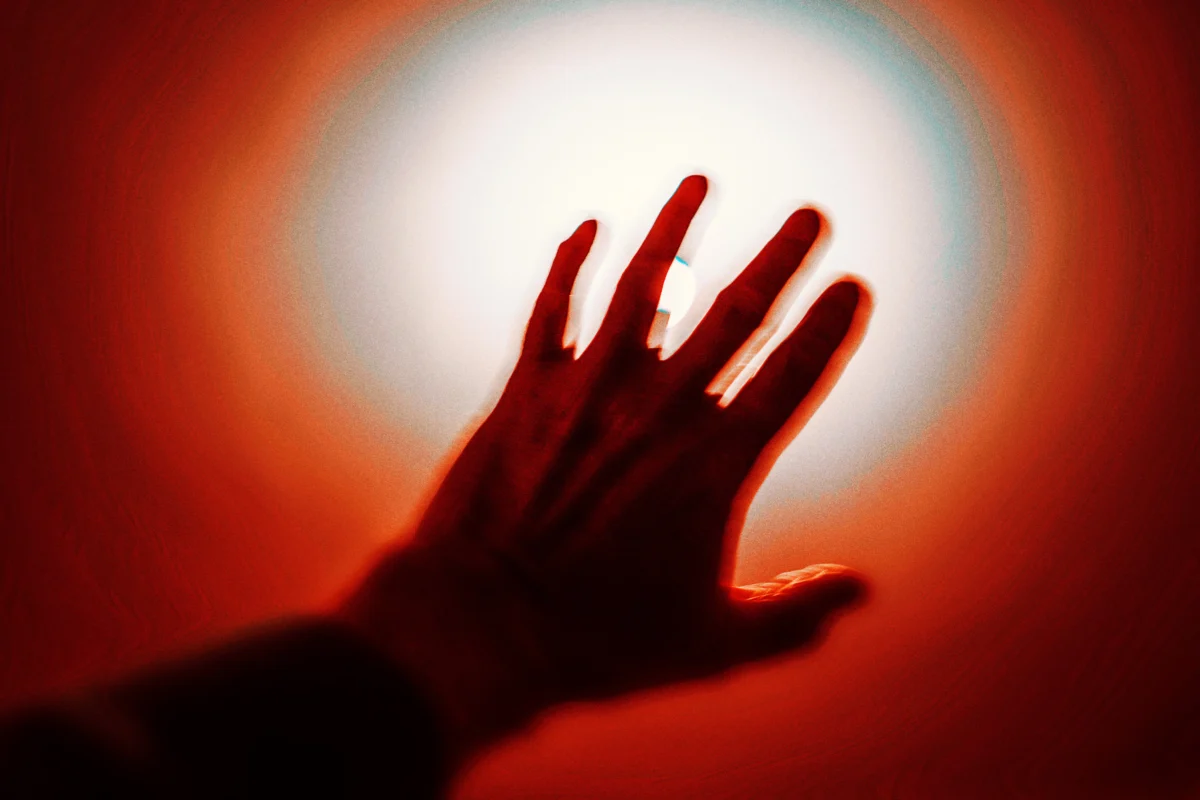
A terrifying new study has shattered previous understandings of human survivability in extreme heat, revealing that the threshold for mass heat death is far cooler and less humid than scientists previously believed. This paradigm shift, published in the esteemed journal Nature Communications, arrives amidst a backdrop of escalating global temperatures, forcing a grim re-evaluation of how societies prepare for and respond to the climate crisis. The image of a hand reaching towards an intense, almost blinding light, surrounded by a fiery aura, serves as a stark visual metaphor for the increasingly perilous conditions humanity faces.
For years, climate scientists and public health officials have referenced "wet bulb temperature" as the critical metric for gauging the danger of heat and humidity. This combined measure indicates how effectively our bodies can cool themselves through sweat evaporation. When the air is dry, sweat readily evaporates, carrying heat away from the body. However, as humidity climbs, the air becomes saturated with moisture, hindering or even stopping this crucial cooling process. The traditional benchmark for human survivability was a wet-bulb temperature of 35 degrees Celsius (95 degrees Fahrenheit at 100 percent humidity). While these extreme conditions had been observed for brief periods in isolated pockets, they were not thought to persist long enough or widely enough to cause widespread fatalities purely from heat exposure – or so the prevailing wisdom held.
The new research, spearheaded by Sarah Perkins-Kirkpatrick, a professor of climate science at the Australian National University, paints a far more alarming picture. "My first thought was ‘oh sht’ — I really didn’t expect to see that, especially when you zoom in to individual cities," Perkins-Kirkpatrick candidly told The Guardian*. Her team’s findings, based on a sophisticated new model called HEAT-Lim (Human Environmental Assessment Tool – Limiting factors), challenge the notion that mass heat deaths only occur at the absolute peak of wet bulb conditions. Instead, they demonstrate that lethal conditions can arise at significantly lower thresholds, particularly for vulnerable populations and in direct sunlight.
The HEAT-Lim model represents a significant leap forward because it moves beyond purely atmospheric measurements. Unlike previous models that largely accounted for temperature and humidity in a generalized way, HEAT-Lim incorporates a detailed understanding of human physiology. It considers factors such as metabolic heat production, radiant heat gain from direct sunlight, convective heat exchange with the air, conductive heat transfer, and the body’s intricate thermoregulatory responses. This allows for a much more accurate assessment of the true physiological stress experienced by individuals under various environmental conditions, including differences in age, health, and acclimatization. By understanding how the human body actually functions under heat stress, researchers can pinpoint the precise conditions under which its natural cooling mechanisms fail, leading to hyperthermia and organ failure.
To validate their model, Perkins-Kirkpatrick’s team applied HEAT-Lim to six extreme heatwaves that occurred across different parts of the globe: Saudi Arabia in 2024; Bangkok in 2024; Phoenix in 2023; Mount Isa, Australia in 2019; Karachi, Pakistan in 2015; and Seville, Spain in 2003. With the exception of the 2019 Mount Isa heatwave, each of these events was associated with thousands of excess deaths, often attributed to cardiovascular or respiratory failures that were only indirectly linked to heat, leading to a systematic undercount of the heatwave’s true lethality.
The findings from these case studies are nothing short of horrifying. All six heatwaves, when re-analyzed through the HEAT-Lim model, contained periods where conditions would have been unsurvivable for elderly individuals exposed to direct sunlight. This alone is a stark warning, given the growing global population of seniors and the prevalence of outdoor activities.
Two of the heatwaves, however, stood out for their particularly grim implications. During prolonged periods of the Phoenix heatwave in 2023, and the Karachi heatwave in 2015, the conditions were so severe that no amount of shade would have been sufficient to save people over the age of 65. The Phoenix event, which saw the city endure a record 31 consecutive days above 110°F (43.3°C), pushed emergency services and hospitals to their breaking point, highlighting the strain on urban infrastructure. Cooling centers were overwhelmed, and vulnerable populations, including the homeless and those without adequate air conditioning, faced unimaginable suffering. The new findings underscore that even with access to shade, the sheer intensity of the combined heat and humidity rendered survival impossible for many elderly residents.
The Karachi heatwave of 2015 proved even more devastating. This event was so extreme that, according to the HEAT-Lim model, individuals aged 18 to 35 faced unsurvivable conditions in full sun. This unprecedented finding explains the staggering death toll that ultimately exceeded 2,000 people, overwhelming morgues and medical facilities in the Pakistani megacity. The sight of young, otherwise healthy individuals collapsing and dying from heatstroke shattered the illusion that only the frailest were at risk. It demonstrated unequivocally that extreme heat, under specific conditions of humidity and solar radiation, can become an indiscriminate killer.
The reason for this persistent underestimation of heatwave lethality lies in the complexity of heat stress and the limitations of traditional meteorological data. "We have often defined heatwaves by temperature alone and partly that has been because of the data that we had," Perkins-Kirkpatrick explained. "But using this model of how the body functions, it is a much better way to understand how these events can be deadly." The human body is a finely tuned machine, but its thermoregulatory capacity has limits. When the external environment prevents effective heat dissipation, internal body temperature rises rapidly, leading to organ damage, heatstroke, and ultimately, death. This internal physiological stress is not always captured by a simple thermometer or even a basic wet bulb calculation. Moreover, the attribution of heat-related deaths remains a challenge, as many fatalities are recorded as cardiac arrest or respiratory failure, obscuring the underlying cause: the extreme heat itself.
These findings carry profound implications for a world grappling with accelerating climate change. As Perkins-Kirkpatrick soberly posed, "If it’s already happening now, then what does a future that is two or three degrees warmer hold?" The scientific consensus is clear: anthropogenic climate change is making heatwaves more frequent, more intense, and longer-lasting. A future with global temperatures rising by another two or three degrees Celsius would mean that the "unsurvivable" conditions observed in Karachi and Phoenix could become commonplace in many more regions, affecting larger swaths of the population.
The consequences would be catastrophic. Vast regions could become uninhabitable for significant portions of the year, leading to unprecedented climate migration. Economic productivity would plummet as outdoor work becomes impossible. Healthcare systems would collapse under the weight of heat-related illnesses and deaths. Energy grids, already strained by increased demand for air conditioning, would face chronic blackouts, further endangering lives. The very fabric of society would be tested as communities struggle to adapt to an environment that actively threatens human life.
Given this stark reality, immediate and comprehensive action is imperative. On a global scale, aggressive mitigation efforts to reduce greenhouse gas emissions are the only long-term solution to avert the most catastrophic scenarios. However, even with ambitious emission cuts, a certain degree of warming and its associated extreme heat is now unavoidable due to past emissions. Therefore, robust adaptation strategies are equally crucial.
Local and national governments must develop and implement more sophisticated early warning systems that incorporate advanced physiological models like HEAT-Lim, providing accurate, localized risk assessments. Urban planning needs to prioritize "cool cities" initiatives, including expanding green spaces, planting more trees, using reflective materials for roofs and pavements, and designing buildings for passive cooling. Public health interventions must be scaled up, offering widespread access to cooling centers, distributing hydration supplies, and conducting targeted outreach to vulnerable populations such as the elderly, children, outdoor workers, and those without adequate housing or air conditioning. Workplace regulations need to be updated to protect outdoor laborers from dangerous heat exposure. Furthermore, strengthening healthcare infrastructure to cope with increased demand during heatwaves is vital, alongside educating medical professionals on diagnosing and treating heat-related illnesses.
The new research serves as an unequivocal wake-up call. The survivability threshold for human beings is not a distant, theoretical limit, but a deadly reality already being breached in multiple locations. The time for complacency is over. Humanity must confront the escalating threat of extreme heat with the urgency and resolve it demands, implementing both immediate adaptive measures and transformative climate action to safeguard our future. The cost of inaction is simply too high.