anjir abdul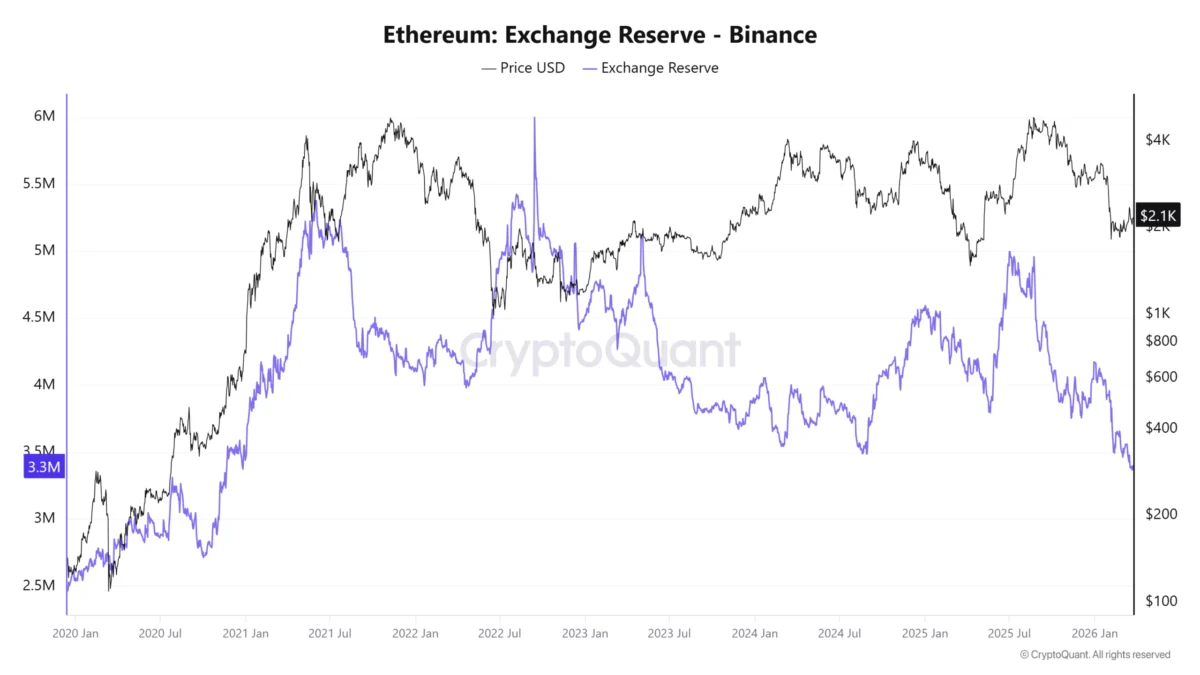
At the heart of this tightening supply narrative is the remarkable and sustained increase in Ethereum’s staking share. As of Wednesday, an impressive 38.1 million ETH had been locked away in staking mechanisms, a figure that represents approximately 33.1% of the total circulating supply of Ether. This monumental achievement marks the highest level ever recorded for staked ETH, according to Everstake, a prominent staking infrastructure provider. This steady ascent in staked Ether signifies a decisive and continuous shift of capital from easily tradable, liquid inventory into illiquid, long-term holdings. Everstake articulated the significance of this trend, stating, "This steady reduction in liquid supply, combined with ongoing demand, creates the conditions for a structurally stronger price environment." The implication is clear: with less supply available for immediate sale and consistent demand, the fundamental economics lean towards upward price pressure.

To fully grasp the magnitude of this trend, it’s essential to understand what staking entails. Staking is the process of actively participating in transaction validation on a proof-of-stake blockchain, like Ethereum, to earn rewards. In the context of Ethereum, stakers lock up their ETH to support the network’s security and operations, receiving newly minted ETH and transaction fees in return. This mechanism, introduced with "The Merge" transition from Proof-of-Work to Proof-of-Stake, transformed ETH from merely a speculative asset into a yield-bearing one, incentivizing long-term holding and further reducing its availability on exchanges. This commitment by a third of the total supply to securing the network not only bolsters Ethereum’s decentralization and robustness but also creates a significant economic barrier to rapid price depreciation. Crypto analyst Gaah further reinforced this sentiment, noting that such a substantial scale of locked ETH inevitably creates a visible and impactful contraction in the liquid supply, making it harder for large sell-offs to occur without meeting significant resistance.
Further reinforcing this trend is the current state of Ethereum’s validator activity, as observed on platforms like ValidatorQueue. The entry queue, which represents the amount of ETH waiting to be staked and begin validating transactions, currently holds a staggering 2,876,752 ETH. This volume comes with an estimated wait time of nearly 50 days, a clear and unequivocal signal of sustained, robust demand to stake Ether. Investors are not just holding ETH; they are actively seeking to commit it for extended periods, despite the waiting period, indicating strong long-term conviction in Ethereum’s future. In stark contrast, the exit queue, which represents ETH waiting to be unstaked and re-enter circulation, contains a comparatively minuscule 40,504 ETH, with a wait time of under 17 hours. This vast disparity between entry and exit queues underscores a profound reluctance among stakers to withdraw their ETH, highlighting both the attractiveness of staking rewards and a general optimism about Ether’s future value. The network’s churn rate, which is capped at 256 validators per epoch, acts as an additional safeguard, limiting how quickly even this small amount of unstaked supply can re-enter general circulation. This controlled release mechanism means that even if market sentiment were to shift dramatically, unlocking and liquidating a significant portion of the staked supply would be a gradual process, preventing sudden market shocks. These conditions collectively contribute to a prolonged state where a substantial portion of ETH remains inactive for trading, effectively slowing the pace at which it can return to exchanges and reinforcing its scarcity.

Beyond staking, the second major pillar supporting the narrative of tightening supply is the consistent outflow of ETH from centralized exchanges. Over the past few weeks, major trading venues have reported persistent negative netflows for Ether, meaning more ETH is leaving exchanges than entering them. This trend is a critical indicator for analysts because cryptocurrencies held on exchanges are generally considered "liquid" and readily available for sale, whereas those moved off-exchange are often destined for cold storage, DeFi protocols, staking, or other long-term holding strategies. Crypto analyst Amr Taha highlighted a particularly significant event: a massive $1.67 billion ETH withdrawal from OKX on March 22. Similarly, Binance, another leading exchange, recorded two separate outflows exceeding $300 million in early February. These substantial negative netflows are not isolated incidents but rather symptomatic of a broader market behavior where participants are choosing to move their ETH away from immediate trading environments.
These large, consistent withdrawals from multiple exchanges point to a broad contraction in the overall exchange-held supply of Ether. When investors move their assets off exchanges, it generally signals an intention to hold them for the long term, reducing the immediate selling pressure that might otherwise come from active traders. This shrinking pool of ETH on exchanges directly translates into tighter available liquidity for spot markets. CryptoQuant data emphatically illustrates this point, showing that the ETH supply on exchanges has plummeted to its lowest level since 2016. Specifically, Binance’s ETH balances are currently hovering near their December 2020 lows of approximately 3.3 million ETH. This historical low is particularly noteworthy as December 2020 preceded a significant bull run for Ether. Such low exchange reserves imply that there are fewer coins available to absorb demand, making the price of ETH increasingly sensitive to buying pressure. In a market where supply is constrained, even moderate demand can trigger disproportionately strong price movements.

The cumulative effect of these interwoven trends—record-high staking, persistent exchange outflows, and multi-year low exchange reserves—is creating a unique and potentially transformative market dynamic for Ether. The "stronger structural price floor" suggested by analysts is not merely speculative; it is a logical consequence of fundamental supply-demand economics. With a significant portion of ETH locked away in staking and an ever-dwindling amount available on exchanges, the immediate supply for trading is severely limited. This scarcity, when combined with sustained or increasing demand, sets the stage for a potential supply shock scenario.
Looking ahead, this tightening supply could be a powerful catalyst for Ether to break decisively above its current trading range, which has largely hovered between $2,000 and $2,200. Once renewed momentum enters the market, potentially driven by factors such as the upcoming Dencun upgrade (which promises to further enhance Ethereum’s scalability and reduce transaction costs for Layer 2s), increasing institutional interest, or the highly anticipated approval of a spot Ethereum ETF, the reduced liquid supply could amplify price movements significantly. An ETH ETF, if approved, would open the floodgates for traditional finance capital, creating immense buying pressure that would collide directly with an already constrained liquid supply. Furthermore, the ongoing growth of the decentralized finance (DeFi) and non-fungible token (NFT) ecosystems built on Ethereum continues to drive utility and demand for ETH as the network’s native gas token. The EIP-1559 upgrade, which introduced a burning mechanism for a portion of transaction fees, also contributes to the net deflationary pressure on ETH’s supply, further exacerbating scarcity over time.

While the outlook appears robust, it is crucial for investors to remain cognizant of inherent market volatility, potential regulatory shifts, and broader macroeconomic trends that can influence the entire cryptocurrency market. However, the current data paints a compelling picture of a maturing Ethereum ecosystem where fundamental forces are aligning to support a structurally stronger price environment for Ether. The journey of ETH from its inception to its current status as a yield-bearing, scarcer asset underscores a significant evolution in its market perception and long-term investment thesis. This confluence of reduced liquid supply, high staking participation, and dwindling exchange reserves suggests that Ethereum is entering a new phase where its inherent value proposition is increasingly supported by compelling supply-side economics, positioning it for potential significant price appreciation as demand continues to grow.