isnaini azizah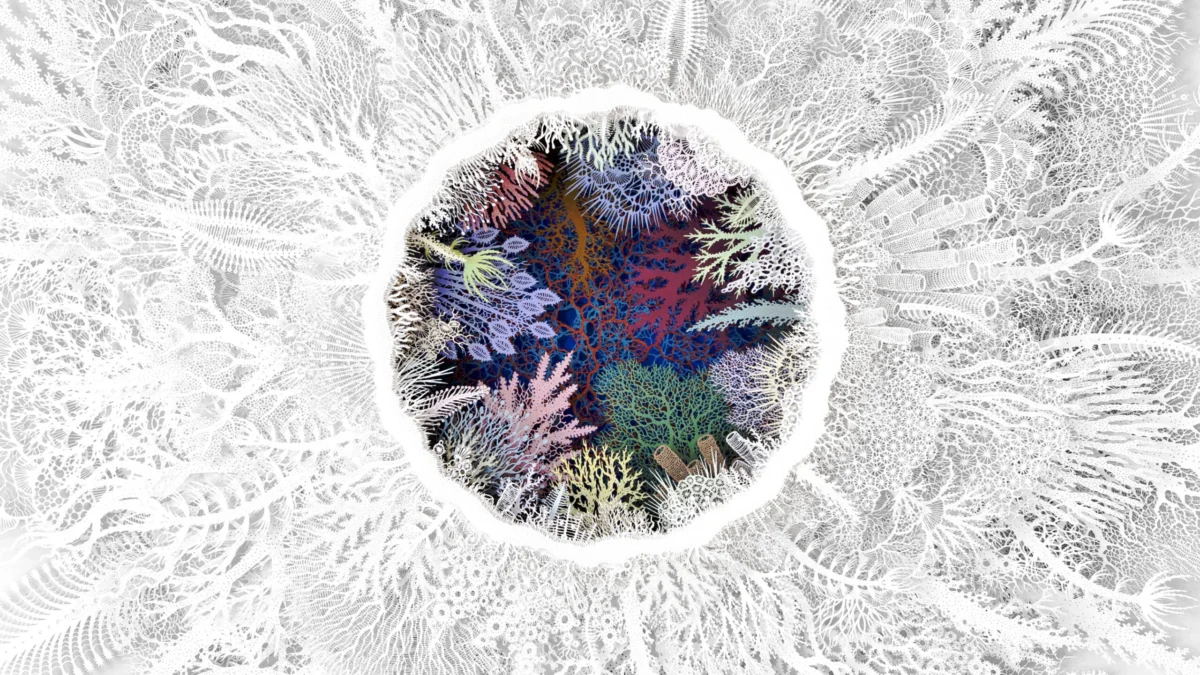
We had crash-landed on the planet, a hostile world far from home. Our spaceship, irreparable, and the rescue beacon, defunct, left us stranded. Only the astrogator, a fragment of the captain, and the ship’s AI mind remained. Outside, the atmosphere registered as toxic to most lifeforms. Huddled in the inoperable lifeboat, which miraculously retained air, we were buffeted by vast storms, a stark contrast to the calmer regions we’d previously noted. Survival demanded exploration. The captain, despite her loss of legs, entrusted me with the sole weapon and tasked the astrogator with carrying essential tools.
The planet offered little beyond desolate snow deserts, but alien artifacts lay nearby, a strange comfort to us, an exploration team whose original mission had been elsewhere. The massive system failure, source unknown, had forced our emergency landing. The artifacts materialized as thirteen domes, scattered across the unforgiving terrain, linked by cables running just below shoulder height, threaded through metal posts at irregular intervals. These formed pathways, intended or not, between the domes. Our AI had detected heat signatures from the domes before our instruments failed. Gripping the cables, we felt a pulse, a promise of warmth ahead, a sensation we slowly grew accustomed to. The shortest path between domes stretched a thousand miles, the longest a daunting ten thousand. Our suits, marvels of technology, could recycle water, generate food, and create oxygen. They offered near-hibernation states, while leg motors propelled us forward. For the captain, the suits compensated for her lost legs and eased her pain. We estimated reaching the nearest path and following it to the nearest dome was our only hope. If that dome offered life support or a way to replenish our suits, we might live; otherwise, death seemed inevitable.
Our survival estimates plummeted upon reaching the path, encountering the skeletal remains of deceased astronauts, cocooned in their suits, scattered across the snow. Their huddled forms, eerily serene in their final moments, belied the extremity of their suffering, revealed when we wiped frost from their faceplates. Walking among so many fatalities, so many lost first contacts, was a profound and unsettling experience. The systems failure was no longer a mystery; spaceships crashed here, and intelligent beings came to die. We could not presume a different fate and tempered our expectations. The AI’s platitudes about courage offered little solace amidst the countless lost souls. These were the ghastly emissaries of hundreds of unknown spacefaring species. The sheer number and haphazard positioning of the bodies hindered our progress. The AI’s survival probability dropped below fifty percent for the first time. We faced starvation, our suit motors propelling us forward until we desiccated, our thoughts elongating until consciousness winked out. Yet, we had no choice. We plunged forward, over and through the piled-high remains, driven towards the dome. What awaited us there was unknown, but we were in a galaxy where ancient civilizations had vanished millions of years prior, en route to a significant site, an ancient city on an airless moon in a wilderness of stars. Our emotions fluctuated, but a professional awe and curiosity for the dead eventually took hold, sparking debates. We had made a discovery for the ages, yet the satisfaction was bittersweet. Even if we survived longer than anticipated, home, friends, and family were lost forever. The AI might endure, but to whom would it report our findings centuries hence? The suits themselves displayed an extraordinary range of materials, some appearing to be crafted from scales and biological substances, offering clues to their origins. The snow-burial and the lack of access, save for the distorted faces glimpsed through cracked faceplates, hampered data collection. This was compounded when suits were integral to organisms. The fact that many had perished despite appearing well-prepared for the planet’s environment sobered us, even before our suits dispensed their mental-state-altering drugs. Eventually, each face seemed to reflect our own terror, our own stress. The sheer volume of detail became overwhelming, causing extreme distress. The captain observed that even a single instance of alien contact could induce physiological and mental distress; here, we faced constant encounters with the dead of an seemingly infinite number of civilizations. We ceased recording, recommitting ourselves to the arduous trek towards the nearest dome. The captain’s drugs unit had failed, but the AI rerouted heating elements in her suit’s panels, offering a measure of comfort as parts of her body succumbed to the cold. We welcomed the cessation of screaming and her counsel.
For a considerable time, as we labored in our spacesuits, following the path through snowstorms, we couldn’t comprehend the absence of spaceships amidst the multitude of dead astronauts. Our line of sight, under favorable conditions, extended for five hundred miles, yet no crash sites were visible. Then, an antenna emerged from the snow. Excavation revealed a colossal, ancient spaceship, unlike any we had ever seen. A gaping wound exposed its unique architecture, creating the illusion that the snow had spilled from within to form the surrounding landscape, rather than having accumulated over time. The ship’s texture suggested an ultra-hard wood or equivalent. Climbing partially up, we noted the strange dimensions of the living quarters, with no sign of its occupants. Perhaps, I suggested, they had sought refuge in the domes, perhaps even reached them, my voice betraying a flicker of hope. The captain ordered the AI to perform a materials analysis. The "snow" in this region was contaminated with ash and tiny bone fragments. The AI estimated over seventy percent of the white expanse was composed of the remains of sentient vertebrate life and suit remnants. The extent of invertebrate remains was unknown. A thaw might bring not just water, but a shushing sound indicative of bone particulate. I imagined the clinking of small objects, undissolved by whatever intense heat had created the ash. The astrogator, clinging to the delusion of repair, insisted on digging deeper into the ship, hoping for recognizable technology. The rest of us indulged him. Upon his return, he held ovals of snow, no larger than a thumbprint, many bearing soft indentations, reminiscent of reptilian egg afterbirth, with faint cilia-like treads along their bottoms. He found no usable technology, but discovered the ship’s pilots were so vastly different from us they required egg-sized encapsulations. The debris spilling from the ship’s gash was largely the bodies of hundreds of thousands of crew members, their suits inadequate, leading to mass death as they attempted to escape their vessel. The AI speculated it was a generation ship, perhaps fleeing a dying star. We clung to disbelief, not wanting the AI’s conclusion to be true. The captain fell silent for over a hundred miles after receiving this news. Leaving the site, unsure of our footing, we realized the snow-covered spaceship might be invisible from above should we attempt to retrace our steps. The already bleak probability of visual rescue from above was lost to us, while the cable line remained perpetually visible. The planet now felt like a trap, but of what nature?
In the captain’s silence, it was perhaps the AI that first voiced the idea of the planet’s "duplicity." The phrasing unsettled us, for it attributed sentience to a celestial body incapable of forethought or premeditation. The AI likely meant the creators of the planet’s conditions, designed to trap spacecraft and their occupants in perilous, inescapable situations. However, the AI used the phrase "the planet," which was not only inaccurate but also indicated a lack of analysis regarding the agency and motivations at play. Yet, in a way, the AI articulated a feeling I had harbored for miles: that an overlay existed, a hidden landscape inaccessible to us and to the doomed explorers. This hidden realm offered all the hoped-for amenities: breathable atmosphere, abundant food, and water. While we struggled along the cable line through snow and storms, others could see us but chose to ignore us, for reasons of their own well-being. For centuries, as explorers met their brutal ends here, a sumptuous, ancient, and unending feast for the senses raged. The AI’s words struck us powerfully, making our mouths water at the thought of real food, clean water, and freedom from our suits. Even our intended destination, a small space station, promised tedium broken only by arduous excursions to the moon’s unbreathable surface and its ancient ruins. This vision, far from a mere tantalizing delusion, terrified us, overwhelming our thoughts like a wave. We fought for the first time, the astrogator advocating a return to the ruined spaceship for parts, while the captain, breaking her silence, ordered us to continue towards the nearest dome. The AI, having led us to this point, remained silent. The endless white plains, devoid of true elevation, marked only by metal ropes and posts, had become a mind-numbing repetition. Gazing across the white, I perceived shapes in the wind, as if invisible entities fled, carried by gusts, unable to gain purchase, swept hundreds of miles before being dashed to the ground. Yet, we did not give up.
About halfway to the nearest dome, amidst a storm that reduced our progress and visibility to nil, we encountered a peculiar tableau. Six astronaut suits lay strewn across the metal rope. With the snow flurries, it took us minutes, even with powerful headlamps, to discern the obstruction. The suits belonged to a humanoid species with nine-foot-long slab torsos, six limbs for locomotion, and flared, fan-like heads. All helmets were cracked open, revealing the curled skeletons of smaller, intelligent beings, no larger than forty to fifty pounds, possibly warm-blooded. The original occupants were nowhere to be seen. After a brief analysis, cut short by the conditions, we theorized that these warm-blooded beings, their breathable skin suits failing, had sought shelter in the dead astronauts. The AI posited that the smaller species had consumed every scrap of the original occupants within the suits, and then perished themselves. The AI suggested that, in time, something smaller would inhabit their remains, then something smaller still, and so on. At this point, the captain, her voice laced with concern, attempted a soft reboot of the AI with a coded question. Undeterred, the AI continued, suggesting this scenario might be common, depending on the planet’s ability to break down and process alien flesh, a process likely fatal to most who attempted it, poisoned by the foreign proteins. The astrogator began muttering to himself, off comms, as if our team cohesion had dissolved. The captain’s reprimands were ineffectual. In the terse harshness of her rebuke, I recognized a spike in her pain levels.
At mile 700, as we strained through the snowstorm, clinging to the cables, the AI began to speak in strange, alien voices: warbling, chirping, howling, humming, clucking. It spoke in voices like fossilized choruses of beasts, vast and harmonious; like dry grass ignited by the sun; like the dissolution of all things, a darkness within the blinding white that terrified me. Initially, we believed the AI was deranged, then that it was channeling voices from the dome, 300 miles ahead. Finally, it conveyed that these were the voices of the dead astronauts we had encountered, huddled and frozen, their suits in myriad shapes and sizes. The voices of the dead were channeled through the AI, and nothing could stop it. We chose to believe the AI was malfunctioning, and wasted no time in responding. The captain, whispering the sequence, ordered a self-shutdown. We understood our loss, yet knew that if the AI remained active, it posed a threat beyond the mental distress it had inflicted. Soon after, the AI ceased its own voice, emitting only the sounds of others, and then fell silent altogether.
The snow began to betray us. The storms generated different forms of ice. Our arms grew weary, our legs cramped, forcing more frequent rests. We learned to trust the solid crunch that supported our weight, rejecting the feather-light freshness that offered effortless footing but could give way like air. In some places, slick, purple-hued ice welled up in sluggish layers, as if semi-alive. In others, we discovered strange islands of elevation, with brutal curls and curves, suggesting a collision of continental shelves. As we adapted to these worsening conditions, an illusion of competency took hold, even momentarily cheering the astrogator. The sounds of our efforts through the comms – deeper breaths, muffled curses – fostered this belief. We felt we were becoming adept at navigating the snow, convinced that reaching the dome meant salvation. Yet, this surge in morale ran parallel to, rather than intersected with, the concept of our ultimate survival.
We lost track of the remaining distance without the AI’s updates, or perhaps the captain, in her pain, no longer issued them. But across the remaining expanse, sights beyond reckoning appeared: three colossal astronauts, spaced fifty miles apart. Larger than most starships, each lay sprawled across an area larger than several fields, in vastly different states of preservation. The first had been severely burned, rendering it unrecoverable, even for salvage. It had crawled or pulled itself along, leaving a long smudge of black and red. The alien species remained unknown, its five arms sunk into the ground as if in agony. Its skull had once held three eyes, and the faceplate was cracked with a force resembling a meteor strike. The body was bloated, the suit fabric a dull gray with a shimmering green, linked to photosensitive skin cells. Its flesh, exhibiting more plant than animal characteristics, made further study impossible. The second was a sprawl of limbs, suggesting a defensive posture. Debris flared out to the side in an incomprehensible display. The suit itself was surprisingly intact, but the faceplate bore a similar crack, devoid of any bodily remains. The rest of the suit had become a habitat for a wealth of other dead astronauts, of varying sizes, who had sought shelter or sustenance, only to become trapped or simply give up. As the AI had predicted, we had once again encountered bodies providing sustenance and shelter for others. This condition became apparent only after an hour of clambering to reach the cracked faceplate, the entry hole resembling a broken archway. Despite the number of remains within and the difficulty of movement, the captain ordered an exhaustive reconnaissance. Her pulse readings were thready. At times, the astrogator and I privately felt the captain was succumbing to delusions similar to the AI’s. Yet, we obeyed, hoping some internal calculation guided her belief that this was our only path to survival. What did we expect to find within a dead giant? Food? Oxygen? The cause of death? To postpone our own demise by seeking refuge in a death so immense we could not comprehend it? I felt like a parasite beholding a god. Or was the scale even more ludicrous? I struggled to visualize the body’s contortions as it pitched into the icy ground, my thoughts fracturing. More pressure mounted in my skull as I contemplated the scene. We were immersed in something no one of my kind had ever experienced. We might be the only ones, ever. I better understood the unraveling of the AI and the captain. My sharpness had dulled, taking my calm with it. It was impossible to determine how long the astronaut had taken to die, unless some hint of life remained hidden within that fallen figure, forever undiscovered. The storms ebbed and flowed.
The third colossal astronaut pulsed with light and life, a beacon across the snowy wasteland. For a moment, I thought we had pierced the invisible veil, glimpsing what lay beyond. We would find comforts far exceeding anything on our ruined spaceship, even in its prime. No more recycled urine for water, no more faint stench of sweat as ventilation failed, no more stale, moldy liquid food. As we approached, the suit extended almost to the horizon, foreshortened by its left foot. Our remaining instrumentation confirmed its integrity; pressure readings indicated circulating air within its sealed surfaces. We climbed with renewed vigor, the proximity of sanctuary making us giddy. Our exclamations of exuberance, though infectious, also instilled a sense of fear. What lay beyond such exhilaration but a fall? Reaching the helmet plate, we found not a face or skull, but a richness of healthy growth. We fell silent, unable to fully comprehend what we saw, except that it was an ecosystem – resplendent with vibrant greens and blues, stippled with other colors. It resembled a terrarium teeming with moss and exotic plants, perhaps with jewel-like amphibians or tiny, shy sapphire birds moving amongst them. We could not smell, taste, or hear it, but somehow we each imagined enough to be calmed and comforted. The astrogator proposed creating a hole in the plate or elsewhere on the body, allowing us entry, and then patching the surface to prevent excessive air or vitality loss. This workaround, he estimated, would take an hour or two due to the delicate nature of the internal growth. The captain considered his proposal and agreed. The weather was turning dangerous again; we needed to begin immediately. This sanctuary could be the difference between life and death, the astrogator stated, potentially offering the captain a better solution for her pain if the atmosphere proved breathable. I unclipped the astrogator’s equipment, threw it from the "mountain" of the astronaut, and watched it sail into the snow. Then, I used my weapon to vaporize it where it lay. I then discarded my weapon into the snow, burying it forever. We were a team, and I had helped my team while demonstrating I posed no threat, though I knew the astrogator and captain would not see it that way. Standing on the helmet plate, which we could no longer open with our diminished tools, I listened to their furious shouts through the comms. Their admonishments were irrelevant; they concerned an unalterable past. Without explanation, I began my descent, ready to rejoin the rope and proceed to the dome. "Will you follow," I called from the ground, seeing them still on the heights. No reply came, but as they saw me take up the rope, they climbed down to join me. I waited, letting them catch up.
The captain died not long after. The pain was too great, or her wounds too severe. I had known for some time she would not reach the dome, but there was no point in stating it. Nothing she had done until the end had required her removal from command. Her last words were the name of our ship and a message of love to someone who would be long dead even if we escaped and returned home. The astrogator promised to carry those words forward. We left her by the marker indicating one hundred miles remaining to the dome. We knew the snow would faithfully bury her, as it had all the rest. As the astrogator followed me down the rope line, he cried out for an explanation. The captain’s death, he insisted, required it. She had not deserved my betrayal, and would not rest easy until I explained why. "You must believe in ghosts," I replied. This incensed him, and he berated me with insults unbecoming of teammates. I ignored him, but offered him my oxygen if our levels ran low, calculating he might reach the dome. I meant it, as the odds were slim anyway. I had injured my knee retrieving the equipment and descending so rapidly from the dead astronaut. The astrogator’s silence indicated his non-acceptance of my answer. The reason I took and destroyed the tools was because the wind had told me something it had not whispered to the captain or the astrogator. The wind had never spoken to me before, so I believed its message: the astronaut within the suit lived on, albeit immobile. What we perceived as an ecosystem on the outside, as separate "plants" and "animals," was in fact a composite life-form, and to breach the suit would have been a violation. That in that frozen hellscape, life’s persistence in such a manner, an oasis in the midst of nothingness, could be categorized as a miracle. I would not extinguish it. I could not allow it to be extinguished. But I also recalled the profound calm and comfort I had felt gazing at the vast, alien landscape behind the faceplate, an emotion I could not place. Would I trade that feeling for the sight of all those explorers dead within the other vast suit? Even as I became one of them? Because the planet had already dictated the rules, the consequences, and the ultimate outcome. There are no odds so terrible that they could not be experienced, in dozens of ways, in this place. So I trudged on, the astrogator cursing me, my childhood, my supposed dishonesty in passing psych exams. I had thought the same of him at various points. "See how beautiful the snow is, falling now," I said to him over comms. "See how precise and geometric this line we follow across this expanse." He did not reply, but a little later announced he no longer believed in the line at all, and by his calculations, would reach the dome faster by striking out on his own. I could not stop him, nor did I wish to. I watched him become a smaller figure against the white until the white consumed him, and I was alone.
I have been walking a long time, visiting with the dead. Here, against an arch of heaven that appears no different from what I see directly in front of me.
Jeff VanderMeer is the author of the critically acclaimed, bestselling Southern Reach series, translated into 38 languages. His short fiction has appeared in Vulture, Slate, New York Magazine, Black Clock, Interzone, American Fantastic Tales (Library of America), and many others.