Faris Adani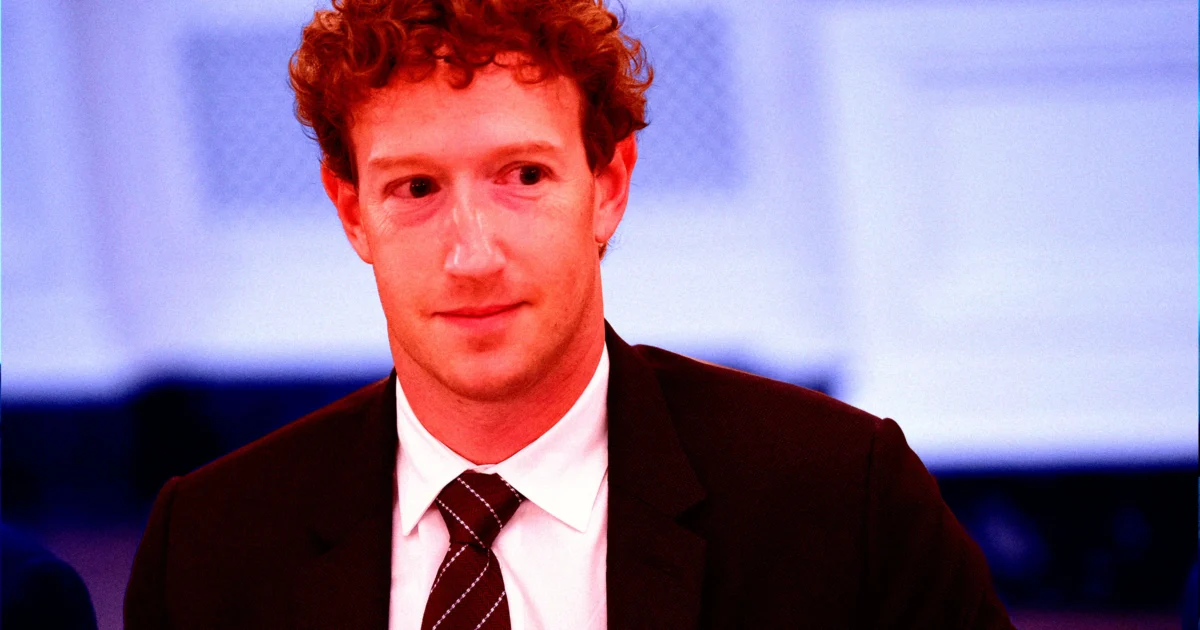
Sign up to see the future, today
Can’t-miss innovations from the bleeding edge of science and tech
Clueless AI CEOs Still Baffled Why Everybody’s So Mad About AI All the Time
The tech industry’s standing in the eyes of the US public has undergone a dramatic transformation over the last few years, shifting from widespread enthusiasm to palpable weariness. Where Americans were once captivated by the promise of new tech products and industry innovations, they are now exhausted by the sector’s relentless intrusions into their daily lives. This fatigue manifests across multiple fronts, from the proliferation of AI-generated content—often derided as “slop”—that dilutes genuine human creativity and information, to the profound environmental and social impact of the massive data centers required to power these ambitious, yet often resource-intensive, endeavors.
This growing public discontent is no longer a fringe sentiment; it’s a mainstream concern resonating across various segments of society. Political strategists, acutely aware of shifting public opinion, are issuing frenzied memos, particularly concerning the backlash against the construction and operation of data centers in communities. Meanwhile, tech financiers, who once seemed immune to public sentiment, are now forced to consider the tangible financial and reputational costs of this widespread “AI hatred.” This opposition is not just a moral quandary; it translates into permitting delays, increased regulatory scrutiny, and a less favorable investment climate, directly impacting the industry’s bottom line.
Yet, amidst this growing chorus of criticism and concern, there appears to be one group that remains largely impervious to the message: the very AI executives who hold immense power and influence over the industry’s direction. These leaders, often operating from a vantage point seemingly detached from the everyday realities of the public, continue to misinterpret the nature of the backlash. As Wired acutely observed, top tech CEOs are increasingly attempting to out-message their way around the profound public skepticism regarding AI. Their strategy hinges not on addressing the core issues of harm, displacement, or environmental degradation, but on a sophisticated public relations offensive designed to reshape perception rather than reality.
To these AI billionaires, the burgeoning discontent is not rooted in the inconvenient truth that AI is often perceived as making life worse for many, while simultaneously concentrating power and wealth in the hands of a few ultra-powerful corporations. Nor do they seem to fully grasp the legitimate grievances surrounding data centers—colossal, energy-hungry structures that are not merely “unsightly” but are often nearly impossible to live next to, imposing significant environmental and quality-of-life burdens on surrounding communities. Instead, the problem, as they diagnose it, is an issue of “trust”—an entirely subjective and malleable concept that, in their view, can be easily remedied with a little strategic communication, a splash of razzle-dazzle, and a fresh coat of corporate optimism.
Meta CEO Mark Zuckerberg stands as a prime example of this executive disconnect. Rather than acknowledging or addressing the concrete concerns of privacy breaches, algorithmic bias, or the mental health impacts of social media, he has chosen to double down on an almost messianic vision of AI. He recently made it a point to inject even more buzzy tech-optimism into the global discourse, publishing a lengthy and often tedious 6,500-word essay. In this sprawling manifesto, Zuckerberg extols AI’s seemingly boundless possibilities, simultaneously lambasting anyone who dares to criticize the industry’s overwhelmingly positive, almost utopian, vision for the future.
“It is surprising that the discourse from many developing AI is so filled with doom,” Zuckerberg wrote, a thinly veiled jab at other industry leaders, likely including Anthropic CEO Dario Amodei, who have vocalized concerns about AI’s potential risks. Zuckerberg confidently declared, “The abundance of the future can be shared by everyone,” painting a picture of an AI-powered utopia where prosperity is universal. He promised that AI would “free up time for the things you enjoy, and help you accomplish more than you could otherwise,” suggesting a future of leisure and enhanced productivity for all.
However, the grandiosity of Zuckerberg’s AI-boosterism is starkly betrayed by his own company’s internal handling of AI and its implications for employees. Earlier this month, a revealing incident brought this hypocrisy into sharp focus: Meta’s CTO, Andrew Bosworth, was reported to have ripped into a Meta worker who naively inquired if AI’s promised efficiencies would soon allow rank-and-file employees to take more time off. Bosworth’s response was dismissive and derisive, underscoring a significant gap between the public rhetoric and the internal corporate reality.
“Go to your parents and ask them: hey, like every time I get a chance to talk to my boss, ask me if I can have more days off,” Bosworth reportedly snapped. “Ask your parents what they think of that as a career strategy.” This retort laid bare the chasm between the promise of AI as a liberator of human potential and the corporate reality of a workforce expected to maximize output, regardless of technological advancements. It highlighted the uncomfortable truth that for many executives, AI is not about freeing up time for workers, but about optimizing corporate efficiency and profitability.
Of course, Zuckerberg is far from alone in his belief that a few honeyed words can easily paper over the growing AI backlash, nor is he unique in his obvious hypocrisy. In a recent response to Zuckerberg’s relentlessly cheery diatribe, Anthropic’s Dario Amodei offered a nuanced perspective, stating, “I do agree that the public has a negative view of AI (and that this is a big problem), but I don’t think it is primarily caused by me or any other AI leader warning about AI’s risks.” Amodei’s statement suggests a recognition of public sentiment but deflects blame from warnings about existential risks, implying the problem lies elsewhere.
Under Amodei’s leadership, Anthropic has cultivated an image of embracing a kind of “cautious skepticism,” meticulously chasing good publicity under the banner of transparency and ethical business practices. They position themselves as responsible developers, keenly aware of AI’s potential pitfalls. Yet, this carefully constructed image often contrasts sharply with the practical applications of their technology. For instance, their flagship AI chatbot, Claude, is reportedly being utilized by the Trump administration in ways that contradict a purely ethical stance, specifically in efforts that could potentially escalate to waging a devastating war on Iran. This disconnect between public messaging and operational deployment reveals a profound tension within the “ethical AI” movement.
Amodei continued his argument by asserting, “The thing that will work is actually curing cancer.” He elaborated, “I think by far the most accurate criticism of AI companies including Anthropic is that we haven’t yet delivered on our big promises to benefit the world. That is totally on us.” This sentiment implies that the public’s disapproval stems primarily from a lack of tangible, transformative benefits, rather than inherent ethical or societal harms. It’s a classic tech industry trope: if only we build something truly groundbreaking, all past transgressions will be forgiven, and public trust will be restored.
Essentially, the Anthropic leader contends that the public would overlook or accept AI’s copious harms—its privacy invasions, job displacements, and environmental footprints—if only the industry would deliver a few revolutionary crumbs for their patience. There is, admittedly, a kernel of truth to this perspective; to date, AI’s most widely publicized real-world use case for many seems to be generating often bizarre and ethically questionable content, such as anthropomorphic fruit smut, rather than solving humanity’s grand challenges. The gap between grand promises and mundane, or even problematic, applications is undoubtedly a source of frustration.
However, even in the extremely unlikely scenario that an AI chatbot somehow, miraculously, unlocks the “cure to cancer” entirely on its own—a feat that ignores decades of complex medical research and human collaboration—the fundamental harms associated with current AI development will persist and likely escalate. Data centers, the physical manifestation of our digital ambitions, will still continue to choke poor Black communities and other marginalized groups with smog, noise pollution, and excessive energy demands, exacerbating environmental injustices. The unchecked development of AI chatbots will continue to pose risks to vulnerable populations, potentially melting children’s brains through addictive engagement, exposure to inappropriate content, or the erosion of critical thinking skills and genuine human interaction. Moreover, machine learning models, irrespective of their beneficial applications, will continue to be deployed and refined for military purposes, potentially leading to scenarios like the Pentagon’s use of AI in bombing scenarios, raising profound ethical questions about autonomous warfare and the dehumanization of conflict.
The issue is not merely one of unmet promises; it is one of inherent design, unchecked power, and a failure to critically evaluate societal impact. AI’s current trajectory, driven by profit motives and a relentless pursuit of technological advancement at any cost, has already sown seeds of distrust and genuine harm. From the pervasive surveillance capabilities that erode privacy, to the algorithmic biases that perpetuate systemic discrimination in hiring and justice systems, the negative consequences are deeply embedded in the technology’s architecture and deployment.
If the tech industry genuinely desires to win the public back to its good graces, a mere shift in messaging or a focus on distant, hypothetical benefits will prove insufficient. It should probably skip the expensive, feel-good advertisements and PR campaigns that often ring hollow and instead ease off on the aggressive, often reckless, proliferation of AI. This would entail a more thoughtful approach to development, prioritizing ethical considerations, environmental sustainability, and equitable societal impact over sheer speed and market dominance. It would mean addressing head-on the concerns about job displacement, data privacy, and algorithmic accountability.
However, the stark reality is that such a pivot seems increasingly improbable. With nearly the entire US economy—and increasingly, the global economy—leveraged on the continued expansion and integration of technology, particularly AI, the industry finds itself in a precarious position. The colossal investments, the intricate web of dependencies, and the relentless pressure from shareholders and competitors mean that AI executives feel they don’t have much of a choice but to plow ahead, public sentiment be damned. The economic machine, once set in motion, is incredibly difficult to redirect, even in the face of widespread public discontent and the undeniable evidence of accumulating harms. The future, it seems, will be shaped by this relentless forward momentum, regardless of who gets left behind or how much trust is irrevocably broken.