Faris Adani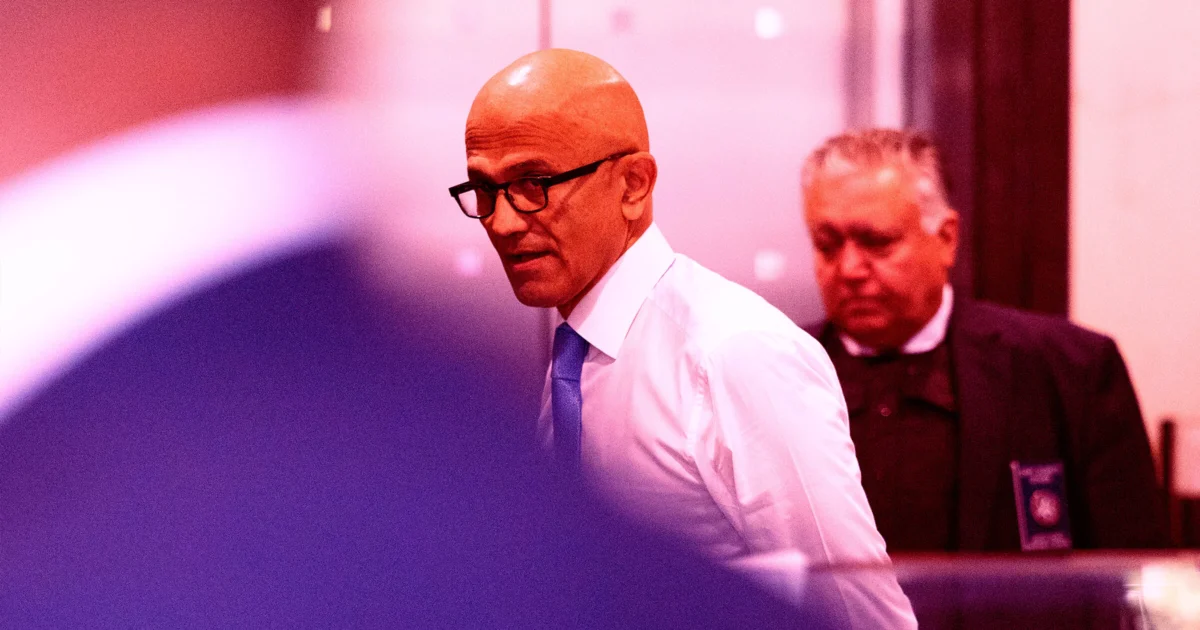
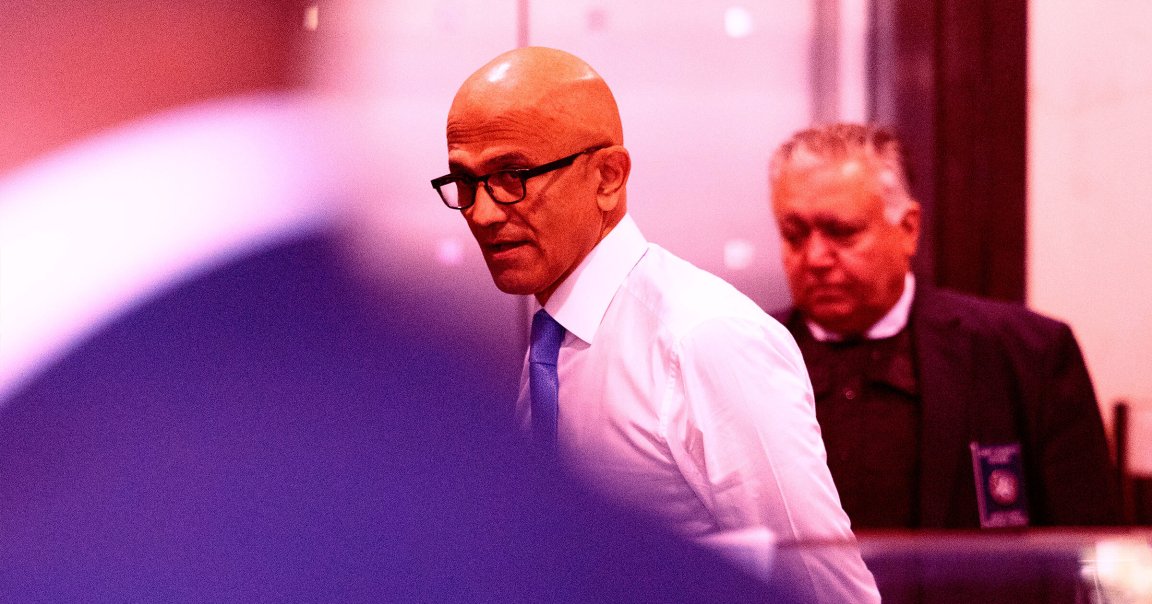
Benjamin Fanjoy/Getty Images/Futurism
Microsoft Shrivels When Asked If Its “Good Neighbor” Data Center Policy Will Involve Actually Supporting Community Groups. The grand pronouncements of corporate social responsibility often sound compelling on paper, but the true test lies in their implementation. This stark reality has become painfully evident for community organizers in South Bend, Indiana, who have found Microsoft’s much-touted “community-first AI infrastructure” initiative to be a hollow promise rather than a blueprint for genuine partnership. Despite a public relations blitz by Microsoft President Brad Smith in January, outlining a five-point plan to “partner with local communities across the United States” and position the tech giant as an invaluable neighbor, the company’s actions on the ground have painted a far less benevolent picture.
Back in January, as public concern mounted over the burgeoning footprint of AI data centers, Brad Smith’s blog post served as a strategic balm, designed to soothe anxieties and frame Microsoft as a conscientious corporate citizen. His essay, titled “Building Community-First AI Infrastructure,” was rich with pledges, promising to “pay our way to ensure our data centers don’t increase your electricity prices” and to create “jobs for your residents.” One bullet point, emphasized with underlining in the original text, stood out: “We will invest in your local nonprofit community.” Smith even committed to dispatching “Microsoft liaisons” to towns hosting these massive digital fortresses, asserting that “Our broader contribution must start with listening. You know best what your town needs, what nonprofits are making a difference, and which organizations are best positioned to do more.” The rhetoric was meticulously crafted to convey empathy, engagement, and a deep commitment to local well-being. It painted a vision of a tech behemoth integrating seamlessly into the social fabric, contributing meaningfully beyond mere economic activity.
However, the warm and fuzzy sentiment quickly evaporated when put to the test by “We Make Indiana,” a formidable coalition of 25 diverse interfaith groups, law enforcement associations, mental health organizations, and other non-profits based in South Bend. This alliance represents a broad cross-section of the community, united by a common goal: to uplift a population where over 20 percent of residents grapple with the harsh realities of living below the federal poverty line—an annual income of just $15,960 for individuals and $33,000 for families. For this vulnerable demographic, chronically underfunded government programs providing community health care, public child and elder care, affordable housing, and efficient public transportation are not luxuries but essential lifelines.
Given the immense scale of Microsoft’s local investment—a sprawling 900-acre hyperscale data center costing over $1 billion being erected nearby—We Make Indiana reasonably assumed that Microsoft, with its declared “community-first” ethos, would be a willing and substantial partner in addressing these urgent needs. Ryan Juskus, an assistant professor at the University of Notre Dame, articulated this sentiment to *Ars Technica*, explaining, “It’s kind of like asking Microsoft to help us solve our challenges when the state has abandoned us.” This statement underscores a deeper frustration: that communities are often left to their own devices, even as large corporations reap significant benefits from local resources and infrastructure.
The coalition’s proposal to Microsoft was not an outlandish demand but a modest and pragmatic request: a mere one percent cut of the data center’s annual revenue. This seemingly small share could inject a transformative $30 to $40 million annually into local programs, providing a crucial boost to services on the brink of collapse. Such an investment would directly translate into tangible improvements in healthcare access, educational opportunities, and support systems for the most marginalized residents of South Bend. It was an opportunity for Microsoft to put its money where its blog post was, to demonstrate a genuine commitment to the “strengthening your community” bullet point.
Yet, as *Ars Technica* reported, Microsoft’s celebrated “liaisons” proved less interested in substantive dialogue and more adept at corporate deflection. After We Make Indiana presented its well-reasoned proposal, the liaisons effectively ghosted the local activists, sidelining the very group they were theoretically sent to support and listen to. The promise of “listening” devolved into selective hearing, where only pre-approved, small-scale philanthropic gestures were entertained. The reality that emerged was that these liaisons were severely constrained, authorized only to facilitate one-time donations from a paltry total allotment of $1 million—a figure Juskus aptly described as “minuscule, given the project’s scale.” Compounding the insult, these limited funds were strictly earmarked for non-profits, explicitly excluding government programs or public-private agencies that often form the backbone of community support and are desperately in need of consistent, significant funding.
This lack of follow-through and the restrictive nature of Microsoft’s “contributions” have been a profound slap in the face to local activists. Their frustration is further compounded by the broader context of massive tax abatements granted to tech giants like Microsoft by Indiana officials. These generous handouts mean that the potential tax revenue from Microsoft’s $1 billion data center—revenue that could have directly served the people of South Bend and beyond—is largely foregone. As *Mirror Indy* highlighted in a 2025 analysis, the total tax revenue lost to such corporate incentives was projected to reach a staggering $900 million statewide. This figure is now undoubtedly higher, given the accelerating pace of data center developments across the Hoosier state, with other tech behemoths like Google also establishing a significant presence.
These tax breaks, often justified by promises of job creation and economic stimulation, effectively shift the financial burden from hugely profitable corporations to local taxpayers, while simultaneously starving essential public services of much-needed funds. The argument from community advocates is clear: if Microsoft truly wants to be a “good neighbor,” its primary contribution should be through fair taxation, allowing elected officials to allocate funds according to community needs, rather than through tokenistic, restricted donations that amount to corporate public relations gestures. The irony is not lost on residents that while their schools, healthcare facilities, and infrastructure struggle, the state is effectively subsidizing a global tech giant’s expansion.
Moreover, the environmental impact of these hyperscale data centers, while not the primary focus of We Make Indiana’s financial request, adds another layer of concern to the “good neighbor” narrative. These facilities are massive consumers of energy and water, generating heat and often requiring backup generators that can belch noxious gases into the surrounding environment, as evidenced by a recent $1 million fine levied against a data center operator (not Microsoft, but indicative of industry practices) in New Jersey. While specific environmental infractions in Indiana haven’t been highlighted in the same vein, the sheer scale of a 900-acre facility inherently raises questions about its long-term ecological footprint and the burden it places on local resources, further challenging the image of a benevolent corporate presence.
In the face of what they perceive as corporate indifference masked by PR, We Make Indiana remains resolute. Ryan Juskus’s concluding remarks to *Ars* encapsulate the community’s determination: “In a fast-changing local and national environment, we will continue to organize our community and elected leaders to use every piece of leverage we have to bring Microsoft to the table for real conversation and negotiation.” He added a poignant summary of the current sentiment: “Microsoft claims to want to be a good neighbor, but the jury is still out.”
This situation in South Bend is not an isolated incident but a microcosm of a larger national challenge. As AI infrastructure expands, communities across the United States are grappling with how to balance the allure of tech investment with the imperative of protecting and enhancing local well-being. The disconnect between corporate rhetoric and ground-level reality erodes trust, fosters disillusionment, and underscores the urgent need for more robust accountability mechanisms. For communities hosting these vast, energy-intensive digital hubs, the expectation is not just for a few jobs or a paltry donation, but for a genuine, equitable partnership that sees a portion of the immense wealth generated by these facilities reinvested meaningfully into the public good. Until then, Microsoft’s “community-first” pledge will continue to ring hollow, overshadowed by the stark reality that when asked to truly support its neighbors, the tech giant appears to shrivel.
**More on Microsoft: **Data Center Operator Slapped With $1 Million Fine for Belching Noxious Gas Into Surrounding Community