anjir abdul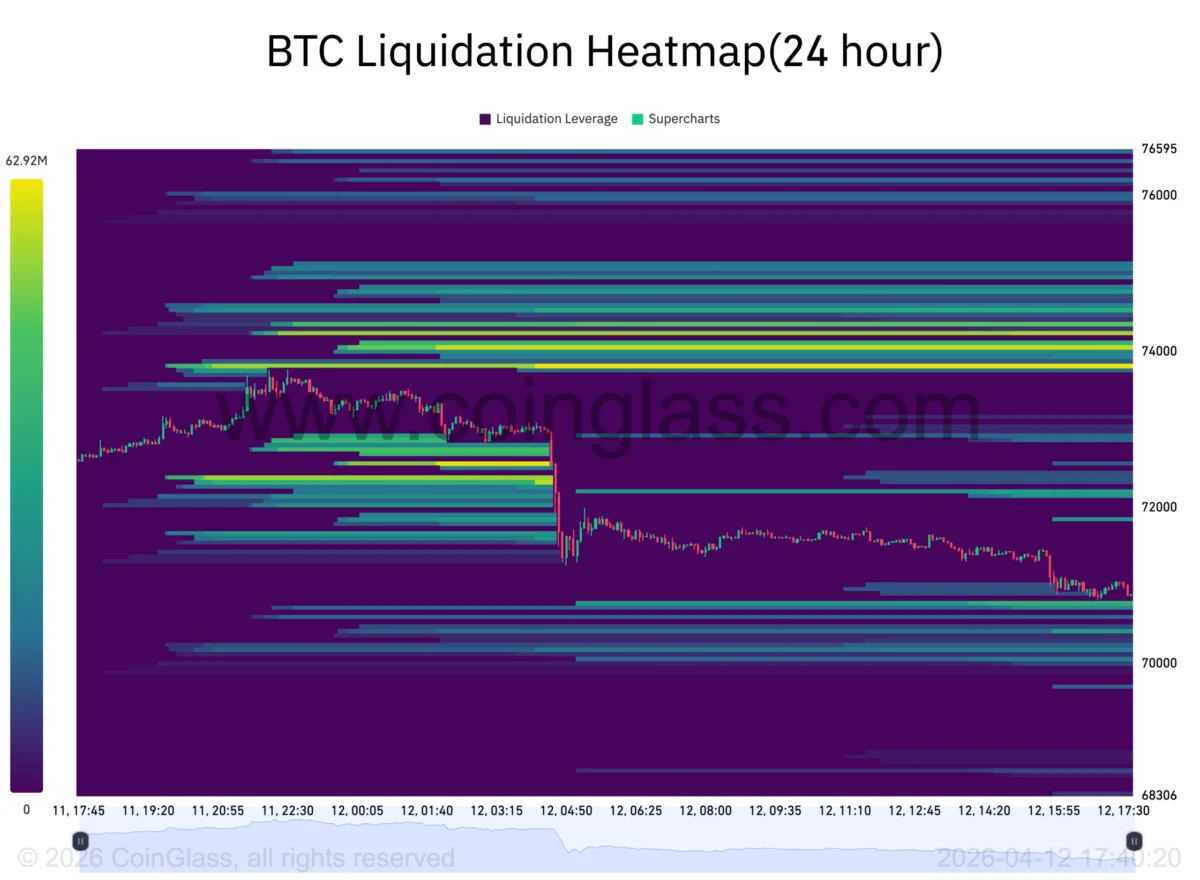
The sudden breakdown in talks, which had been anticipated as a potential pathway to ease tensions, immediately triggered a sell-off across risk-on assets, with Bitcoin, a 24-hour traded asset, being among the first to react. Data from TradingView captured the swift BTC price action, illustrating a rapid dip below the psychological $71,000 level as news of the diplomatic failure spread. This significant price movement underscores Bitcoin’s growing integration into the global macro landscape, where geopolitical events can now exert a profound and immediate influence on its valuation.

The high-stakes discussions in Islamabad, intended to address the contentious issue of Iran’s nuclear weapons program and broader regional security, ended without a resolution. Both US and Iranian delegations reportedly departed the talks unfinished, signaling a complete deadlock. The primary sticking point remained Iran’s insistence on its right to enrich uranium to levels that the US and its allies deem dangerously close to weapons-grade, coupled with Iran’s demands for the lifting of all economic sanctions. The choice of Islamabad as a neutral ground for these sensitive talks had initially offered a glimmer of hope, with Pakistan leveraging its diplomatic ties to both nations, but ultimately proved insufficient to bridge the deep chasm of mistrust and opposing strategic interests. The failure to secure an agreement on such a critical issue left the international community bracing for potential escalation.
In a swift and assertive response to the diplomatic impasse, US President Donald Trump took to Truth Social, a platform frequently used for direct communication, to announce a severe measure: the US would blockade the Strait of Hormuz and "interdict" any vessels attempting to pay Iran for safe passage. This declaration immediately ratcheted up tensions, as the Strait of Hormuz is a vital chokepoint for global oil transit, through which a significant portion of the world’s seaborne oil passes daily. Trump’s post, stating, "No one who pays an illegal toll will have safe passage on the high seas," conveyed a zero-tolerance policy, effectively challenging Iran’s claims over the strategic waterway and its historical practice of collecting tolls from passing ships. A subsequent post reiterated demands for Iran to ensure the Strait of Hormuz remained "fully operational," implying that any perceived obstruction by Iran would be met with force. These pronouncements signaled a dramatic shift from diplomatic engagement to a confrontational stance, reminiscent of past periods of heightened US-Iran maritime friction in the Persian Gulf. The implications of such a blockade for global energy markets, already prone to volatility, were immediately apparent.

The economic fallout from this geopolitical development quickly became a central concern for analysts. The Kobeissi Letter, a prominent financial commentary outlet, provided a stark assessment on X (formerly Twitter), warning of severe economic ramifications. "If the path forward is continued war, escalation, and a prolonged closure of the Strait of Hormuz, then the Iran War has just entered a new era," the letter stated, highlighting the potential for a full-blown military conflict. The immediate and most pressing concern for the US economy, according to Kobeissi, was inflation. The latest analysis indicated that "US CPI inflation just jumped from 2.4% to 3.3% and further escalation of the Iran War would lead to 4.0%+ inflation, according to our models." This prediction is particularly alarming given that the US Consumer Price Index (CPI) inflation, a crucial gauge of the cost of living, is highly sensitive to oil prices. Earlier in the week, the March CPI print had come in slightly below expectations, offering a brief respite, despite the highest jump in its oil-price component in 60 years. The prospect of a prolonged closure or disruption in the Strait of Hormuz would inevitably send crude oil prices soaring, impacting everything from gasoline at the pump to manufacturing and transportation costs, thereby fueling broader inflationary pressures across the economy. Such an inflationary surge could force the Federal Reserve into an unenviable position, potentially compelling it to choose between combating inflation with tighter monetary policy or supporting a weakening economy.
As the only major asset class traded 24 hours a day, seven days a week, Bitcoin and the broader cryptocurrency market bore the immediate brunt of the geopolitical chaos. The digital asset’s price action offered a real-time barometer of market sentiment, reflecting a clear shift towards risk aversion. Data from CoinGlass, a cryptocurrency analytics platform, revealed a significant wave of liquidations among Bitcoin long positions, with the total for the past 24 hours nearing an eye-watering $350 million. A long liquidation occurs when a trader betting on a price increase (a "long" position) sees their collateral fall below the maintenance margin level, forcing their exchange to automatically close their position to prevent further losses. This cascade of forced selling amplifies downward price pressure, creating a volatile environment. The heatmap visualization on CoinGlass likely illustrated concentrated areas of liquidation, indicating where leveraged traders were hit hardest. The sheer scale of these liquidations underscored the market’s sensitivity and the leverage employed by many participants, making them vulnerable to sudden price swings driven by unexpected global events.

Prominent crypto trader Michaël Van de Poppe weighed in on the unfolding situation, emphasizing the broader market implications. "Volatility remains high and it’s clear that there won’t be a path forward where risk-on assets will do well if this continues to be the consensus," he wrote in an X response. Van de Poppe’s assessment highlighted the prevailing sentiment that escalating geopolitical tensions and the threat of an actual "Iran War" would deter investors from higher-risk assets like Bitcoin, pushing capital towards traditional safe havens or simply out of the market altogether. However, he also presented a contrarian view regarding the potential response from central banks. He suggested that the economic weakness resulting from a renewed conflict and sustained high inflation could paradoxically force the Federal Reserve to inject liquidity, despite the inflationary environment. "On a larger scale, I think that we’re currently in a sufficiently weak economy and the FED has no other option than to start printing again to positively influence the economy," he argued. This perspective, while speculative, points to the difficult dilemma facing policymakers: combatting inflation with hawkish measures risks tipping an already fragile economy into recession, while loosening policy could exacerbate inflationary spirals. The possibility of such "stagflationary" pressures, where high inflation coexists with economic stagnation, has been a growing concern, with Cointelegraph having previously reported on rising odds of the US entering a recession in 2026.
The immediate future remains clouded by uncertainty. Iranian media reports confirm there are currently no plans for additional talks, leaving the diplomatic path seemingly closed. The critical question now, as posed by The Kobeissi Letter, is whether President Trump will "choose to push harder for diplomacy or double down on military action?" The decision carries immense weight, not only for the geopolitical landscape but also for the stability of global markets, including Bitcoin. Should tensions escalate further, the digital asset could face sustained downward pressure as investors flee risk. Conversely, any unexpected de-escalation could trigger a rapid rebound. Next week promises further economic cues, with the release of the March Producer Price Index (PPI) print, which measures inflation from the perspective of producers, and speeches from multiple senior Federal Reserve officials who will undoubtedly be addressing the evolving economic outlook in light of these new geopolitical realities. However, these scheduled economic events may well be overshadowed by the unfolding drama in the Middle East, underscoring the interconnectedness of global finance and international relations in an increasingly volatile world.

This article is produced in accordance with Cointelegraph’s Editorial Policy and is intended for informational purposes only. It does not constitute investment advice or recommendations. All investments and trades carry risk; readers are encouraged to conduct independent research before making any decisions. Cointelegraph makes no guarantees regarding the accuracy or completeness of the information presented, including forward-looking statements, and will not be liable for any loss or damage arising from reliance on this content.