Imroatul Nasiyah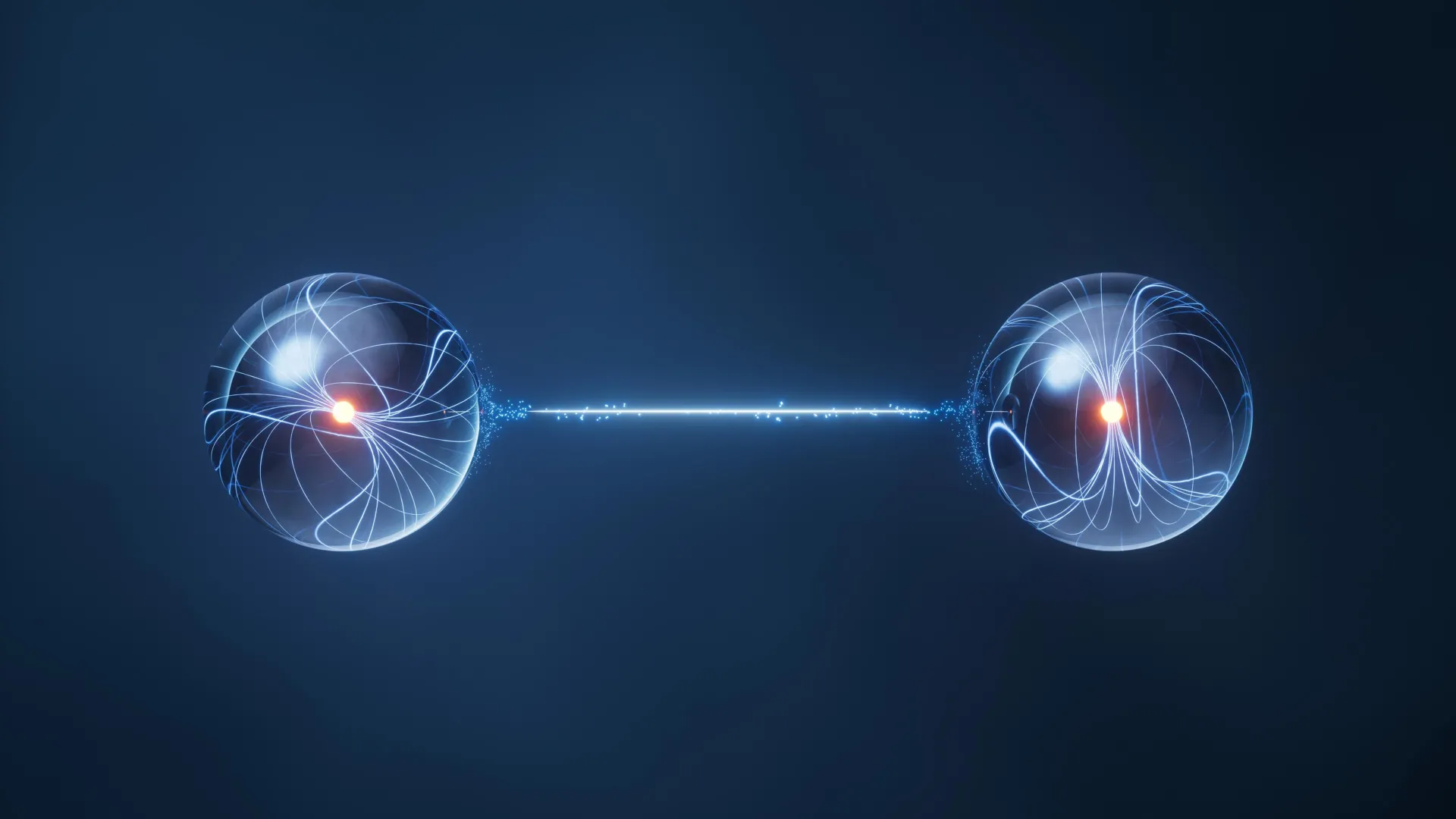
For decades, the immense potential of quantum computers has been hampered by a fundamental challenge: reliably connecting them over significant distances. While these machines excel at specific, complex calculations with remarkable speed, their delicate quantum states are susceptible to environmental interference, making long-haul communication a formidable hurdle. Historically, the entanglement of quantum bits, or qubits, which underpins quantum communication, would degrade rapidly over fiber optic cables, limiting the practical range of quantum links to a few kilometers. This constraint meant that even within a single city, two quantum computing facilities might be too far apart to establish a direct quantum connection. The vision of a vast, interconnected quantum network, capable of harnessing the collective power of distributed quantum processors, remained largely a distant dream.
However, the recent work by Assistant Professor Tian Zhong and his team at UChicago PME offers a compelling solution. Their innovative approach focuses on significantly enhancing the "coherence time" of entangled quantum systems. Quantum coherence refers to the ability of a quantum system, such as an entangled pair of atoms, to maintain its quantum state over time. The longer this coherence is preserved, the farther the quantum signal can travel without losing its integrity. Previously, the coherence time of individual erbium atoms, a key component in many quantum communication systems, was a mere 0.1 milliseconds. This ephemeral nature severely restricted the reach of quantum links.
The breakthrough achieved by Zhong’s team lies in their ability to dramatically extend this coherence time. Through meticulous experimentation, they successfully pushed the coherence time of these erbium atoms to over 10 milliseconds, with one experiment even achieving an impressive 24 milliseconds. This tenfold increase in coherence time translates directly into a proportional increase in communication distance. Under ideal conditions, this improvement theoretically allows for quantum communication between computers separated by approximately 4,000 kilometers – the distance between the University of Chicago and Ocaña, Colombia. This means that a quantum computer in Chicago could, in principle, communicate with a quantum device located far beyond the confines of its city, even reaching as far as Salt Lake City, Utah, a distance of roughly 1,700 km.
"For the first time, the technology for building a global-scale quantum internet is within reach," stated Professor Zhong, whose pioneering research in this area has already earned him the prestigious Sturge Prize. This sentiment underscores the profound implications of his team’s findings for the future of quantum technology and its integration into a global network.
The key to this radical upgrade lies not in the discovery of exotic new materials, but in a fundamental reimagining of how essential quantum materials are manufactured. The team eschewed the traditional Czochralski method, a bulk crystallization process that involves melting raw materials at extremely high temperatures (above 2,000 degrees Celsius) and then slowly cooling them to form crystals. While this method has been a staple in crystal growth, it often results in imperfections and impurities that compromise the quantum coherence properties of the embedded atoms. After crystallization, the resulting bulk material needs to be painstakingly carved and shaped into usable components, a process Zhong likens to a sculptor chipping away at marble.
Instead, Zhong’s team adopted and adapted a technique known as molecular-beam epitaxy (MBE). This advanced method, more akin to atomic-scale 3D printing, allows for the precise deposition of crystal layers, atom by atom. "We start with nothing and then assemble this device atom by atom," Professor Zhong explained. "The quality or purity of this material is so high that the quantum coherence properties of these atoms become superb." This highly controlled, bottom-up fabrication approach ensures an unprecedented level of purity and structural integrity in the rare-earth doped crystals, which are crucial for quantum entanglement.
While MBE is a well-established technique in other branches of materials science, its application to the specific type of rare-earth doped materials required for quantum entanglement was novel. To achieve this, Professor Zhong collaborated with Shuolong Yang, an Assistant Professor specializing in materials synthesis at UChicago PME. Together, they successfully tailored the MBE process to meet the exacting demands of quantum information science.
The significance of this achievement has been recognized by leading figures in the field. Dr. Hugues de Riedmatten, a Professor at the Institute of Photonic Sciences and an independent expert in quantum optics, described the results as a "highly innovative" and "important step forward." He elaborated, "It shows that a bottom-up, well-controlled nanofabrication approach can lead to the realization of single rare-earth ion qubits with excellent optical and spin coherence properties, leading to a long-lived spin photon interface with emission at telecom wavelength, all in a fiber-compatible device architecture. This is a significant advance that offers an interesting scalable avenue for the production of many networkable qubits in a controlled fashion." His endorsement highlights the multifaceted advantages of the MBE approach, including its scalability and compatibility with existing fiber optic infrastructure.
With the theoretical groundwork firmly established and the materials science challenge overcome, the next crucial phase involves rigorous real-world testing. The team is now focused on verifying that the enhanced coherence times translate into robust long-distance quantum communication outside of laboratory simulations. Before embarking on ambitious deployments, such as laying fiber optic cables between major cities, Professor Zhong plans to conduct controlled experiments within his own lab.
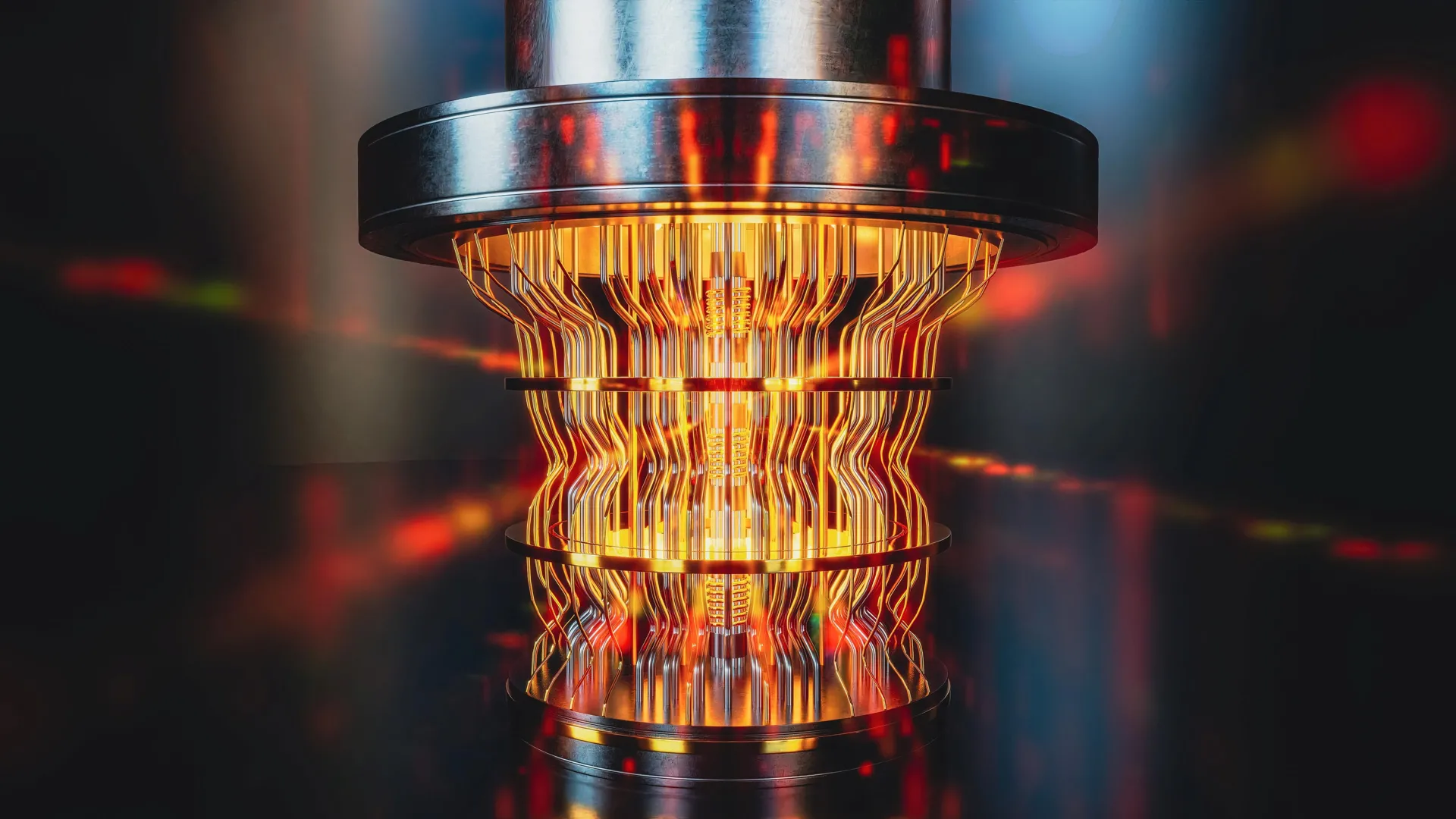
The team is currently in the process of setting up their third dilution refrigerator, a specialized cryogenic device essential for maintaining the quantum states of qubits. Once operational, these three refrigerators, each housing qubits, will be interconnected using approximately 1,000 kilometers of coiled fiber optic cable within Zhong’s laboratory. This experimental setup will serve as a miniature, localized quantum network, allowing them to meticulously simulate the behavior of a future long-distance quantum network. By performing experiments in this controlled environment, they can identify and address any potential issues before scaling up to intercity or even transcontinental distances.
"We’re now building the third fridge in my lab. When it’s all together, that will form a local network, and we will first do experiments locally in my lab to simulate what a future long-distance network will look like," Professor Zhong stated, emphasizing the systematic approach to realizing their ambitious goals. "This is all part of the grand goal of creating a true quantum internet, and we’re achieving one more milestone towards that." The successful establishment of this local quantum network will be a critical validation of their research and a significant stride towards a future where quantum computers are interconnected, unlocking a new era of scientific discovery and technological innovation. The implications for fields ranging from drug discovery and materials science to cryptography and artificial intelligence are profound, promising solutions to problems currently intractable with even the most powerful classical supercomputers.