Imroatul Nasiyah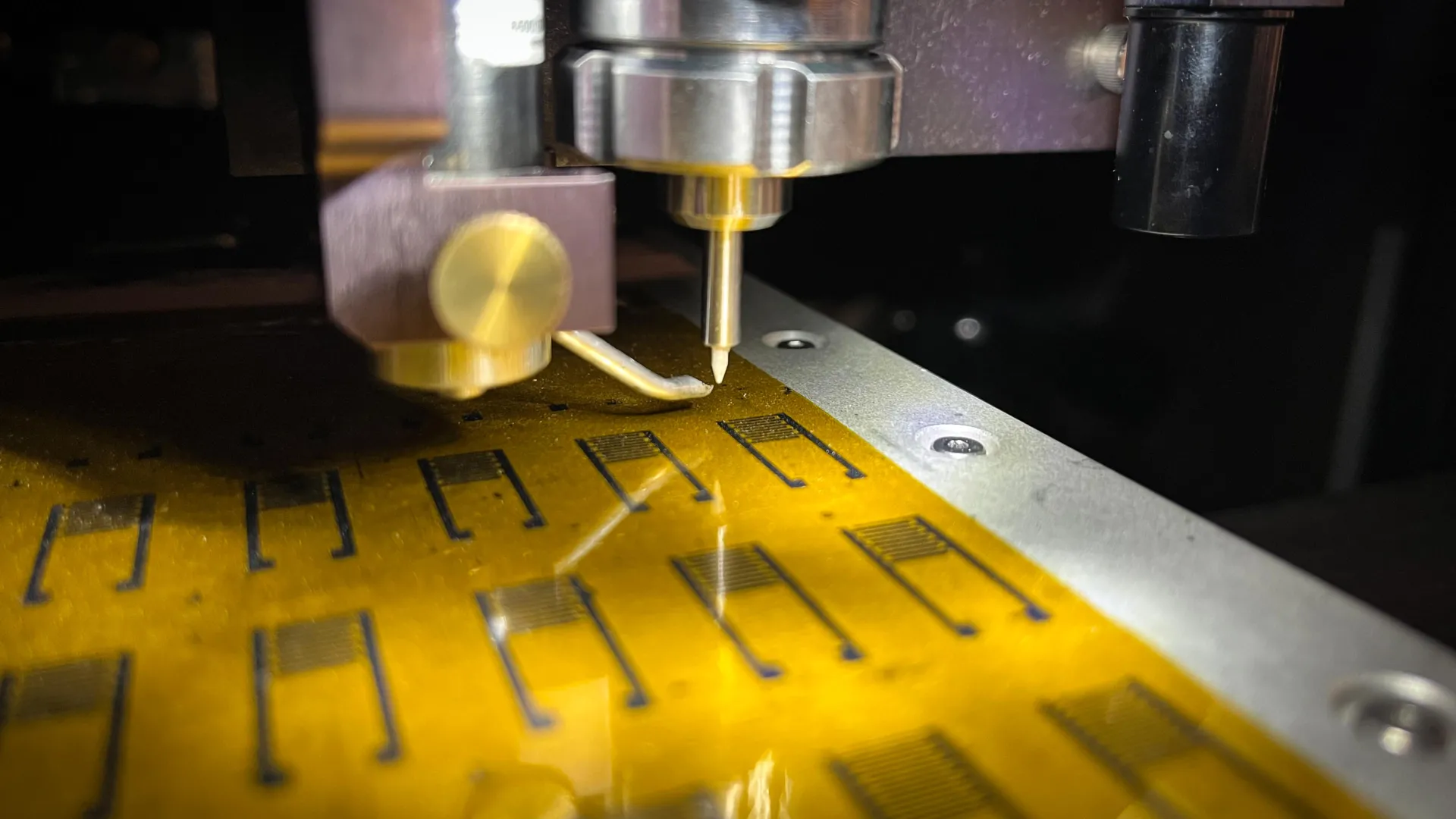
Engineers at Northwestern University have achieved a groundbreaking feat, developing printed artificial neurons that transcend mere imitation to establish direct communication with living brain cells. These innovative, flexible, and cost-effective devices meticulously generate electrical signals that mirror the intricate patterns of biological neurons, enabling them to effectively activate live neural tissue. This remarkable advancement, detailed in the forthcoming April 15th issue of the prestigious journal Nature Nanotechnology, represents a significant leap forward in the quest to bridge the gap between artificial electronics and the complex biological machinery of the nervous system. The research was co-led by Mark C. Hersam, a distinguished expert in brain-inspired computing and a Walter P. Murphy Professor of Materials Science and Engineering at the McCormick School of Engineering, and Vinod K. Sangwan, a research associate professor at McCormick.
In pivotal experiments conducted on slices of mouse brain, these meticulously engineered artificial neurons demonstrated a profound ability to elicit responses from their biological counterparts. This success signifies a novel level of interoperability between electronic systems and living neural networks, opening up a vista of unprecedented possibilities. The implications of this breakthrough are far-reaching, extending from the development of advanced brain-machine interfaces and sophisticated neuroprosthetics—technologies that could potentially restore lost sensory functions like hearing and vision, or enable regained motor control—to the creation of a new generation of ultra-energy-efficient artificial intelligence (AI) systems.
The driving force behind this innovation is the stark contrast between the computational paradigms of traditional silicon-based computers and the human brain. Modern digital computers, while immensely powerful, achieve their capabilities by densely packing billions of identical transistors onto rigid, two-dimensional silicon chips. Each of these transistors operates with the same functionality, and once fabricated, the system’s architecture remains largely immutable. This monolithic approach, while effective for many tasks, is inherently energy-intensive and lacks the adaptability and dynamic nature of biological neural networks.
The brain, conversely, operates on an entirely different principle. It comprises a vast and diverse array of neuron types, each specialized for distinct functions, interconnected in intricate, soft, three-dimensional networks. These networks are not static; they are remarkably dynamic, constantly forming, strengthening, and pruning connections in response to learning and experience. "Silicon achieves complexity by having billions of identical devices," explained Hersam. "Everything is the same, rigid and fixed once it’s fabricated. The brain is the opposite. It’s heterogeneous, dynamic and three-dimensional. To move in that direction, we need new materials and new ways to build electronics."
While previous attempts to create artificial neurons have been made, many have fallen short, producing overly simplistic signals that fail to capture the nuanced communication patterns of biological neurons. To achieve more complex behaviors, these earlier systems often required extensive networks of devices, thereby escalating energy consumption. Hersam’s team, however, has taken a fundamentally different approach, seeking to better replicate the brain’s inherent complexity and efficiency.
The key to their success lies in the use of soft, printable materials that more closely mimic the brain’s organic structure. Their revolutionary method employs electronic inks formulated from nanoscale flakes of molybdenum disulfide (MoS2), a semiconductor, and graphene, a highly conductive material. These inks are then precisely deposited onto flexible polymer substrates using aerosol jet printing, a technique that allows for intricate patterning and minimal material waste.
A crucial element of their design, previously considered a drawback, is the polymer matrix within the inks. While earlier researchers attempted to completely remove this polymer due to its perceived interference with electrical performance, Hersam’s team ingeniously leveraged it. "Instead of fully removing the polymer, we partially decompose it," Hersam elaborated. "Then, when we pass current through the device, we drive further decomposition of the polymer. This decomposition occurs in a spatially inhomogeneous manner, leading to formation of a conductive filament, such that all the current is constricted into a narrow region in space."
This controlled decomposition process creates a narrow conductive path that, when stimulated, generates a sudden electrical response strikingly similar to a neuron firing. The resulting artificial neuron is capable of producing a rich spectrum of signals, including single spikes, continuous firing patterns, and bursting activity, all of which closely resemble the dynamic communication observed in living neural systems. This enhanced signaling capability means that fewer artificial neurons are required to perform complex computational tasks, offering a significant boost to computing efficiency.
To rigorously validate their findings and confirm the direct interaction with living systems, the Northwestern team collaborated with Indira M. Raman, the Bill and Gayle Cook Professor of Neurobiology at Weinberg. Her team exposed slices of mouse cerebellum to the electrical signals generated by the artificial neurons. The results were compelling: the artificial spikes exhibited key biological properties, including precise timing and duration, and crucially, they reliably activated real neurons and triggered neural circuits in a manner indistinguishable from natural brain activity. "Other labs have tried to make artificial neurons with organic materials, and they spiked too slowly," Hersam noted. "Or they used metal oxides, which are too fast. We are within a temporal range that was not previously demonstrated for artificial neurons. You can see the living neurons respond to our artificial neuron. So, we’ve demonstrated signals that are not only the right timescale but also the right spike shape to interact directly with living neurons."
Beyond their impressive performance, these novel artificial neurons offer substantial environmental and practical advantages. The manufacturing process is inherently simple and cost-effective, and the additive printing method ensures that material is utilized only where it is needed, drastically reducing waste. This sustainability aspect is particularly vital in the context of rapidly evolving AI technologies.
The burgeoning field of artificial intelligence is placing immense demands on energy resources. Large-scale data centers, which power much of modern AI, already consume staggering amounts of electricity and require vast quantities of water for cooling. "To meet the energy demands of AI, tech companies are building gigawatt data centers powered by dedicated nuclear power plants," Hersam stated, highlighting the unsustainable trajectory of current AI development. "It is evident that this massive power consumption will limit further scaling of computing since it’s hard to imagine a next-generation data center requiring 100 nuclear power plants. The other issue is that when you’re dissipating gigawatts of power, there’s a lot of heat. Because data centers are cooled with water, AI is putting severe stress on the water supply. However you look at it, we need to come up with more energy-efficient hardware for AI."
The research, titled "Multi-order complexity spiking neurons enabled by printed MoS2 memristive nanosheet networks," was made possible through the support of the National Science Foundation, underscoring the significance of this advancement in pushing the boundaries of scientific and technological innovation. This breakthrough not only offers a path towards more sophisticated and seamlessly integrated brain-computer interfaces but also provides a crucial blueprint for building the next generation of AI systems – systems that are not only powerful but also remarkably energy-efficient, mirroring the elegance and sustainability of the human brain itself.