Faris Adani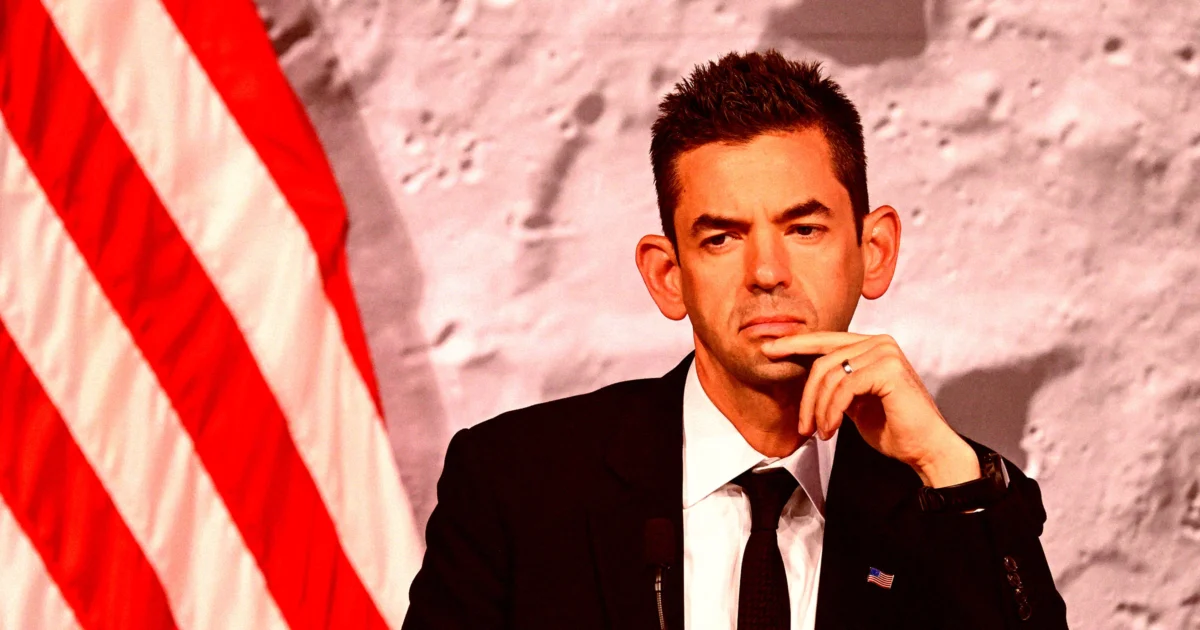
Sign up to see the future, today
Can’t-miss innovations from the bleeding edge of science and tech
There’s Something Extremely Shady About Trump’s Disastrous New NASA Budget
The United States’ preeminent space agency, NASA, finds itself once again at the precipice of a fiscal cliff, ensnared in a contentious political battle over its very mission. Months after a bipartisan coalition in Congress resoundingly voted against the Trump administration’s previous brutal budget proposal for fiscal year 2026, the White House has renewed and intensified its efforts to deal NASA’s vital science directorate a devastating blow. This persistent assault on scientific research and exploration is not merely a budget dispute; it represents a profound challenge to the nation’s long-term strategic interests, global leadership in space, and the fundamental pursuit of knowledge.
Earlier this month, the White House Office of Management and Budget (OMB) unveiled its proposed 2027 top-line request, a document that has sent shockwaves through the scientific community and space advocacy groups. The proposal outlines a catastrophic plan to eviscerate NASA’s science budget by a staggering 47 percent and slash the agency’s overall funding by 23 percent. Such a reduction would not only halt ongoing research but also jeopardize future missions, potentially leading to the premature termination of vital projects and the scattering of highly specialized scientific teams built over decades. This aggressive move, a stark echo of previous attempts, further solidifies the Trump administration’s persistent and staunchly anti-science agenda, drawing immediate and outraged reactions from nearly every corner of the space and scientific communities.
What makes this latest budget request particularly egregious is its astonishing lack of transparency and an almost deliberate vagueness. As Casey Dreier, Chief of Space Policy at The Planetary Society, eloquently told Space.com, the document is unprecedented in its obscurity. It conspicuously fails to identify which specific space science missions would land on the chopping block, leaving crucial programs like the Hubble Space Telescope, the Mars rovers, Earth observation satellites, and exoplanet hunting initiatives in an agonizing limbo. Even more baffling, and indeed suspicious, is its refusal to list prior-year funding levels—a baffling departure from over 60 years of institutional history and standard budgetary practice. This omission prevents direct comparison and obscures the true magnitude of the proposed cuts, creating a smokescreen that experts like Dreier found deeply concerning.
“There are two things: the astonishing lack of transparency and the abject refusal to acknowledge political reality,” Dreier stated, his voice reflecting a blend of frustration and professional dismay. “This is the least transparent NASA budget request I’ve ever seen — and I’ve literally looked through every single one since 1960.” This statement alone underscores the extraordinary nature of the current situation. The historical precedent for such obfuscation is virtually non-existent, suggesting a deliberate attempt to sidestep scrutiny and accountability for the drastic cuts being proposed. This lack of detail makes it incredibly difficult for Congress, the scientific community, and the public to understand the true impact of the proposed budget, hindering informed debate and decision-making.
Further illustrating the document’s sloppiness and suspicious intentions, Dreier highlighted a curious allocation of $438 million to “Mars Technology” without providing any further cost breakdowns. While investment in Mars exploration is laudable, the absence of specific projects, research areas, or even a general roadmap for this substantial sum raises immediate red flags. Is this a genuine investment, or a placeholder designed to inflate certain figures while masking cuts elsewhere? Such vague line items are highly unusual in detailed budget requests and contribute to the overall impression of a document hastily assembled with ulterior motives.
The 2027 request also demonstrates a profound disregard for the expressed will of Congress. Lawmakers, on a bipartisan basis, had already resoundingly rejected the White House’s proposed 2026 budget, which Dreier had previously described as an “extinction-level event for space science and exploration in the United States.” That Congress, having already dismissed similar draconian cuts, is now presented with an even more severe and less transparent proposal for the following year, suggests either a profound disconnect between the executive and legislative branches or a deliberate strategy of attrition. In Dreier’s words, the Trump administration’s latest request comes off as a “copy-paste budget” from its last attempt, which he bluntly called “sloppy and unprofessional.” This casual disregard for Congressional feedback and established budgetary norms indicates a White House more intent on imposing its will than engaging in a constructive dialogue about the future of space exploration.
The document’s deficiencies extend beyond vagueness to include egregious factual errors that, in any professional context, would be considered unacceptable. Dreier noted that the budget request inexplicably lists the Mars Sample Return (MSR) mission as a line item, despite its well-publicized cancellation last year. MSR, a cornerstone of NASA’s planetary science strategy for decades, aimed to bring Martian rock and soil samples back to Earth for unprecedented scientific analysis. Its cancellation was a major blow to the scientific community, and its inclusion in the 2027 budget as an active program highlights a shocking lack of attention to detail, or perhaps a cynical attempt to pad figures with non-existent projects. Similarly, the document misstates the fiscal year for the funding of NASA’s groundbreaking James Webb Space Telescope (JWST), one of humanity’s most ambitious and successful scientific endeavors. These aren’t minor typos; they are fundamental errors that undermine the credibility of the entire budget proposal and further fuel suspicions about its true intent.
While funding for future human missions to the Moon, including NASA’s signature Artemis program, remains largely intact, the proposed cuts disproportionately target space science. This distinction is crucial. Space science—which encompasses everything from astrophysics and heliophysics to planetary science and Earth observation—relies heavily on long-term, consistent public funding. These are not short-term ventures; they require decades of planning, development, and operation, yielding fundamental discoveries that often have unforeseen but profound impacts on human understanding and technological advancement. The administration’s apparent prioritization of human exploration at the expense of scientific discovery creates a false dichotomy, ignoring the symbiotic relationship between the two. Scientific missions often pave the way for human exploration, providing critical data, insights, and technological advancements necessary for safe and successful human endeavors.
“It’s the essence of why we have public investment in basic science,” Dreier told Space.com, emphasizing the unique role of government funding in foundational research. “Just because SpaceX is very good and launching rockets does not then mean that it’s now easy to get high quality science data at Mars.” This point is vital. While the commercial space sector has revolutionized access to space, it is primarily driven by profit and specific mission goals (like satellite deployment or human transport). Basic scientific research, with its long timelines, uncertain immediate returns, and focus on fundamental questions, is not typically a profitable venture for private companies. Public investment fills this gap, enabling humanity to push the boundaries of knowledge, explore the universe, and address critical questions about our planet and our place within the cosmos.
“The two activities are very different, but they often get conflated together,” he added, referring to the distinction between launch capabilities and scientific discovery. The administration’s rhetoric often blurs this line, implying that a robust commercial launch sector can somehow compensate for drastic cuts to NASA’s scientific research budget. This is a dangerous misrepresentation, as scientific instruments, data analysis, and mission planning require specialized expertise and dedicated funding that commercial launch providers do not typically supply.
Perhaps most disconcerting is the stance of NASA’s current leadership. Despite the glaring errors and vagueness of the document, NASA Administrator Jared Isaacman has firmly defended the Trump administration’s attempts to largely dismantle the agency’s science mission. Isaacman, seemingly aligning himself more with the White House’s fiscal policies than with the broad scientific mandate of the agency he leads, told CBS News that the agency would still have enough resources to “get to the Moon.” While reaching the Moon is a key objective, this statement implies that other critical aspects of NASA’s mission are secondary or expendable, a perspective that contradicts decades of balanced exploration and scientific inquiry.
He further told CNN in a separate interview that “NASA’s science budget is greater than every other space agency combined across the world.” While numerically true, this comparison is misleading. NASA’s vast portfolio covers an unparalleled range of scientific disciplines, from Earth science and astrophysics to heliophysics and planetary exploration, often leading international collaborations and operating numerous flagship missions. To significantly cut this budget, even if it remains numerically larger than individual smaller agencies, would cripple its capabilities and diminish its global impact, effectively ceding leadership in key scientific fields to other nations.
In an April 3 memo to NASA employees, as quoted by SpaceNews, Isaacman wrote, “I strongly support the President’s fiscal policies and mandate to drive efficiency.” While efficiency is always desirable, critics argue that these cuts go far beyond mere efficiency, threatening to dismantle established programs and intellectual capital that are impossible to quickly rebuild. The perception of the Administrator actively supporting such deep cuts to the agency’s scientific core could have a devastating impact on morale, potentially leading to a brain drain of top scientific talent to other nations or sectors.
The fate of NASA’s scientific future is once again in the hands of lawmakers. Considering how its 2026 proposal fared, there’s a strong likelihood that a bipartisan group in Congress will once again strike down the White House’s draconian request. Congress has historically been a strong defender of NASA’s broader mission, recognizing its importance for national prestige, technological innovation, education, and inspiration. Senate Appropriations Commerce, Justice and Science chair Jerry Moran (R-KS) immediately pushed back, arguing in a statement this week that it would be a “mistake” to gut funding for science missions. “I’m going to try to lead the subcommittee and the whole committee to put us in a position where we are funding NASA, NOAA and our other agencies in a way that is pretty similar to what we did last year,” he asserted, signaling a clear intent to protect these crucial investments.
However, the upcoming midterm elections could soon complicate matters even further. The political landscape often shifts dramatically during election cycles, potentially delaying the necessary legislative processes or altering the balance of power in Congress. An almost guaranteed revision of this budget proposal could be stalled, leaving NASA’s science programs in prolonged uncertainty and risking further damage to ongoing missions and planning. The potential for a divided Congress or a change in leadership could either strengthen or weaken the resolve to protect NASA, making the outcome of this budget battle even more unpredictable.
In short, the OMB’s latest budget request is seemingly little more than a clumsily constructed document designed to obstruct, not support, NASA’s operations. It flagrantly underlines the White House’s apparent disregard for anything not directly related to sending astronauts to the Moon and Mars, creating a dangerous imbalance in the nation’s space strategy. This myopic focus risks sacrificing the broader scientific endeavor that has long defined NASA’s legacy and provided humanity with profound insights into the universe. The pursuit of fundamental scientific knowledge is not a luxury; it is a strategic imperative that fuels innovation, inspires future generations, and maintains America’s leadership in the global scientific community.
“Members of both parties understand that dismantling the US space science program is a short-sighted, wasteful, strategic blunder,” Dreier concluded, encapsulating the consensus among those who truly understand the value of NASA’s scientific mission. The battle for NASA’s budget is not just about dollars and cents; it’s about the soul of American innovation, its commitment to scientific inquiry, and its vision for the future of humanity in space.
More on NASA’s budget: The White House Is Still Desperately Trying to Slash NASA’s Budget