Faris Adani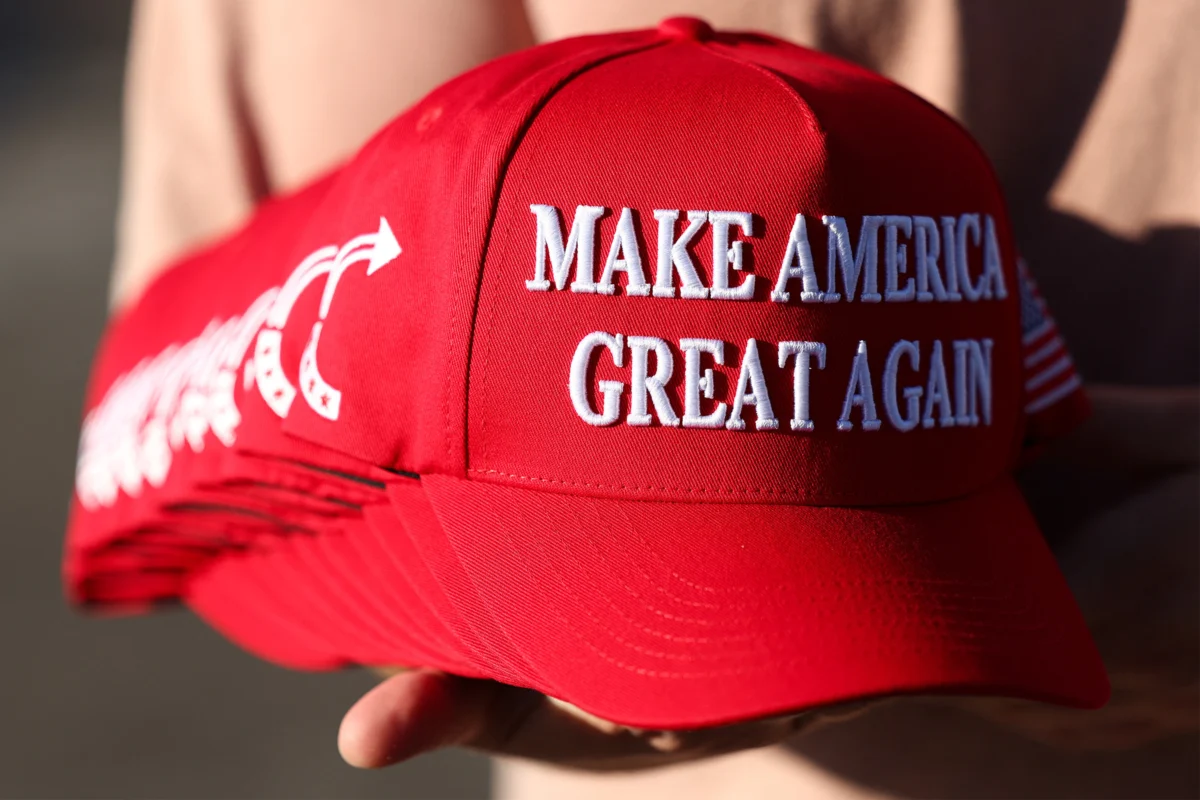
The political landscape surrounding Donald Trump has been characterized by intense polarization and a constant barrage of accusations ranging from alleged serial fabrications to instances of sexual abuse. For many observers, the unwavering support he commands despite these serious allegations presents a significant psychological puzzle. This is precisely the phenomenon that motivated researchers to delve into the minds of his supporters, seeking to understand the underlying cognitive processes that allow for sustained allegiance in the face of seemingly contradictory evidence. The findings illuminate a fundamental human tendency to resolve internal conflict, often through means that prioritize psychological comfort over an objective assessment of facts.
Central to understanding these findings is the concept of cognitive dissonance, a groundbreaking theory introduced by social psychologist Leon Festinger in the 1950s. Cognitive dissonance refers to the mental discomfort experienced by an individual who holds two or more contradictory beliefs, ideas, or values, or is confronted with new information that conflicts with existing beliefs, ideas, or values. This psychological tension is inherently unpleasant, prompting individuals to seek ways to reduce or eliminate it. The strength of the dissonance is proportional to the importance of the cognitions involved; the more deeply held the belief, the greater the discomfort when challenged.
Individuals employ various strategies to alleviate cognitive dissonance. These include changing one’s beliefs, changing one’s behavior, adding new consonant cognitions (rationalizations), reducing the importance of the dissonant cognitions, or, most pertinent to these studies, outright denial of the contradictory information. In the context of political support, especially for a figure as polarizing as Donald Trump, deeply held political identities and allegiances become significant cognitions. When these are challenged by negative information about the admired leader, the psychological system is activated to protect these core beliefs, leading to sophisticated and often unconscious defense mechanisms.
The first of the three studies, initiated in October 2019, engaged a cohort of 128 US adults who had indicated a preference for Trump in the 2016 presidential election. Participants were specifically asked to justify their continued support for the Republican candidate in light of persistent allegations of his sexual misconduct, including the widely publicized case brought by E. Jean Carroll. The results were striking: over half of the surveyed group responded by unequivocally denying the charges, asserting that they simply did not believe the accusations against him. This direct rejection of factual claims served as an immediate and effective mechanism for reducing the dissonance between their positive view of Trump and the negative information presented.
These initial observations were further reinforced and expanded upon in a second study, which commenced in December 2019, merely two days after federal lawmakers voted to impeach President Trump. This subsequent investigation involved 173 self-identified "MAGA diehards," a term reflecting their strong and unwavering support. Faced with questions about the various allegations against Trump, a majority of these supporters again resorted to outright denial of the accusations. Additionally, this study identified another significant coping strategy: approximately 15 percent of participants declared they simply "don’t care" about the allegations, effectively diminishing the importance of the dissonant information. A substantial portion also demurred by changing the topic, redirecting the conversation to focus on Trump’s policy achievements or other positive aspects of his presidency, thereby introducing consonant cognitions to outweigh the dissonant ones.
The most recent study in this series, conducted in 2022, immediately following Trump’s arraignment for his alleged role in the January 6 Capitol riots, further solidified these findings. Out of 187 participants, more than 60 percent expressed the belief that the accusations leveled against the former president were simply fabricated lies. The consistent replication of these findings across three distinct studies, conducted at different points in time and focusing on various allegations, lends significant weight and credibility to the conclusion that denial and deflection are deeply ingrained psychological responses among Trump’s base. This pattern suggests a robust and consistent mechanism at play, rather than an isolated or context-specific phenomenon.
A crucial methodological aspect contributing to the depth of these findings was the use of open-ended questioning. Unlike typical surveys that restrict responses to predefined choices, these studies allowed Trump supporters to articulate their justifications in their own words. This qualitative approach provided much greater "wiggle room" for participants to explain away their preconceived notions and express the nuanced logic behind their continued support. As noted by PsyPost, while previous studies on cognitive dissonance often offered participants only a single opportunity to deflect, these studies’ open-ended format offered richer insights into the complex reasoning processes involved, revealing the specific strategies employed to manage discomfort.
The motivation behind this comprehensive research was eloquently articulated by study author Cindy Harmon-Jones, a senior lecturer in psychology at Western Sydney University. She shared with PsyPost, "I was motivated by real-life experiences. I’ve been puzzled and confused by the continuing support and admiration that Donald Trump’s supporters hold for him, despite the many accusations that he has engaged in sexual assault, corruption, and other immoral and illegal activities. I wanted to give those supporters a chance to explain in their own words why they support him." Her inquiry stemmed from a genuine desire to understand, rather than merely critique, the psychological underpinnings of this persistent political allegiance.
The psychological underpinnings of denial as a coping mechanism are profound. When an individual’s core beliefs, particularly those tied to their identity or values, are threatened, the brain often engages in protective measures. Supporting a political leader can become deeply intertwined with one’s self-concept and social identity. To admit that such a leader has engaged in immoral or illegal activities would not only cause cognitive dissonance but could also challenge one’s own judgment, moral framework, or group affiliation. Denial, in this context, serves as a powerful shield, protecting the self from uncomfortable truths and preserving a coherent, positive self-image and worldview.
Beyond cognitive dissonance, other related psychological concepts contribute to these observed behaviors. Motivated reasoning, for instance, describes the unconscious tendency of individuals to process information in a way that aligns with their existing beliefs or desired conclusions, rather than objectively evaluating evidence. Confirmation bias, a closely related phenomenon, leads people to seek out, interpret, and remember information in a way that confirms their preexisting beliefs. These biases create a powerful feedback loop, where any information that challenges one’s support for Trump is automatically scrutinized, dismissed, or reinterpreted, while information that confirms support is readily accepted.
Furthermore, the role of group identity and political allegiance cannot be overstated. For many, supporting Donald Trump is not just about a candidate; it’s about being part of a movement, a community, and a shared set of values. When a leader of such a group faces accusations, it can be perceived as an attack on the group itself, or on the supporter’s own identity. This strong group affiliation amplifies the need to reduce dissonance and protect the leader, as doing otherwise could mean questioning one’s own social belonging and core values.
The societal implications of widespread denial of factual information, particularly concerning political figures, are significant. In an era where information is abundant but trust is scarce, the capacity for large segments of the population to dismiss documented facts poses a considerable challenge to democratic discourse and the ability to hold leaders accountable. It complicates efforts to establish a common understanding of reality, making constructive debate and problem-solving increasingly difficult. When objective truth becomes subjective, the foundations of informed civic engagement erode.
These findings also highlight the profound challenges faced by traditional media and other institutions dedicated to fact-finding and public information. When audiences are psychologically predisposed to deny information that conflicts with their political allegiances, even the most rigorously reported facts can be perceived as biased or false. This underscores the need for new approaches in communication and engagement that acknowledge and perhaps even account for these deep-seated psychological mechanisms.
Looking ahead, Harmon-Jones wisely points out that more research is needed to isolate the findings on cognitive dissonance from the specific "Trump-themed line of questioning." She posed the critical question to PsyPost: "Would supporters of Barack Obama or Bill Clinton react similarly if they learned of similar accusations against them? That remains to be tested." This emphasizes that while the studies offer profound insights into a contemporary political phenomenon, the underlying psychological principles of cognitive dissonance and its reduction are universal. Future research could explore these dynamics across different political spectra, in various cultural contexts, and concerning a broader range of allegations, further enriching our understanding of human psychology in the political arena.
In conclusion, these three converging psychological studies provide a robust empirical framework for understanding how Donald Trump’s most loyal supporters navigate the dissonance created by allegations against him. By consistently employing denial, deflection, and a selective disregard for uncomfortable facts, individuals effectively protect their psychological equilibrium and maintain their political allegiance. This research not only sheds light on a crucial aspect of contemporary political behavior but also reaffirms the enduring power of cognitive dissonance theory in explaining the complex ways humans process information and construct their realities, particularly when deeply held beliefs and identities are at stake. The findings underscore the intricate interplay between individual psychology, group dynamics, and the broader political environment, highlighting the ongoing need for nuanced scientific inquiry into these complex human phenomena.