isnaini azizah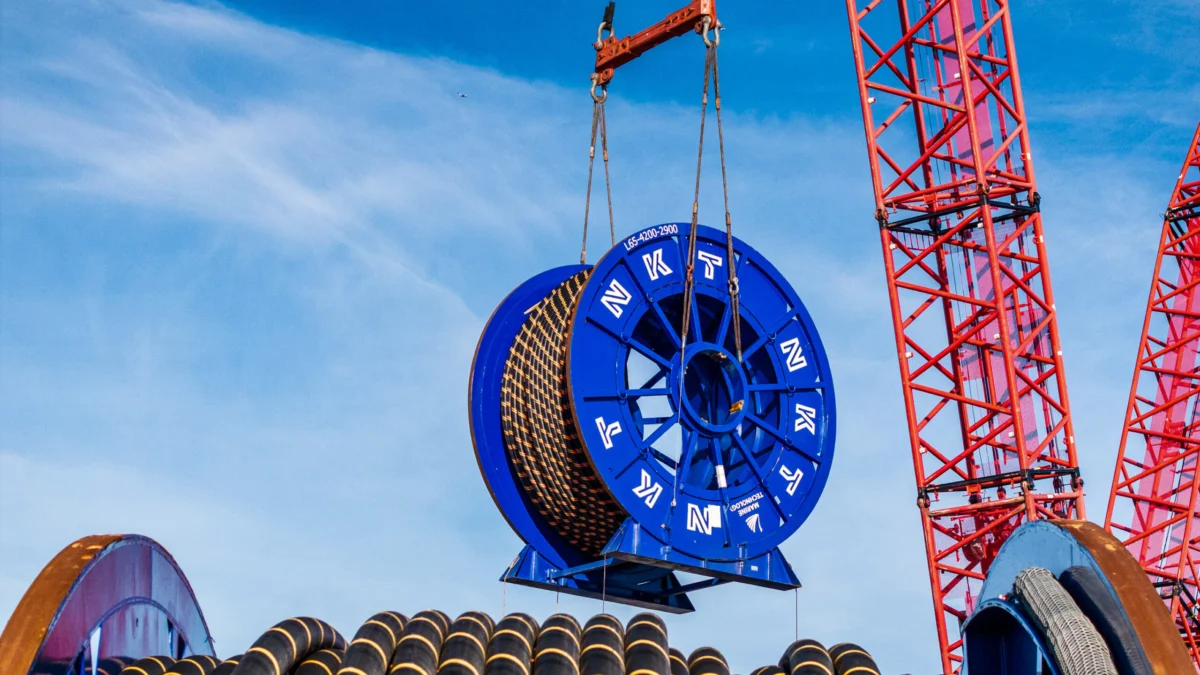
The genesis of the CHPE transmission line dates back 15 years, with formal permitting commencing in March 2010, aiming to forge a robust connection between Quebec and southern New York. This ambitious undertaking is rooted in Quebec’s overwhelmingly renewable energy landscape, where hydropower accounts for over 99% of its electricity generation, supplemented by a rapidly growing wind capacity. In contrast, New York, while possessing its own hydropower, nuclear, and wind resources, still heavily relies on fossil fuels for a significant portion of its energy needs.
The CHPE project is a collaborative effort between Transmission Developers, a subsidiary of the alternative asset management giant Blackstone, and Hydro-Québec, the provincial entity responsible for managing generation and transmission. Construction began in late 2022 and concluded earlier this year, with the privately funded endeavor incurring a substantial total cost of $6 billion. The construction itself was a remarkable feat of engineering. The line comprises a bundle of two high-voltage direct-current (HVDC) power cables, each approximately five inches in diameter. These cables were meticulously laid underground or underwater across the entire length of New York State, with a significant portion traversing the bottom of the Hudson River. This underwater installation required specialized vessels equipped with water jets capable of excavating deep trenches in the sediment to accommodate the cables.
The strategic advantage of interconnecting power grids lies in their ability to accelerate the transition away from fossil fuels. By enabling the efficient movement of electricity to areas of high demand, such a connection can also mitigate the need for extensive new power generation capacity. Extensive research supports the notion that enhanced grid interconnection can lead to significant reductions in carbon emissions and a decrease in overall system costs, thereby fostering a more resilient and economically viable energy landscape.
Despite its promising potential, the CHPE has experienced a rocky start, marked by two significant outages. The first incident, occurring on July 1, was reportedly triggered by a fault at a converter station on the Canadian side of the border. The second outage commenced on July 4, and as of the morning of July 22, the power line remained offline. While these initial disruptions might seem concerning, some experts, including Normand Mousseau, a physics professor at Université de Montréal, view them as not entirely unusual for a new, large-scale infrastructure project. Mousseau noted that complex power lines often encounter similar startup challenges, with their true operational capabilities only being fully understood and tested once they are consistently in service.
Further investigation into the July 4 outage revealed a damaged section of cable on the U.S. side of the border. According to reports from RTO Insider, a trade publication, the cable manufacturer dispatched experts to pinpoint the root cause of the damage. Lynn St-Laurent, a spokesperson for Hydro-Québec, confirmed that the compromised cable segment has been removed and replaced. She stated, "It is currently estimated that the remaining work, including necessary post-repair testing, will be completed by the weekend."
The CHPE is not the only recent transmission project linking Quebec’s clean energy to the Northeast to face challenges. The New England Clean Energy Connect (NECEC) line, which stretches 145 miles from Quebec to Maine and began operations in January, has also experienced outages and has delivered "very little additional energy" to the region thus far, according to Canary Media. This pattern suggests that the integration of large-scale renewable energy transmission projects can be a complex and protracted process.
Fortunately for New York, the state’s grid was not prematurely dependent on the CHPE for its summer energy needs. Kevin Lanahan, a spokesperson for the New York Independent System Operator (NYISO), the state’s grid management authority, emphasized in a statement that the grid’s reliability during a recent heatwave was not contingent on CHPE’s availability. "Our planning studies did not assume CHPE would be available this summer, and that was one reason the grid performed reliably during the heat wave earlier this month," Lanahan stated. He further underscored a fundamental principle of grid reliability: "A core principle of reliability planning is not relying on any single project." This cautious approach to grid planning highlights the importance of diversification and redundancy in energy supply.
The long-term objective is for states and regions to increasingly rely, at least in part, on such interconnections. This underscores the considerable pressure to ensure these projects function smoothly, as the construction of massive transmission lines represents a significant, long-term investment. As the equipment undergoes further stress-testing and utilities gain greater confidence in the projects’ reliability, these lines are poised to play a more substantial role in the grid’s overall architecture.
However, a critical factor to monitor moving forward is the ongoing condition of Quebec’s hydropower fleet. The region has been grappling with an intense drought for the past three years, which has progressively depleted its water reserves essential for electricity generation. This prolonged dry spell raises concerns about the consistent availability of abundant hydropower to be transmitted across the border, even if the transmission lines are fully operational. The interplay between infrastructure development, energy demand, and climate-induced hydrological changes presents a complex challenge for the future of clean energy transmission.
This article originates from The Spark, MIT Technology Review’s weekly climate newsletter. To receive it directly in your inbox every Wednesday, please sign up via the provided link.