isnaini azizah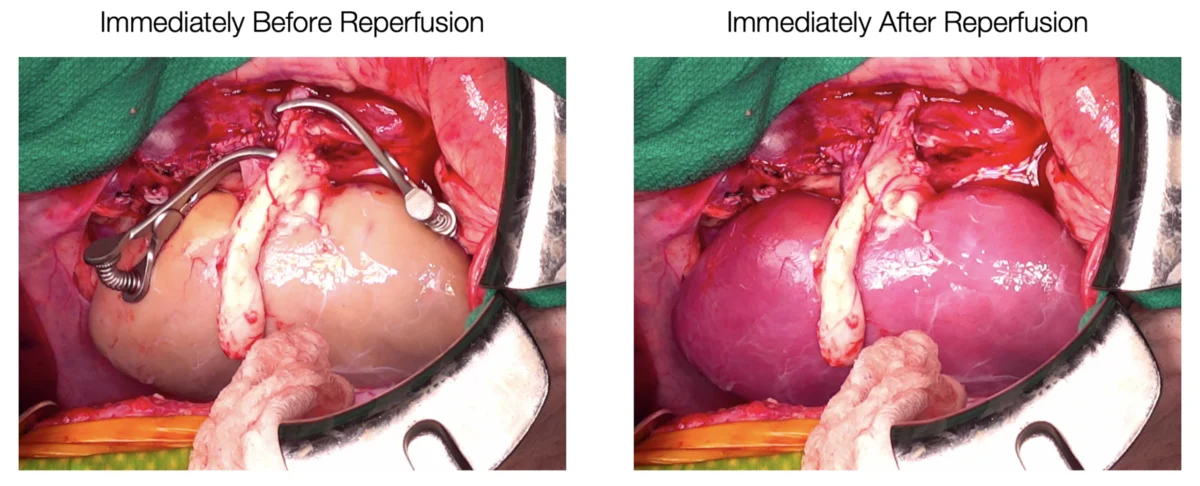
In the critical race against time that defines organ donation, where every moment counts, a groundbreaking advancement has emerged, promising to revolutionize the field of transplantation. Traditionally, once a vital organ is removed from a donor, its viability diminishes rapidly. Surgeons face a narrow window of mere hours to deliver it to a recipient before it becomes unusable. Current preservation methods typically involve keeping organs on ice at approximately 4°C (39°F), a process fraught with limitations, as previous attempts to freeze organs resulted in ice crystal formation, causing irreversible damage. However, a team led by Matthew Powell Palm at Texas A&M University has unveiled a revolutionary device capable of cooling organs to a remarkable -4°C (25°F) without the dreaded formation of ice. This innovative technology has now demonstrated its profound potential in a series of experiments involving pig organs, showcasing that kidneys, at least, can be supercooled and preserved for days, then successfully transplanted back into animals after rewarming, exhibiting superior function compared to organs stored conventionally on ice. This development has been hailed as a “landmark achievement” by Kevin Myer, president and CEO of LifeGift, a prominent organ procurement organization in Texas, who was not involved in the research.
The urgent need for extended organ preservation is starkly illustrated by the global organ shortage crisis. In the United States alone, over 104,000 individuals are currently on the waiting list for a kidney transplant, with an estimated 17 lives lost daily due to the inability to secure a suitable organ in time. This tragic statistic is not solely attributable to a scarcity of donated kidneys; a significant factor is the wastage of viable organs that degrade beyond usability before reaching a recipient. In some years, as many as one in three donated kidneys are discarded, often because the available preservation time – typically around 24 hours on ice or in devices mimicking bodily conditions – is insufficient to find a match and complete transportation. As Myer points out, this limited timeframe often proves inadequate for connecting a donor organ with the most appropriate recipient.
Scientists worldwide have been diligently exploring methods to extend organ viability through deeper cooling. The principle behind this endeavor is that slowing down an organ’s metabolic rate, the colder it becomes, the longer it can be stored. While cryopreservation of gametes and embryos has been successful, freezing large, complex organs for transplantation has remained an elusive goal. Despite extensive research into various temperatures and cryoprotectants—chemicals acting as biological antifreeze—no method has yet enabled the successful cryopreservation of human organs for transplantation.
Powell Palm, approaching the challenge from a thermodynamic perspective, focused on an alternative strategy: preventing ice formation by maintaining an organ at a constant pressure below 0°C. This approach bypasses the need for cryoprotectants, which could introduce potential side effects and necessitate rigorous regulatory approval for human use. His team’s innovative device achieves this by enclosing organs in a hermetically sealed chamber, equipped with sensors to monitor temperature and detect ice formation. The organs are submerged in a solution commonly used for transplant preservation, a testament to what Powell Palm describes as "low-tech high science." He elaborates that while the underlying kinetics are complex, the practical application of the device is remarkably simple, requiring a deep understanding of the thermodynamic principles at play.
The efficacy of this supercooling technology was rigorously tested using pig kidneys. Following standard transplantation protocols, the kidneys were flushed to remove blood. Some were then stored on ice for 2 and 24 hours, mirroring conventional practices. Crucially, other kidneys were placed in Powell Palm’s device for extended periods of 24, 48, and 72 hours. Following the preservation period, each kidney was transplanted back into its original donor pig, with the animal’s contralateral kidney removed to ensure the transplanted organ was the sole functional kidney.

Remarkably, kidneys preserved for 24 hours in the supercooled state began producing urine immediately upon transplantation, a critical indicator of immediate functionality. Further analysis of various kidney function markers revealed that these organs were operating normally within approximately 10 days. This recovery rate, while slower than kidneys stored for just two hours on ice, was significantly faster than those stored for 24 hours on ice. The organs preserved for 48 and 72 hours demonstrated comparable performance, with Powell Palm expressing immense excitement: "Even at three days—triple the clinical standard—we’re getting recovery that is faster than [what has been] the gold standard for the last three decades." Heidi Yeh, a transplant surgeon and researcher in organ preservation technologies at Mass General Brigham for Children, echoed this sentiment, noting the impressive speed of recovery, especially compared to organs stored for 48 hours in other studies.
The long-term implications of this technology are equally promising. Over a 30-day observation period, the pigs that received supercooled kidneys showed significant growth, with their transplanted organs doubling in size to accommodate the pigs’ growth and compensate for the absence of a second kidney. One pig was monitored for an impressive 200 days, and its transplanted kidney remained healthy upon analysis, underscoring the sustained viability of the supercooled organs. These findings were recently presented at the American Transplant Congress in Boston.
This breakthrough builds upon recent research from Canada, where scientists successfully cooled pig kidneys to sub-zero temperatures using a cryoprotectant and achieved a week-long survival period post-transplantation after 48 hours of storage. However, Powell Palm and his team have pushed the boundaries further by preserving kidneys for 72 hours and demonstrating robust function for over 30 days, a feat previously unreported. This extended preservation window, as Myer of LifeGift emphasizes, could be transformative. It offers invaluable time for organ evaluation, meticulous donor matching, and logistical coordination, potentially enabling international organ donations and opening doors to more economical transportation methods. "Right now, with kidney transplantation the assumed limit is 18 to 24 hours," Myer states. "If we can get up to 72 hours… that would change everything."
Powell Palm and his colleagues are optimistic about extending the preservation period even further, with preliminary studies indicating healthy organs after up to 120 hours of storage, although these have not yet undergone transplantation. A significant advantage of their method is the absence of cryoprotective chemicals, which could expedite the approval process with the U.S. Food and Drug Administration for human trials. The device itself is designed to be simple and portable, making it easy to transport. While not yet tested for air travel, it has already proven its resilience by transporting supercooled kidneys across the U.S. in a car, a testament to its stability and robustness.
With the aim of bringing this revolutionary technology to patients, Powell Palm and his colleague Sebastian Giwa are preparing to launch a company dedicated to developing this and other "biological time-stopping" protocols in the coming months. This endeavor holds the potential to dramatically alleviate the organ shortage crisis, offering hope and extended life to countless individuals awaiting a transplant.