anjir abdul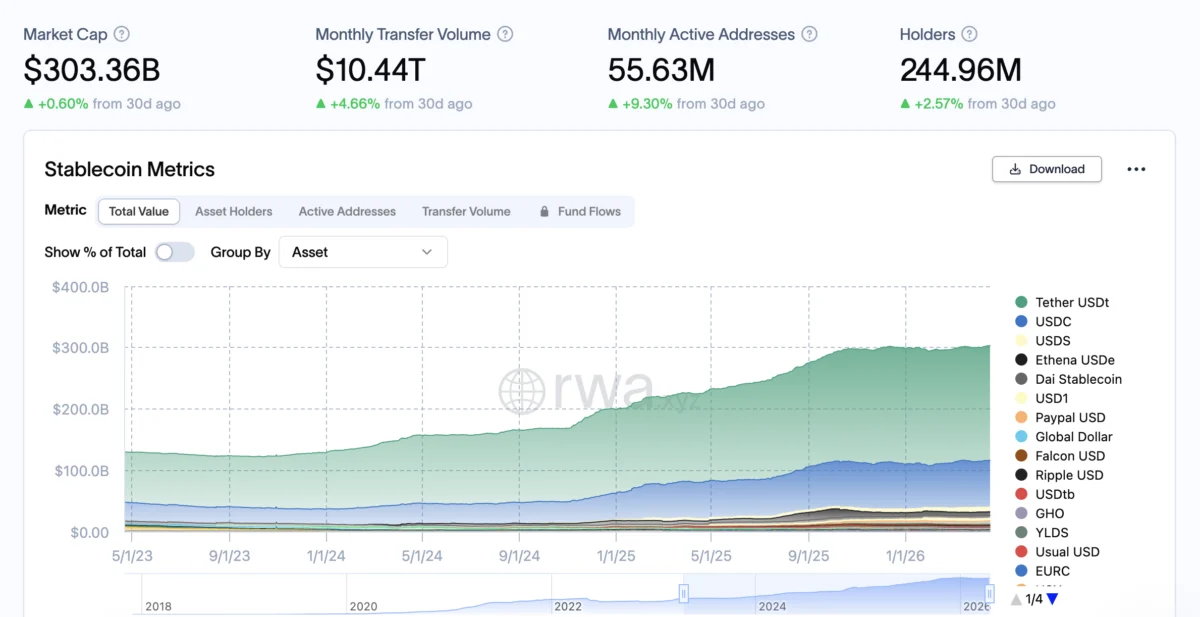
While the immediate seismic shift some predicted has yet to materialize, a deeper analysis reveals a complex interplay of current market dynamics, regulatory hurdles, and evolving technological potential that positions stablecoins as a burgeoning force rather than an immediate existential threat to traditional financial institutions. Abhi Srivastava, associate vice president of Moody’s Investors Service Digital Economy Group, articulated this nuanced perspective to Cointelegraph, highlighting that despite their currently restricted usage, the market capitalization of stablecoins impressively exceeded $300 billion by the close of last year, marking a significant 47% growth year-to-date. This growth underscores an undeniable expansion of their footprint in the broader financial ecosystem.
Srivastava elaborated on the expanding role of stablecoins across various financial activities, including payments, cross-border commerce, and on-chain finance. He acknowledged that this expansion is occurring even as their overall adoption remains somewhat limited, particularly within established markets like the United States. In the U.S., existing payment systems are characterized by their speed, low cost, and high level of trust, which inherently reduces the immediate appeal of alternative solutions like stablecoins for everyday domestic transactions. Consequently, for the banking sector, the risk of disruption at this juncture appears contained. A key factor contributing to this limited immediate threat is the current U.S. regulatory stance, which largely prohibits stablecoins from paying yield. This prohibition significantly diminishes their ability to compete directly with traditional bank deposits, which often offer interest, thereby preventing a large-scale replacement of conventional banking services domestically.
However, this equilibrium is not immutable. Srivastava cautioned that a gradual but sustained increase in the adoption of stablecoins, coupled with the emergence and growth of tokenized real-world assets (RWAs), could exert considerable pressure on the banking sector over time. Tokenized RWAs, which represent traditional or physical financial assets on a blockchain through a digital token, possess the potential to revolutionize how assets are owned, transferred, and traded. Should this trend accelerate, it could lead to significant deposit outflows from traditional banks, consequently reducing their lending capacity and impacting their profitability. This long-term outlook highlights a critical area of strategic concern for financial institutions.
The debate surrounding stablecoin regulatory policy has escalated into a highly contentious issue, capturing the attention of both crypto industry executives and leaders within the banking sector. A central point of contention revolves around the prospect of yield-bearing stablecoins, which banks fear could directly erode their market share by attracting deposits away from traditional accounts. This specific concern has proven to be a significant stumbling block for the CLARITY crypto market structure bill currently making its way through Congress, illustrating the deep divisions and high stakes involved in shaping the future of digital finance.
The Digital Asset Market Clarity Act of 2025, commonly referred to as the CLARITY Act, was designed as a comprehensive regulatory framework for the crypto market. Its primary objectives include establishing a clear asset taxonomy, defining regulatory jurisdiction, and outlining oversight mechanisms for various crypto assets and activities. This legislative effort aims to bring much-needed clarity and structure to a rapidly evolving and often ambiguous sector. The bill sought to classify digital assets, delineate the roles of various regulatory bodies like the SEC and CFTC, and provide a legal foundation for crypto operations within the U.S. financial system.
Despite its ambitious goals, the CLARITY Act is currently stalled in Congress. This legislative gridlock is largely due to widespread opposition from a coalition of crypto industry companies, spearheaded by major players like cryptocurrency exchange Coinbase, which publicly voiced concerns over earlier drafts of the bill. The contentious issues cited by crypto industry opponents included a perceived lack of adequate legal protections for open-source software developers, a fundamental aspect of decentralized technology development. However, the most significant point of contention, and one that directly impacts the banking sector’s concerns, was the proposed prohibition on yield-bearing stablecoins. From the perspective of the crypto industry, such a ban would stifle innovation, push capital towards offshore and less regulated instruments, and ultimately hinder the growth and competitiveness of the U.S. digital asset market.
The legislative process has been marked by several attempts from U.S. lawmakers and the White House to broker a compromise bill that would be acceptable to both the burgeoning crypto industry and the powerful bank lobby. These negotiations underscore the intricate balance required to foster innovation while safeguarding financial stability and consumer protection. Earlier this month, North Carolina Senator Thom Tillis indicated his intention to release an updated draft bill proposal, explicitly designed to bridge the divide between the two sides. However, reports from Politico suggest that this revised bill has also encountered significant pushback and has yet to be publicly released, indicating the persistent difficulty in finding common ground on these complex issues.
The ongoing legislative impasse carries significant implications. Several crypto industry executives and market analysts have issued warnings that if the CLARITY Act ultimately fails to pass, it could leave the crypto industry vulnerable to future regulatory crackdowns. In the absence of a clear, comprehensive federal framework, individual states or existing federal agencies with broad mandates might step in with more restrictive or piecemeal regulations, potentially leading to an unpredictable and fragmented regulatory environment. This uncertainty could deter investment, stifle innovation, and push crypto businesses out of the United States, thereby undermining the nation’s potential leadership in the digital economy.
Beyond the immediate regulatory skirmishes, the broader narrative of stablecoin growth and its potential impact on banking is rooted in their inherent utility. Stablecoins, by offering a digital representation of fiat currency, bridge the gap between traditional finance and the decentralized world of blockchain. Their value proposition lies in their ability to facilitate faster, cheaper, and more transparent transactions, particularly in cross-border payments where traditional remittance services often incur high fees and lengthy settlement times. The surge past a $300 billion market cap, as cited by RWA.xyz, is not merely a number; it reflects growing confidence and utility in various use cases, from facilitating crypto trading pairs to powering decentralized finance (DeFi) protocols and acting as a conduit for programmable money.

The concept of tokenized real-world assets (RWAs) further amplifies the potential for disruption. Imagine fractional ownership of real estate, fine art, or even illiquid private equity funds, all represented as tokens on a blockchain. This tokenization democratizes access to traditionally exclusive asset classes, increases liquidity, and reduces transactional friction. If banks do not adapt to offer similar tokenized services, they risk losing a significant portion of the asset management and lending market to more agile, blockchain-native platforms. This is where the long-term "pressure" on the banking sector truly comes into play, potentially leading to a re-evaluation of business models and revenue streams.
From the banking sector’s perspective, the primary concerns extend beyond just deposit flight. There are worries about financial stability, regulatory arbitrage, and the potential for new systemic risks if stablecoins grow unchecked and without robust oversight. Banks are heavily regulated entities, subject to stringent capital requirements, liquidity rules, and consumer protection laws. They fear that stablecoin issuers, especially those operating without comprehensive regulatory frameworks, could gain an unfair competitive advantage by operating with fewer constraints. This drives their strong advocacy for "same activity, same risk, same regulation" principles.
However, it’s also true that banks are not entirely passive in this evolving landscape. Some financial institutions are exploring how they can integrate stablecoins and tokenized assets into their existing operations, or even issue their own stablecoins (often referred to as bank-issued stablecoins or institutional stablecoins). This approach would allow them to leverage blockchain technology for efficiency and innovation while maintaining regulatory compliance and customer trust. Partnerships with FinTech companies and participation in blockchain consortia are also avenues through which banks are attempting to navigate this new terrain.
In conclusion, the current assessment that stablecoins do not pose an immediate threat to traditional banking is accurate, largely due to existing regulatory constraints, particularly the ban on yield-bearing stablecoins in the U.S., and the robust nature of established payment systems. However, this perspective carries a significant caveat: the situation is dynamic and evolving. The rapid growth of the stablecoin market, coupled with the burgeoning potential of tokenized real-world assets, presents a clear long-term competitive challenge. The ongoing legislative battle over the CLARITY Act, particularly concerning yield-bearing stablecoins, highlights the critical juncture at which the U.S. financial system finds itself. The outcome of these regulatory debates will profoundly influence whether stablecoins become an integrated component of a modernized financial infrastructure or remain a parallel, potentially disruptive, force that compels traditional banks to fundamentally rethink their services and strategies to remain relevant in the digital age. The imperative for clear, balanced, and forward-looking regulation has never been more pressing to ensure both innovation and financial stability.