Imroatul Nasiyah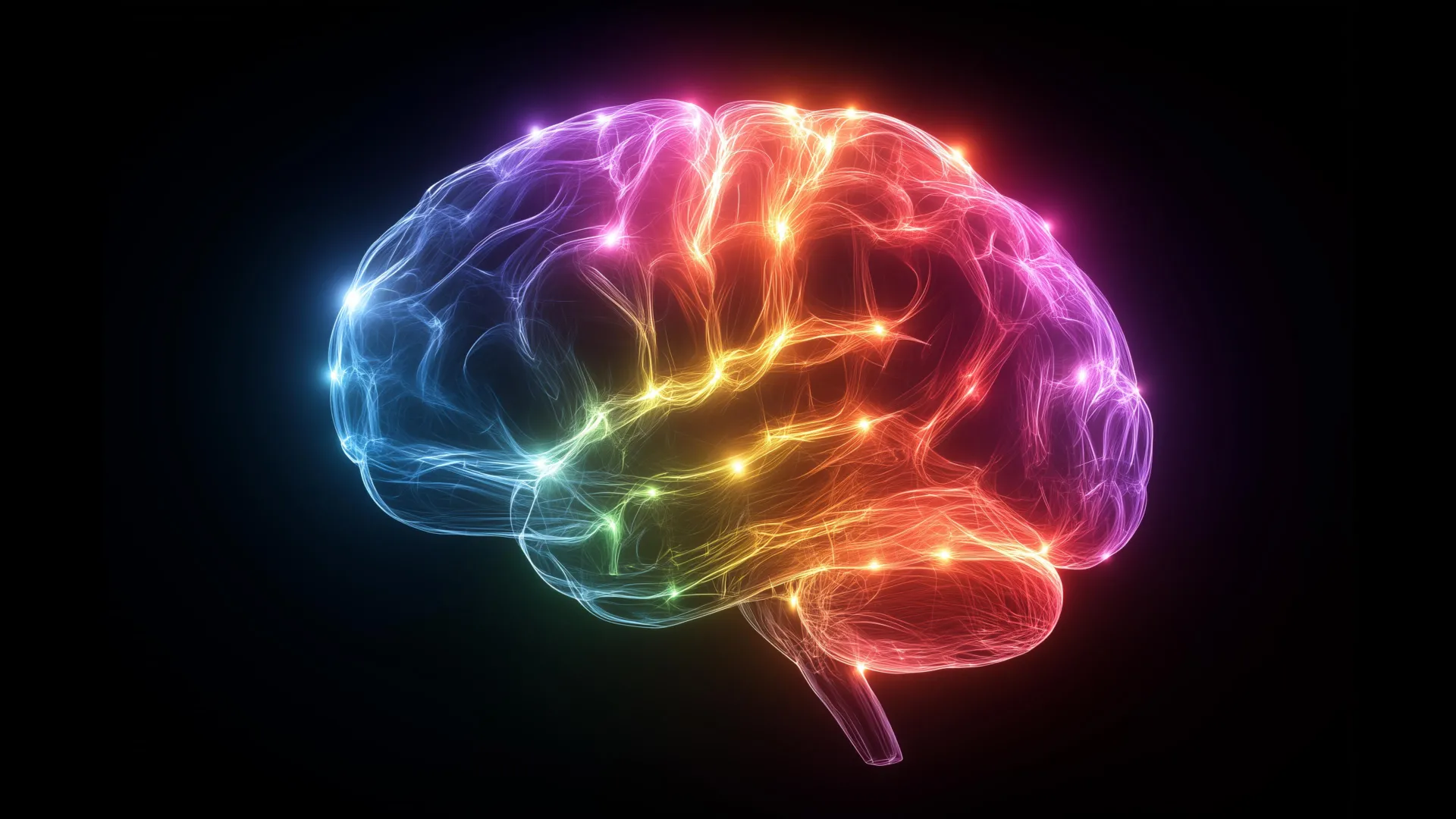
Researchers at Skoltech have unveiled a groundbreaking mathematical model that delves into the intricate workings of memory, leading to a startling revelation: the human brain might be optimized to process information through seven senses, rather than the traditional five. This discovery, published in the esteemed journal Scientific Reports, not only holds profound implications for our understanding of human cognition but also offers a significant leap forward for the development of advanced robotic systems and artificial intelligence. The study suggests that when concepts are characterized by seven distinct features, the brain’s capacity to store unique information is maximized, hinting that our current sensory apparatus might be limiting our full cognitive potential.
Professor Nikolay Brilliantov, a co-author of the study and a leading figure at Skoltech AI, emphasized the speculative yet exciting nature of these findings concerning human senses. "Our conclusion is of course highly speculative in application to human senses, although you never know," he stated. "It could be that humans of the future would evolve a sense of radiation or magnetic field. But in any case, our findings may be of practical importance for robotics and the theory of artificial intelligence." He elaborated on the core discovery: "It appears that when each concept retained in memory is characterized in terms of seven features—as opposed to, say, five or eight—the number of distinct objects held in memory is maximized." This suggests a fundamental mathematical principle governing memory efficiency, independent of the specific nature of the senses themselves.
The Skolkovo Institute of Science and Technology (Skoltech) team built their model upon a rich research tradition dating back to the early 20th century, focusing on the fundamental units of memory known as "engrams." An engram is conceptualized as a distributed network of neurons across various brain regions that activate in unison. Each engram represents a specific concept, which is then described by a collection of defining features. For humans, these features are intrinsically linked to our sensory experiences. Consider the concept of a banana: its representation in our memory is built upon its visual appearance, its characteristic smell, its unique taste, and other sensory qualities. Within this theoretical framework, the banana transforms into a five-dimensional object residing within a vast mental landscape that encompasses all our stored memories.
A crucial aspect of this model is the dynamic nature of engrams. They are not static entities but rather evolve over time. This evolution is influenced by how frequently an engram is activated by sensory input from the external world. Engrams can become sharper and more defined with repeated exposure and recall, or they can become more diffuse and fade as they are less frequently accessed. This continuous process elegantly mirrors the mechanisms of learning and forgetting that are fundamental to our interaction with the environment.
Professor Brilliantov further explained the observed evolutionary trajectory of these engrams: "We have mathematically demonstrated that the engrams in the conceptual space tend to evolve toward a steady state, which means that after some transient period, a ‘mature’ distribution of engrams emerges, which then persists in time." This steady state represents a stable configuration of stored memories. The team’s surprising finding emerged when they analyzed the ultimate capacity of such a conceptual space for a given number of dimensions. "As we consider the ultimate capacity of a conceptual space of a given number of dimensions, we somewhat surprisingly find that the number of distinct engrams stored in memory in the steady state is the greatest for a concept space of seven dimensions. Hence the seven senses claim." This mathematical elegance points towards an optimal dimensionality for memory storage and retrieval.
To further clarify this concept, imagine that the myriad objects in the world can be described by a finite set of characteristics, which correspond to the dimensions of a conceptual space. The researchers’ goal was to maximize the capacity of this conceptual space, defined as the number of distinct concepts that can be associated with these objects. A greater capacity implies a more nuanced and comprehensive understanding of the world. The mathematical analysis revealed that this maximum capacity is achieved precisely when the conceptual space has seven dimensions. This leads to the compelling conclusion that seven is the optimal number of senses for maximizing memory storage and, consequently, cognitive understanding.
The robustness of this finding is particularly noteworthy. The researchers highlight that this optimal number of seven dimensions does not appear to be dependent on the specific details of their model. Factors such as the inherent properties of the conceptual space itself or the nature of the stimuli that provide sensory impressions do not alter this fundamental result. The number seven emerges as a persistent and reliable feature of memory engrams in their own right. However, the researchers do acknowledge a specific caveat: multiple engrams that are of varying sizes but centered around a common point are considered to represent similar concepts. When calculating memory capacity, these are treated as a single, consolidated concept, preventing an overestimation of distinct memories.
The phenomenon of memory, in both humans and other living organisms, remains an enigmatic aspect of consciousness and existence. Advancing our theoretical understanding of memory is therefore paramount to unlocking deeper insights into the complexities of the human mind. Furthermore, this research paves the way for the ambitious goal of recreating humanlike memory capabilities within artificial intelligence agents, potentially leading to AI that can learn, adapt, and understand the world with a depth and efficiency previously unimagined. The implications for fields ranging from neuroscience and psychology to computer science and engineering are vast, promising a future where our understanding of cognition is as rich and multifaceted as the seven-dimensional conceptual space that this research suggests may be the brain’s ideal operational framework. This research is not merely an academic exercise; it is a potential blueprint for the next generation of intelligent systems and a profound re-evaluation of our own sensory perception.