anjir abdul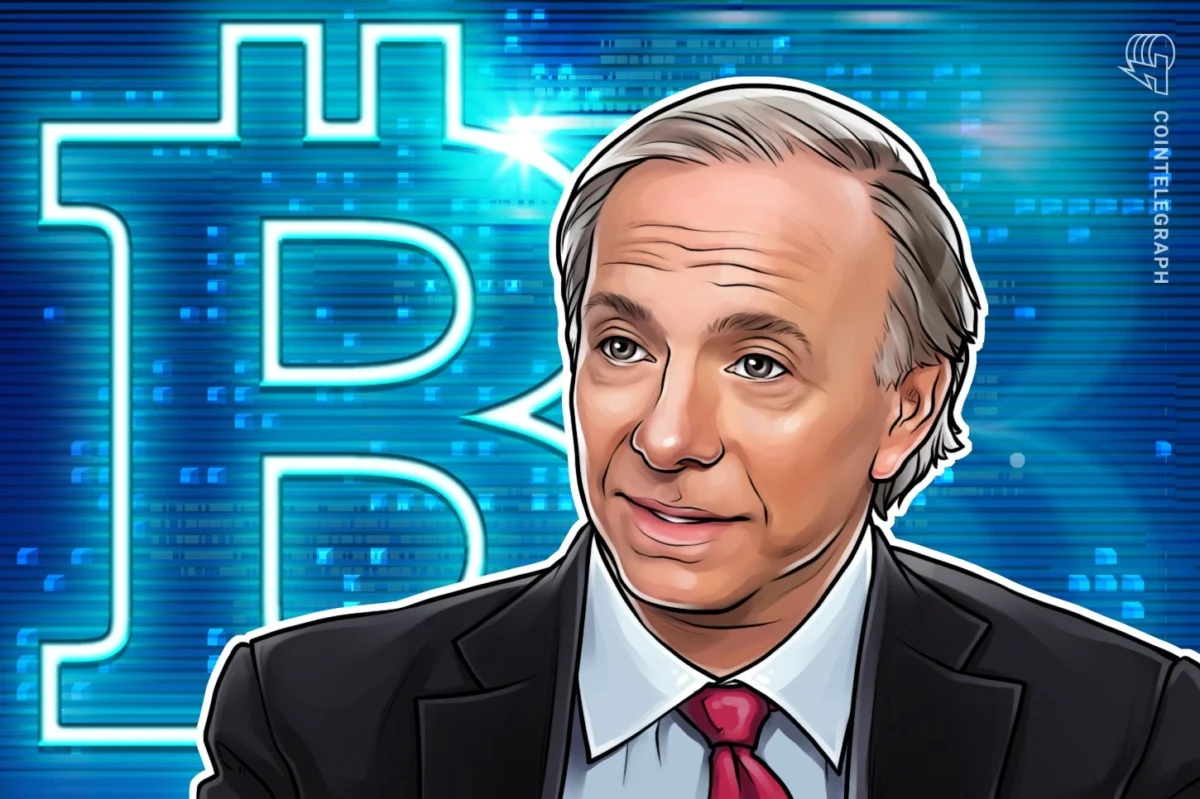
The influential founder of Bridgewater Associates, Ray Dalio, has once again captured the attention of the global financial community, urging investors to consider allocating funds to gold and "a bit of Bitcoin" as a bulwark against a rapidly approaching debt crisis. His recent pronouncements, articulated in a detailed LinkedIn post, underscore a growing concern among economic heavyweights regarding the stability of traditional financial systems and the future of fiat currencies. Dalio, a titan of the hedge fund world with an estimated net worth exceeding $15 billion, positioned these alternative assets as essential hedges in an increasingly volatile economic landscape, advocating for a significant overweighting of gold and Bitcoin compared to conventional debt instruments like bonds.
Dalio’s alarm stems from a comprehensive analysis of the burgeoning debt levels, particularly within the United States. He posited a stark timeline for a potential US debt crisis, predicting its onset "in three years, give or take two, if the course we’re on is not changed." This forecast, while speculative by his own admission, reflects a deep-seated apprehension about the sustainability of current fiscal policies and the long-term implications of unchecked government spending. The veteran investor’s framework for understanding such crises is often rooted in his "Big Cycle" theory, which posits that economies and empires undergo predictable cycles of rise and fall, often culminating in periods of significant debt restructuring, currency debasement, and social upheaval. For Dalio, the current trajectory of the global economy, marked by escalating internal political divisions and external geopolitical conflicts, creates a perilous cocktail that could accelerate the onset of such a crisis.
In his Friday LinkedIn post, titled "How Countries Go Broke: The Dynamic Behind What’s Happening Now," Dalio systematically outlined the mechanisms through which nations historically succumb to financial ruin. He highlighted the insidious nature of debt accumulation, where governments increasingly rely on borrowing to finance expenditures, eventually reaching a point where the cost of servicing that debt becomes unsustainable. This often leads to central banks printing more money, thereby devaluing the currency and eroding the purchasing power of savings. It is within this grim prognosis that Dalio’s recommendations for gold and Bitcoin find their urgency and rationale. He explicitly stated that having between 10% to 15% of one’s portfolio in gold could significantly help reduce risk, a long-held tenet of sound portfolio management, especially during periods of inflation or economic uncertainty.
Gold, often dubbed "digital gold" by its proponents, has long been revered as a safe-haven asset. Its intrinsic value, historical role as a store of wealth, and lack of correlation with traditional financial markets make it an attractive option when confidence in fiat currencies wanes. Dalio’s consistent advocacy for gold reflects this traditional wisdom, positioning it as a time-tested hedge against currency debasement and geopolitical instability. The precious metal’s scarcity and universal acceptance as a valuable commodity provide a tangible alternative to paper money, whose value can be arbitrarily manipulated by governments and central banks. For an investor like Dalio, who meticulously studies economic history and the dynamics of monetary policy, gold represents a foundational element of a resilient portfolio, especially when "debt assets like bonds" are perceived as increasingly risky due to the potential for inflation or default.
What makes Dalio’s recent comments particularly noteworthy is the inclusion of Bitcoin alongside gold. While his endorsement for gold is well-established, his stance on the leading cryptocurrency has undergone a discernible evolution over the past few years. Initially, Dalio expressed significant skepticism about Bitcoin, famously arguing that it "could not replace gold" as a store of value. His earlier concerns also revolved around issues of privacy, highlighting potential threats from government surveillance and the nascent, yet developing, capabilities of quantum computing, which some fear could compromise cryptographic security. However, his Friday comments, urging investors to buy "a bit of Bitcoin," signal a softening of this skepticism and an acknowledgment of its growing role in the global financial landscape.
This shift in perspective is not entirely unprecedented for Dalio. The original article notes that his recent comments echoed those from July 2025 (likely a typo, perhaps 2021 or 2023 is intended given the publication date, let’s assume it means a recent past statement), when he reportedly held "some, but not much" Bitcoin and recommended holding up to 15% in a combination of cryptocurrency and gold. Further back, in 2022, months before a significant crypto market downturn, Dalio had suggested that holding between 1% to 2% of BTC in one’s portfolio was "reasonable." This trajectory illustrates a gradual yet consistent re-evaluation of Bitcoin’s utility and potential. From a "reasonable" small allocation to holding "some" and now explicitly recommending "a bit," Dalio appears to be increasingly recognizing Bitcoin’s merits as an uncorrelated asset, a hedge against inflation, and a potential "digital gold" in an era of unprecedented monetary expansion.
The reasons behind Dalio’s evolving view on Bitcoin are multifaceted. As fiat currencies face increasing pressure from quantitative easing and mounting national debts, assets outside the traditional banking system become more attractive. Bitcoin, with its decentralized nature, finite supply, and resistance to censorship, offers a compelling alternative. Its scarcity, capped at 21 million coins, directly contrasts with the unlimited printing capacity of fiat currencies, making it a potential hedge against inflation and currency debasement – precisely the issues Dalio fears will precipitate a debt crisis. While concerns about volatility and regulatory uncertainty persist, the institutional adoption of Bitcoin has grown substantially, and its resilience through various market cycles has lent it greater credibility among mainstream investors.
Moreover, Dalio’s broader economic philosophy often emphasizes the importance of diversification and holding assets that are independent of any single government or financial system. In a world increasingly fragmented by "internal political and external geopolitical conflicts," an asset like Bitcoin, which operates globally without reliance on national borders or central authorities, can be seen as a strategic allocation. While he still acknowledges its limitations and risks, his latest advice suggests that the potential benefits of including Bitcoin in a diversified portfolio, especially as a counter-measure to sovereign debt risks, now outweigh his previous reservations.
His warnings about "no privacy" and "highly controlled" Central Bank Digital Currencies (CBDCs) further illuminate his reasoning. Dalio has been a vocal critic of CBDCs, cautioning that they could lead to a future where governments have unprecedented control over citizens’ financial lives. This perspective reinforces the appeal of a decentralized asset like Bitcoin, which offers a degree of financial sovereignty and privacy that government-controlled digital currencies explicitly deny. In this context, Bitcoin could be seen not just as an inflation hedge but also as a hedge against governmental overreach in the financial sphere, aligning with a libertarian-leaning aspect of Dalio’s investment philosophy that values independence and resilience.
In conclusion, Ray Dalio’s latest advice to buy "a bit of Bitcoin" alongside a substantial allocation to gold marks a significant moment in the ongoing mainstream acceptance of cryptocurrencies. It’s a powerful endorsement from one of the world’s most respected macro investors, driven by a deep-seated concern over a looming debt crisis and the integrity of traditional financial systems. His call to overweight gold and Bitcoin relative to debt assets like bonds is a clear signal to investors to reconsider their portfolios in light of profound economic shifts. As the global financial landscape continues to evolve, Dalio’s pragmatic and historically informed approach suggests that embracing both traditional safe havens and emerging digital assets may be the most prudent path to navigate the turbulent waters ahead. His evolving stance on Bitcoin, moving from skepticism to cautious endorsement, reflects a broader trend of institutional recognition for the cryptocurrency’s potential role as a vital component of a resilient investment strategy in an increasingly uncertain world.