anjir abdul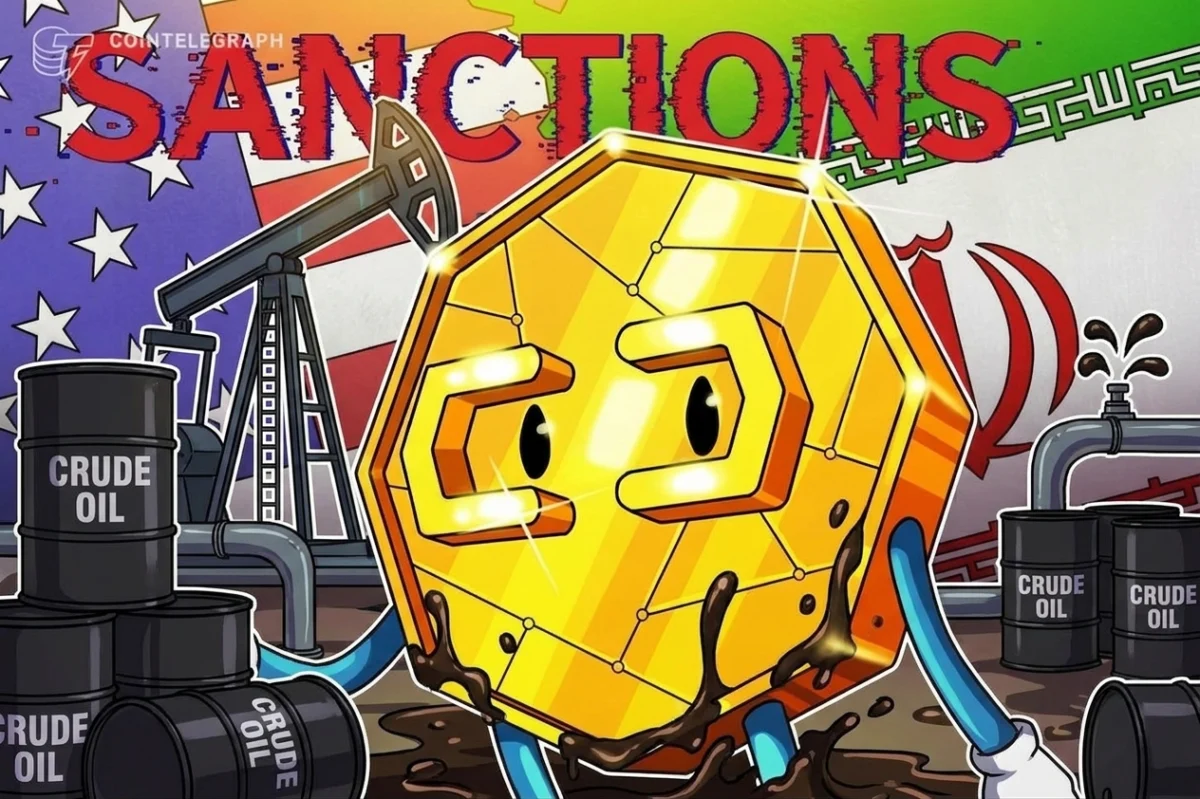
The United States Treasury Department has significantly intensified its campaign against Iran’s illicit financial activities, formally expanding its sanctions framework to encompass the country’s burgeoning digital asset sector. This pivotal move, announced on Monday, comes with an explicit citation of over $100 million in crypto payments allegedly utilized to facilitate Iranian oil sales, a crucial revenue stream for the sanctioned regime. The Office of Foreign Assets Control (OFAC), the Treasury’s principal enforcement arm for sanctions, issued sweeping sectoral sanctions determinations that cover not only digital assets but also technology, gold, aviation, and shipping, signaling a comprehensive and multi-pronged approach to choke off Iran’s access to global financial networks. Concurrently, OFAC sanctioned nearly 60 entities, individuals, and vessels across Iran’s nuclear, missile, cyber, and oil networks, underscoring the interconnected nature of these illicit operations.
This new digital asset determination marks a critical evolution in US sanctions policy. It grants OFAC unprecedented authority to sanction foreign individuals and companies found to be operating in, or providing services supporting, Iran’s digital asset sector. The Treasury Department explicitly highlighted that Iran has increasingly embraced cryptocurrency as a "tool of choice for sanctions evasion," a trend observed across various illicit networks, including those linked to the Islamic Revolutionary Guard Corps (IRGC) and high-ranking government insiders. These groups, already designated for their involvement in terrorism, proliferation of weapons of mass destruction, and human rights abuses, are now facing direct pressure on their digital financial lifelines. The IRGC, in particular, plays a pervasive role in the Iranian economy, often operating through a labyrinthine network of front companies and proxies, making the targeting of its financial infrastructure a strategic priority for US authorities.
A key revelation accompanying this latest round of sanctions points directly to the alleged involvement of UAE-based Ukrainian broker Ivan Obukhov. According to the Treasury, Obukhov has processed more than $100 million in crypto payments since 2023, directly facilitating the sale of Iranian oil on behalf of the IRGC’s Quds Force. The Quds Force, the IRGC’s elite external operations unit, is a notorious actor in regional destabilization, and its financial activities are consistently a target of US enforcement. OFAC swiftly moved to sanction Obukhov and his UAE-based company, Foscom FZE, effectively severing their access to the US financial system and signaling a clear warning to other facilitators of Iranian illicit trade globally. The choice of the UAE as a base of operations for such activities is not coincidental, as the region has historically been identified as a hub for financial intermediaries attempting to circumvent international sanctions due to its robust financial sector and strategic geographic location.
This sector-wide measure is not an isolated incident but rather the culmination of a series of escalating US actions against named crypto exchanges and wallets linked to Iran. The Treasury’s proactive stance against Iran’s digital financial network began to crystallize earlier in the year. In January, OFAC sanctioned UK-registered Zedcex and Zedxion, marking its inaugural Iran-related designations of digital asset exchanges. These initial steps signaled a clear intent to move beyond traditional financial institutions and directly address the crypto vector. The enforcement accelerated dramatically, with the Treasury sanctioning four more Iranian crypto exchanges on June 3, including Nobitex, which is reportedly the country’s largest platform. This move came just days after then-Treasury Secretary Scott Bessent publicly disclosed that the US had successfully seized nearly $1 billion in cryptocurrency from Iranian exchanges and wallets, an impressive figure that showcased the growing capabilities of US authorities in blockchain forensics and asset recovery. Most recently, on August 7, OFAC further tightened its grip by sanctioning exchanges Shelbit and Aban Tether, alleging they facilitated a combined $5 million in digital assets connected to Iran. These previous actions, while significant, were largely reactive, targeting specific platforms after their alleged involvement in illicit activities was identified.
The strategic shift to a sector-wide determination represents a profound expansion of US enforcement capabilities. Unlike the earlier actions that focused on individual platforms, the latest determination provides a foundational legal basis for sanctioning any person or entity based on their participation in Iran’s broader digital asset sector. This broader mandate, operating under Executive Order 13902, "significantly expands" OFAC’s ability to impose sanctions on foreign individuals and companies that are found to be operating within or providing support services to these covered sectors. The accompanying OFAC determination explicitly states that any person determined to operate in Iran’s digital asset sector will be subject to sanctions, creating a powerful deterrent for potential facilitators worldwide.
The implications of such a designation are severe and far-reaching. Once designated, parties’ US-linked property and interests in property must be blocked, effectively freezing their assets within the US financial system. Furthermore, foreign financial institutions, including banks, that facilitate significant transactions for these designated entities could face stringent restrictions on their access to US accounts, including correspondent and payable-through accounts. This "secondary sanctions" mechanism extends the reach of US enforcement beyond its direct jurisdiction, compelling global financial actors to comply with US sanctions or risk severe penalties. This cascading effect aims to isolate sanctioned entities from the legitimate global financial system, regardless of whether transactions occur in fiat or digital currencies.
For the global cryptocurrency industry, these escalating measures underscore the critical importance of robust compliance frameworks. The continuous targeting of crypto entities involved in sanctions evasion necessitates heightened vigilance from exchanges, custodians, blockchain analytics firms, and other service providers. The "travel rule," anti-money laundering (AML), and know-your-customer (KYC) regulations become paramount, as legitimate crypto businesses are increasingly expected to identify and report suspicious activities to prevent their platforms from being exploited by illicit actors. The potential for "de-risking," where compliant institutions sever ties with entire regions or client categories deemed high-risk to avoid penalties, also looms large. This regulatory pressure is likely to drive further innovation in blockchain analytics, as both governments and private firms race to develop more sophisticated tools to trace complex transactions across various blockchains and identify ultimate beneficial owners.
Looking ahead, the US Treasury’s actions signal a clear and unwavering commitment to adapting its enforcement strategies to the evolving landscape of illicit finance. While Iran and other sanctioned regimes will undoubtedly continue to seek new methods to circumvent restrictions, including potentially exploring privacy-enhancing cryptocurrencies, decentralized exchanges (DEXs), or more sophisticated mixing services, the US has demonstrated its resolve to follow these illicit money flows into the digital realm. The ongoing cat-and-mouse game between state-backed enforcement agencies and determined illicit networks will shape the future of financial surveillance and compliance in the digital age. This robust stance by the US not only aims to cripple Iran’s ability to fund its destabilizing activities but also sets a significant precedent for how major global powers intend to regulate and police the burgeoning world of digital assets, firmly establishing that cryptocurrency, despite its decentralized nature, is not beyond the reach of state authority when it comes to national security and international sanctions.