
 Faris Adani
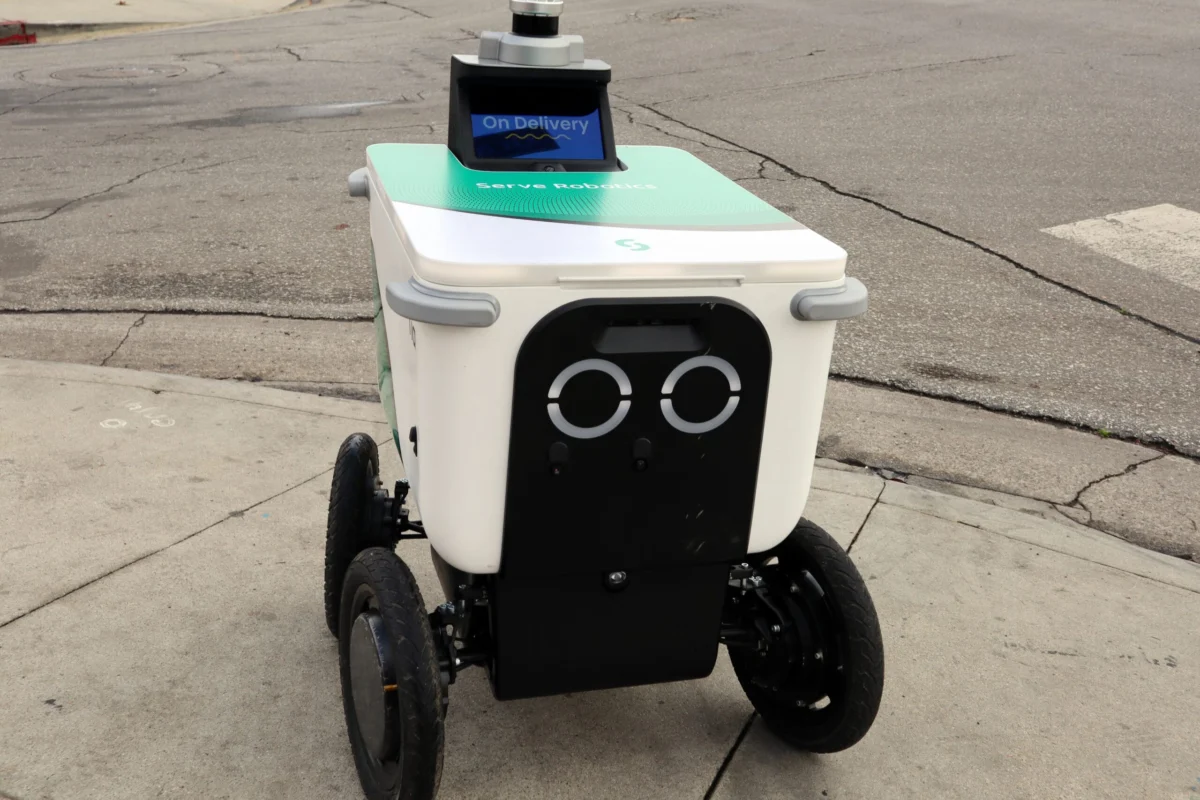
The pervasive march of automation into our daily lives, once a distant sci-fi fantasy, is now an undeniable reality, epitomized by the burgeoning presence of WALL-E-esque delivery robots trundling across America’s urban landscapes. While these autonomous couriers promise unparalleled convenience, their sophisticated navigation systems, bristling with cameras and sensors, are now at the heart of a contentious debate surrounding personal privacy and the unauthorized collection of sensitive biometric data. Two recent lawsuits filed in Chicago against prominent delivery robot companies, Coco Robotics and Serve Robotics, cast a stark light on these concerns, raising the alarming possibility that the price of convenience might be a surreptitious scan of our very identities, potentially making these sidewalk automatons a far more intrusive presence than the much-maligned Flock surveillance cameras.
For years, privacy advocates have sounded alarms over technologies like Flock cameras, which primarily focus on capturing and storing license plate data from passing vehicles. While undeniably a form of surveillance, the data collected by Flock systems—vehicle identifiers—is generally considered less personal than the intricate biological information that defines us as individuals. However, the lawsuits against Coco and Serve Robotics introduce a new dimension to this surveillance discussion, alleging that their delivery bots are actively collecting biometric data—detailed information about people’s hands, bodies, and faces—without explicit consent. This distinction is crucial: license plate data identifies a vehicle, while biometric data identifies a person, linking directly to their unique biological characteristics. The question then becomes, are these seemingly innocuous delivery robots inadvertently or intentionally building databases of human biometrics, and if so, what are the implications for a society increasingly reliant on automated services?
According to reporting by the Associated Press, the complaints from Chicago residents highlight a critical lapse in consent. The plaintiffs assert that they did not request a robot delivery in the first place, and therefore, could not have possibly consented to having their personal biometric information recorded and stored by these machines. One plaintiff in the case against Coco Robotics further alleges that a remote human operator was actively monitoring his delivery in real-time, adding another layer of concern regarding human oversight and the potential for misuse of visual data. The lawsuit against Serve Robotics, meanwhile, details a scenario where a plaintiff encountered a delivery robot while collecting an Uber Eats order, claiming the bot subsequently collected and retained his data. This case also explicitly voices anxieties that such data could be leveraged for training artificial intelligence algorithms or, more ominously, shared with third parties without the individual’s knowledge or permission.
The backdrop for these legal challenges is Illinois’ uniquely robust Biometric Information Privacy Act (BIPA). Enacted in 2008, BIPA stands as one of the strongest biometric privacy laws in the United States, granting individuals the right to sue companies that collect, store, or disseminate their biometric information—such as fingerprints, retinal scans, or facial geometry—without explicit consent. Unlike many other state privacy laws, BIPA includes a private right of action, meaning individuals can directly sue for damages, often leading to substantial settlements. This legal framework has previously been utilized in high-profile cases against tech giants like Meta (formerly Facebook) over its facial recognition features, demonstrating its potent capacity to hold corporations accountable for biometric data practices. The fact that these delivery robot lawsuits are emerging in Chicago, a city that has also seen a noticeable surge in the deployment of these bots and, consequently, a rise in public frustration over their presence on sidewalks, underscores the immediate relevance and potential impact of BIPA.
At the heart of the dispute lies the technology itself. Delivery robots are typically equipped with an array of sensors designed to help them navigate complex urban environments safely and efficiently. These include high-resolution cameras, similar to those found in smartphones or security systems, which capture visual data of their surroundings. More sophisticated robots often integrate LIDAR (Light Detection and Ranging) sensors, which use pulsed laser light to measure distances and create detailed 3D maps of their environment. While companies like Coco and Serve argue that these systems are primarily for navigation and safety—identifying obstacles, pedestrians, and traffic—the plaintiffs contend that the granular nature of the data collected by these sensors inadvertently or purposefully captures biometric identifiers. For instance, LIDAR can map the contours of a human body, and cameras can capture facial features, hand gestures, and gait patterns, all of which fall under the broad umbrella of biometric information depending on how they are processed and stored. The critical question is whether these raw sensor inputs are merely used for real-time obstacle avoidance, or if they are processed, analyzed, and stored in a manner that creates identifiable biometric profiles of individuals.
Both Coco Robotics and Serve Robotics have vehemently denied the claims, stating that privacy is a paramount concern. Coco characterized the litigation as "frivolous" and asserted that it "fundamentally misunderstands our technology," specifically stating, "we have not collected biometric data in Chicago." The company further explained that any data shared is "navigational data used to make sidewalks safer for all users," citing an example of providing real-time hazard information to BlindSquare, a navigation app for visually impaired individuals. Serve Robotics, while planning to "defend against" the legal action, echoed similar sentiments, stating that it "does not use that data to identify individuals and our systems are not designed to identify individuals or create biometric profiles." These defenses suggest that the companies believe their data collection falls outside the scope of BIPA, focusing on anonymized or aggregate data for operational purposes rather than individual identification. However, the lawsuits challenge this interpretation, arguing that even if the intent isn’t to identify, the capability and act of collecting such data without consent still constitutes a violation.
The comparison to Flock cameras, as posed in the title, is not merely rhetorical; it highlights a crucial differentiation in the perceived sensitivity of data. Flock cameras, by focusing on license plates, primarily identify vehicles and their registered owners, which, while raising privacy concerns, typically falls short of direct personal identification in the immediate context of public surveillance. Biometric data, conversely, is deeply personal. Facial geometry, fingerprints, and even gait patterns are unique to an individual, and their unauthorized collection raises profound concerns about identity theft, pervasive tracking, and potential discrimination. If delivery robots are indeed collecting such data, even inadvertently, it opens the door to a host of frightening possibilities:
- Mass Surveillance: A network of delivery robots could, collectively, create a detailed map of people’s movements and identities across a city.
- AI Training and Profiling: The data could be used to train AI models for advanced facial recognition, emotion detection, or even predictive policing, potentially without any oversight or ethical guidelines.
- Third-Party Sharing: The information could be sold or shared with advertisers, government agencies, or other entities, leading to highly targeted marketing, social scoring, or other forms of control.
- Security Risks: Stored biometric data, if breached, could lead to irreparable harm, as biometrics cannot be changed like a password.
This burgeoning conflict epitomizes the ongoing tension between technological innovation and fundamental privacy rights. The promise of seamless, automated convenience is alluring, but it often comes with an unseen cost: the expansion of the "surveillance economy." As more aspects of our lives become automated, from package delivery to grocery shopping, the digital footprint we leave behind grows exponentially, often without our full understanding or consent. The Chicago lawsuits serve as a critical reminder that while companies tout the benefits of their advanced technologies, the responsibility to safeguard personal data, particularly highly sensitive biometric information, rests squarely on their shoulders.
The frustration among Chicago residents regarding the proliferation of delivery robots extends beyond privacy concerns. Many have voiced complaints about these devices obstructing sidewalks, posing safety hazards to pedestrians, particularly those with disabilities, and generally adding to urban clutter. The biometric data lawsuits inject a new and more serious dimension into this public discontent, transforming an issue of mere annoyance into one of fundamental rights. Regardless of how these specific cases against Coco Robotics and Serve Robotics shake out in the Illinois courts, they will undoubtedly set precedents for how autonomous delivery services and other sensor-laden technologies are regulated in the future.
The broader implication is clear: in an increasingly automated world, the line between public observation and private data collection becomes ever blurrier. These lawsuits are not just about a few delivery robots; they are about defining the boundaries of digital privacy in an age where every interaction, every movement, and every biological characteristic could potentially be "swallowed up, stored somewhere, and used in ways that we have no control over." As we continue to embrace the convenience offered by advanced robotics and AI, a vigilant public and proactive legal framework are essential to ensure that the future of automation does not come at the unacceptable cost of our personal autonomy and privacy. The question of whether delivery robots are scanning us into a database scarier than Flock cameras isn’t just hypothetical; it’s a pressing legal and ethical challenge that demands immediate and comprehensive answers.